Ham
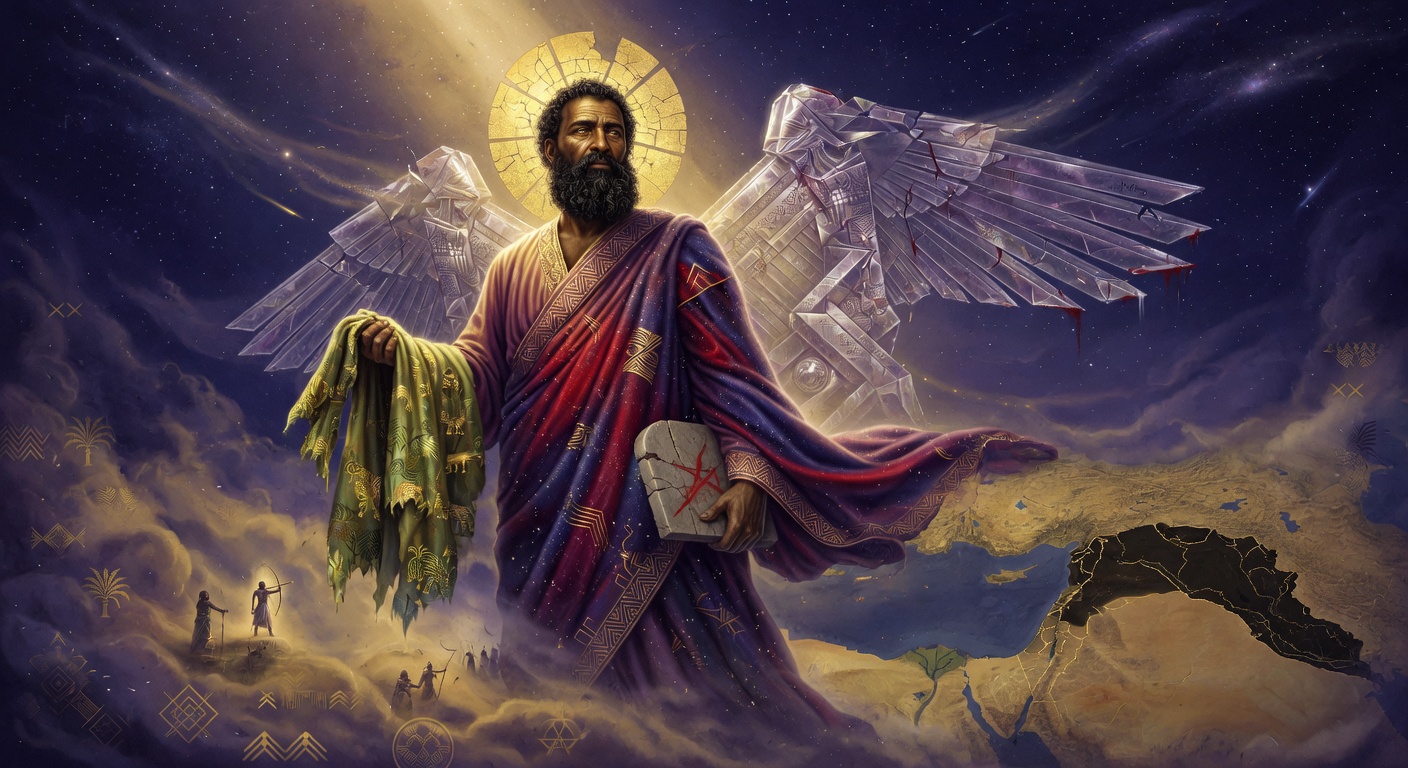
Ham is Noah's second son whose act of dishonoring his father after the Flood - and whose descendant Canaan's illegal seizure of Shem's territory - establishes the theological basis for later conflicts over the promised land. Jasher 7 describes Ham stealing Adam's garments (which pass to Nimrod), introducing the theme of illegitimate power. Jubilees 8-10 details the division of the earth and Canaan's violation of the sworn boundaries. Ham's line produces both Nimrod (the first tyrant) and the Canaanite peoples who will oppose Israel. Within the broader narrative preserved across these three ancient texts, Ham occupies a distinctive position in the Post-Flood that connects to figures such as others in the tradition. The pseudepigraphal accounts provide details and perspectives absent from other ancient sources, offering readers a more complete portrait of this figure's significance within the cosmic drama of covenant, rebellion, and restoration that defines the Enochian worldview. These expanded narratives invite deeper reflection on the moral and spiritual dimensions of Ham's story as it relates to the overarching themes of divine sovereignty, human agency, and the consequences of choices made in the presence of heavenly realities.
Biography
- Father
- Noah
- Era
- Post-Flood
Family
Key Chapters
Key Passages
Ham's garments stolen
The Book of Jasher 7:24-30
And the garments of skin which God made for Adam and his wife, when they went out of the garden, were given to Cush....
 24nd the garments of skin which God made for Adam and his wife, when they went out of the garden, were given to Cush.
Division of earth
The Book of Jubilees 8:1-12
In the twenty-ninth jubilee, in the first week, 1373 A.M. in the beginning thereof Arpachshad took to himself a wife and...
 1n the twenty-ninth jubilee, in the first week, 1373 A.M. in the beginning thereof Arpachshad took to himself a wife and her name was Rasu'eja, the daughter of Susan, the daughter of Elam, and she bare him a son in the third year in this week, 1375 A.M. and he called his name Kainam.
Did You Know?
Adam's original garments passed through Ham to Nimrod, granting supernatural power.
His son Canaan's illegal land seizure is the theological basis for the later conquest.
He fathers the Egyptian, Canaanite, and African peoples in the tradition's geography.
Ham, Noah's second son, dishonored his father after the Flood in an act central to post-Flood rebellion themes.
Ham's line produces Nimrod, portrayed as the first tyrant in the narratives preserved by Jasher and Jubilees.