Ancient Themes
12 major themes woven through the Enochic corpus - from the Watchers and divine judgment to the Son of Man and cosmic restoration.
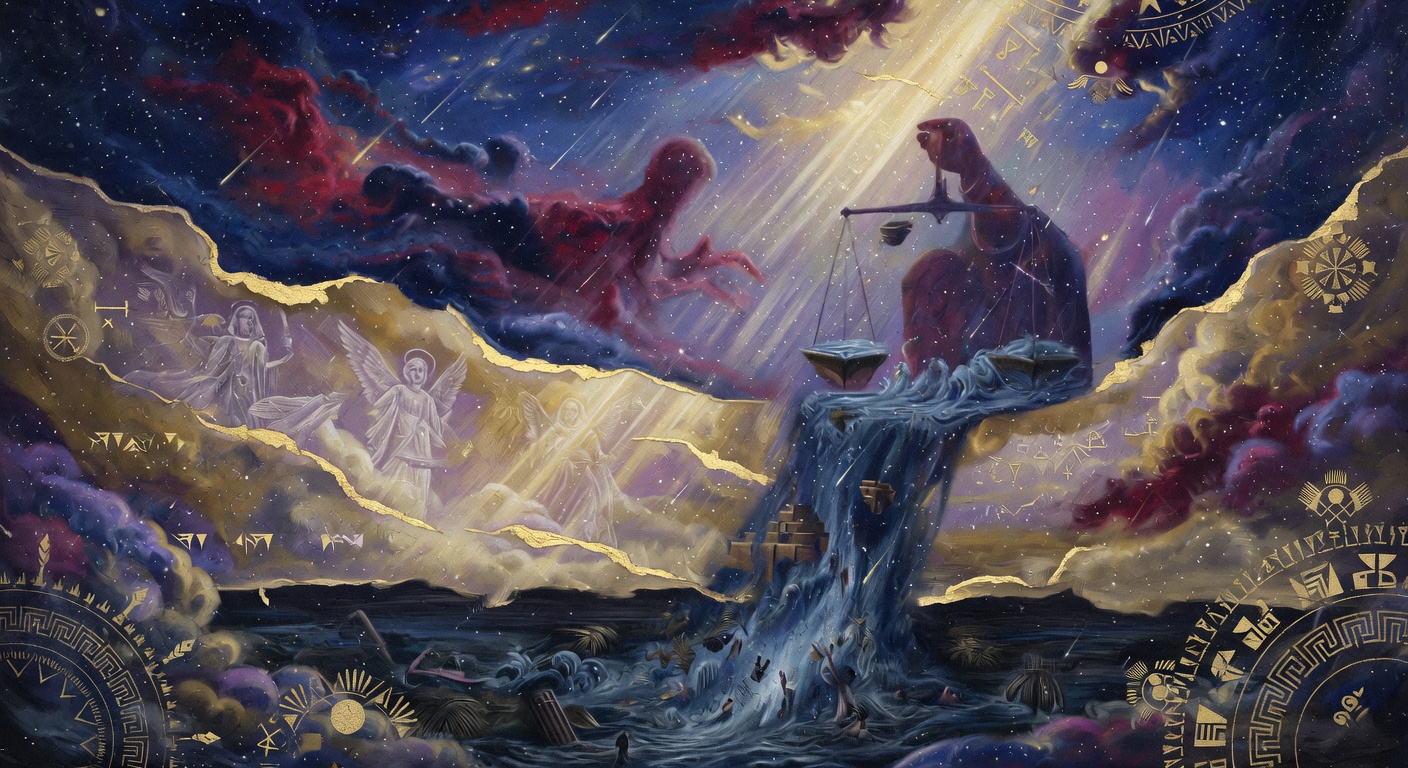
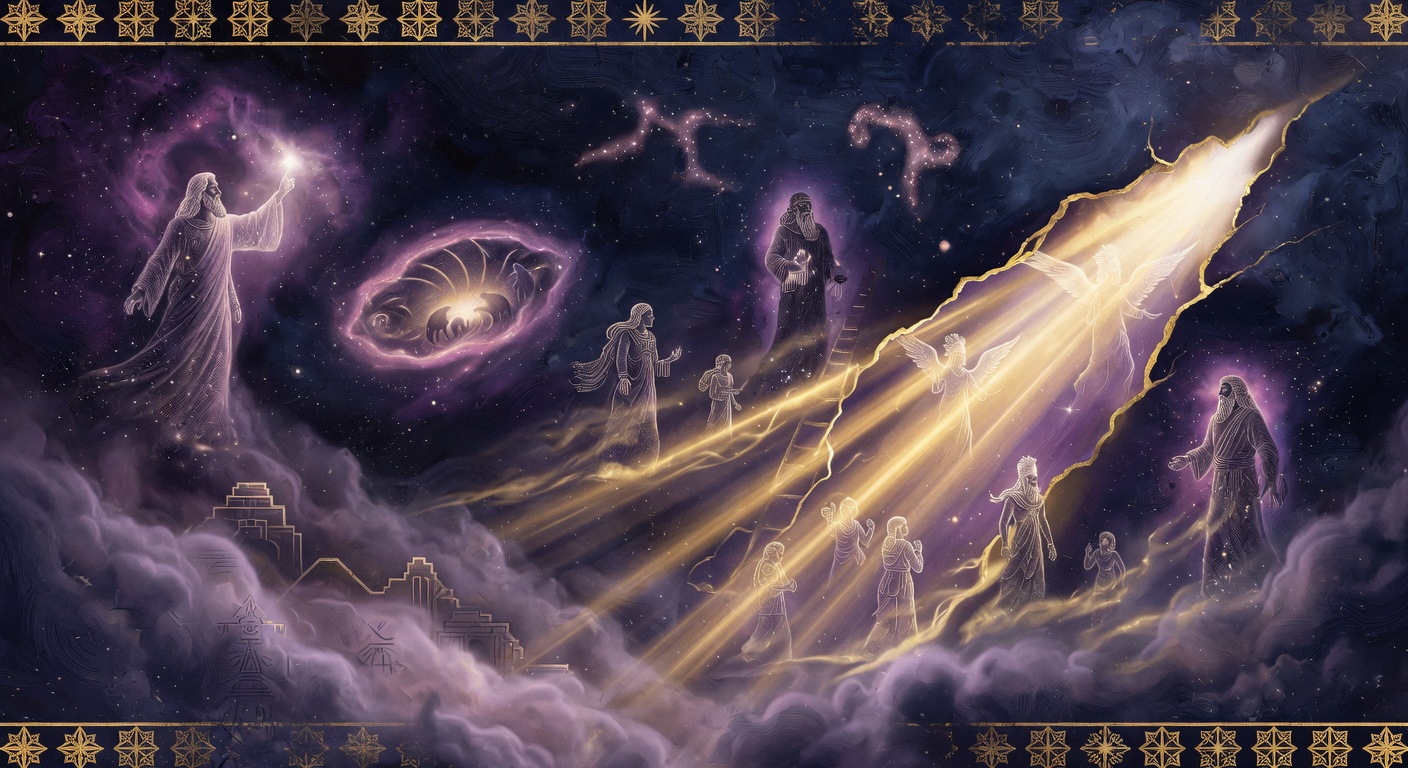
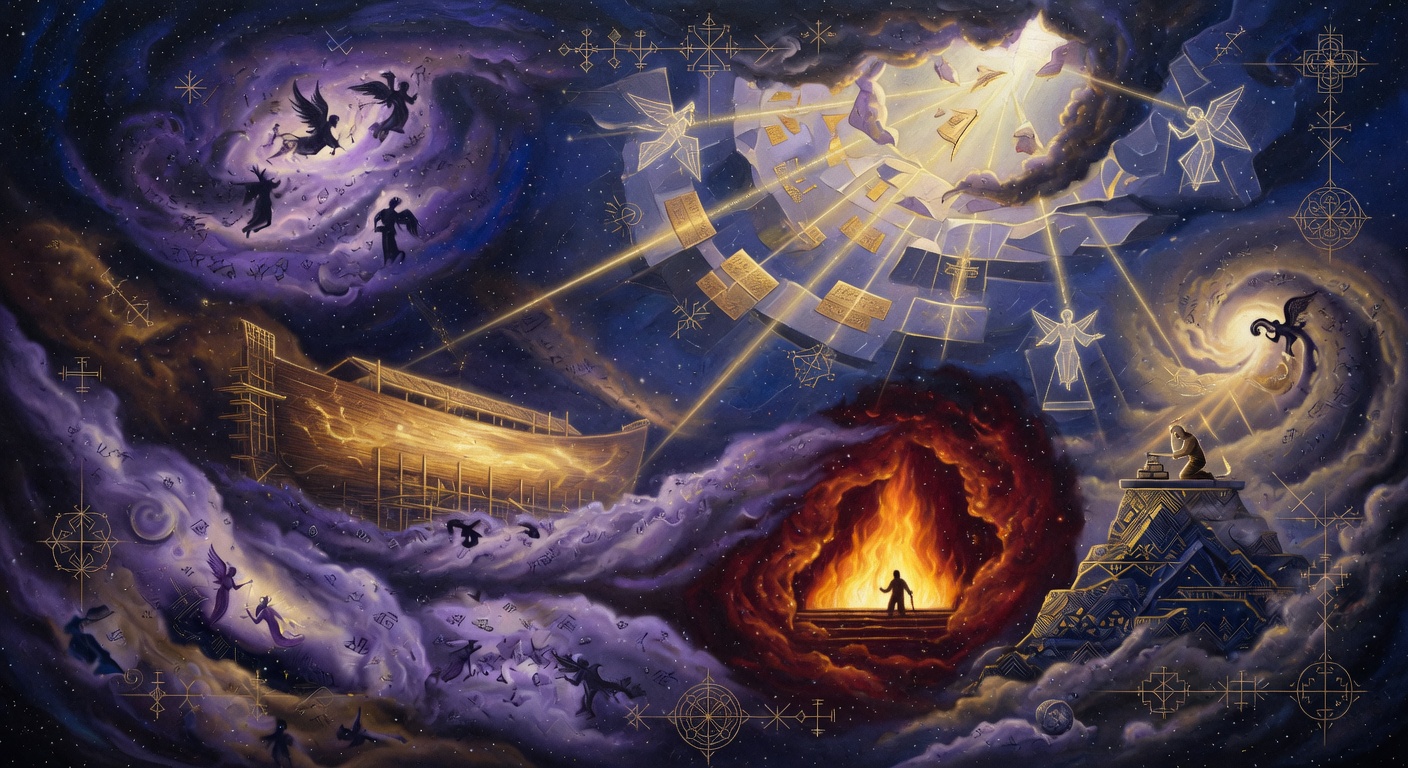
Twelve major themes thread through the Enochic corpus, Jubilees, and Jasher - recurring ideas that connect disparate narratives into a coherent theological vision. The rebellion of the Watchers introduces forbidden knowledge; divine judgment responds with precision; the Son of Man awaits his appointed hour; and the promise of restoration assures the faithful that the present disorder will not endure. These themes function as interpretive lenses through which ancient readers understood their own suffering and hope.
Angelic / Primordial
-
The Watchers and Their Fall
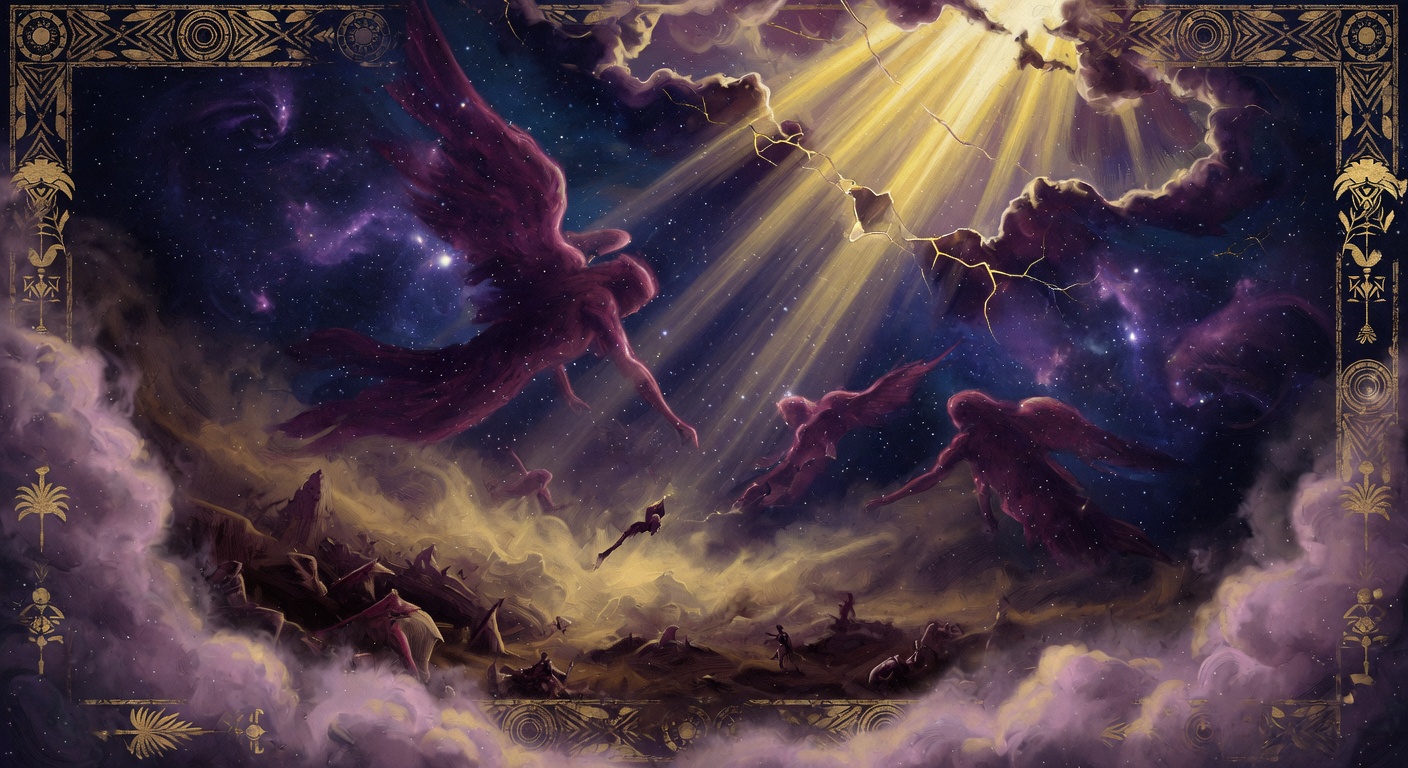
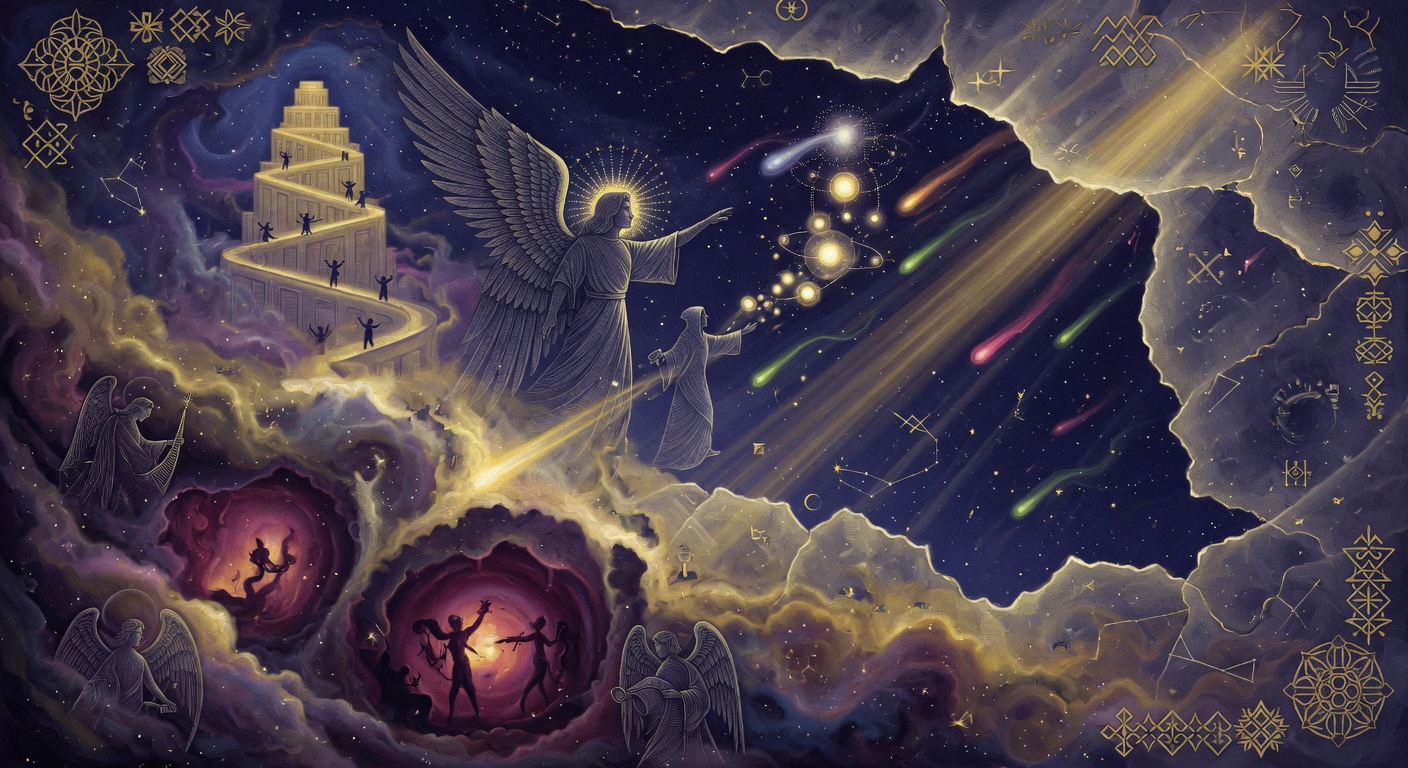
The Watchers are the rebellious angels who descended from heaven to earth, took human wives, and introduced forbidden knowledge that corrupted humanity before the Flood. In the ancient Jewish apocalyptic traditions, the narrative of rebellious angels descending to earth serves as a profound explanation for the origins of human corruption and the necessity of divine judgment. This account, preserved most fully in the Book of Enoch, portrays these heavenly beings as initially holy watchers assigned to oversee creation, yet their decision to abandon their proper station initiates a chain of events that fundamentally alters the moral order of the world. The story provides crucial context for the Flood as not merely punishment for human wickedness but as a response to a deeper cosmic transgression involving both celestial and terrestrial realms. Central to this tradition is the pact formed by two hundred angels under the leadership of Semjaza and Azazel on Mount Hermon, as detailed in 1 Enoch 6. Swearing a mutual oath to take human wives and share forbidden knowledge, they descend and beget the giants known as Nephilim. Their teachings encompass metallurgy for weapons and ornaments, the use of cosmetics and dyes, sorcery, and the secrets of the stars and clouds, as recorded in 1 Enoch 7-8. These revelations accelerate violence and idolatry among humanity, corrupting the natural boundaries established at creation. The Books of Jubilees and Jasher reinforce this framework while adding distinct emphases. Jubilees 5 describes the angels as Watchers who defile themselves with the daughters of men, producing offspring that fill the earth with lawlessness and prompt the divine decree of the Flood. Jasher similarly alludes to the angels' descent and the resulting moral decay in the generations before Noah. Together these texts position the angels' fall as the pivotal event that necessitates both the destruction of the old world and the renewal of the covenant with Noah's line. Within the broader Enochian tradition, this episode underscores the interplay between free will, divine order, and eschatological judgment. It frames subsequent revelations about the final binding of the fallen angels and the restoration of righteousness, offering readers a lens through which to interpret the persistence of evil and the hope of ultimate cosmic restoration.
-
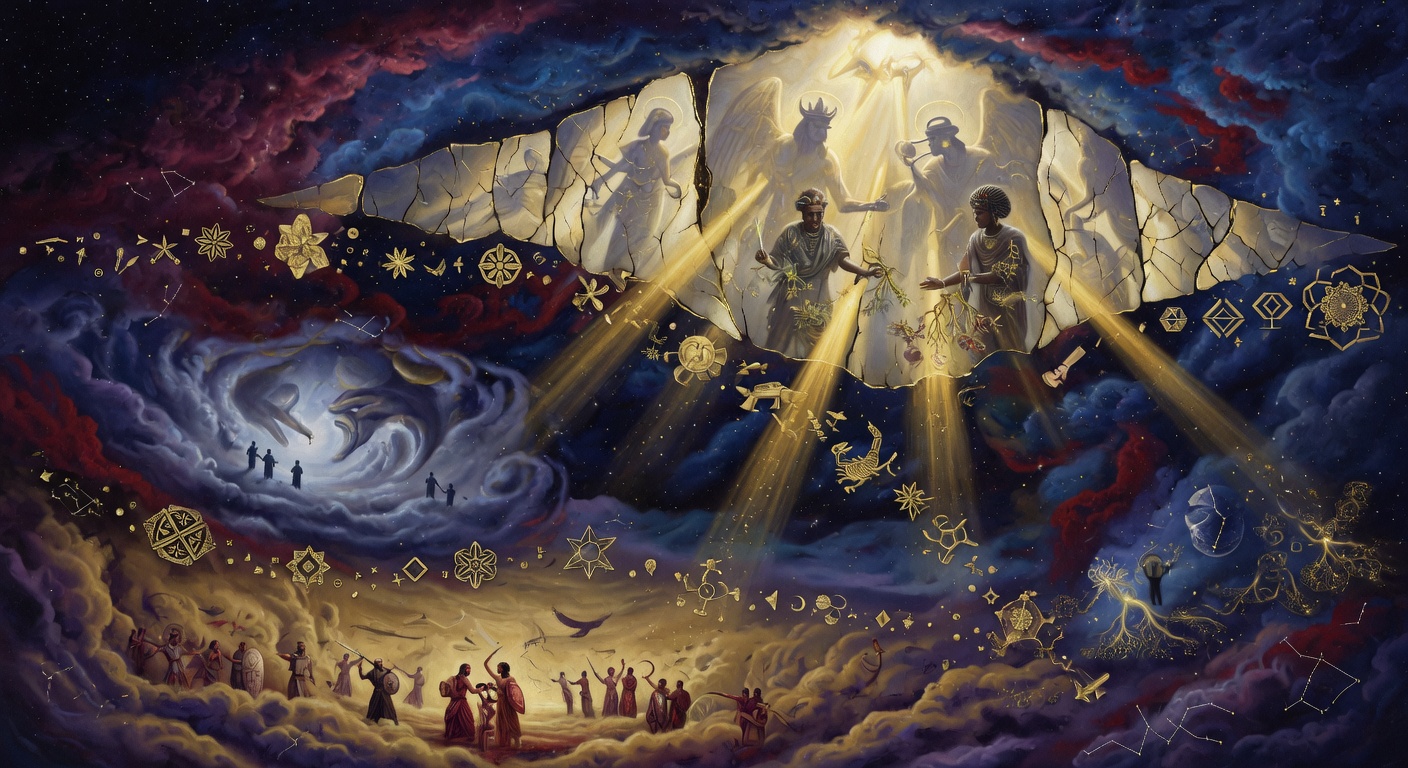
Forbidden Knowledge
The Watchers transgressed not only by taking human wives but by revealing heavenly secrets to humanity - metallurgy, cosmetics, astrology, root-cutting, and the resolution of enchantments. Azazel taught the making of swords and shields; Semjaza taught enchantments and root-cutting; Armaros taught the resolving of enchantments; Baraqijal taught astrology; Kokabel the constellations; and others taught signs of the earth, sun, and moon. This forbidden transmission transforms the human condition irreversibly - weapons enable organized violence, cosmetics amplify the seduction that began the transgression, and divination usurps divine prerogative. The tradition insists that certain knowledge belongs only to heaven, and its premature revelation constitutes cosmic rebellion with catastrophic consequences for the created order.
Eschatological
Messianic / Apocalyptic
Covenantal
Patriarchal Example
Moral / Polemical

Visionary / Cosmological
Calendrical / Legal
Theological
-
Divine Providence and Plan
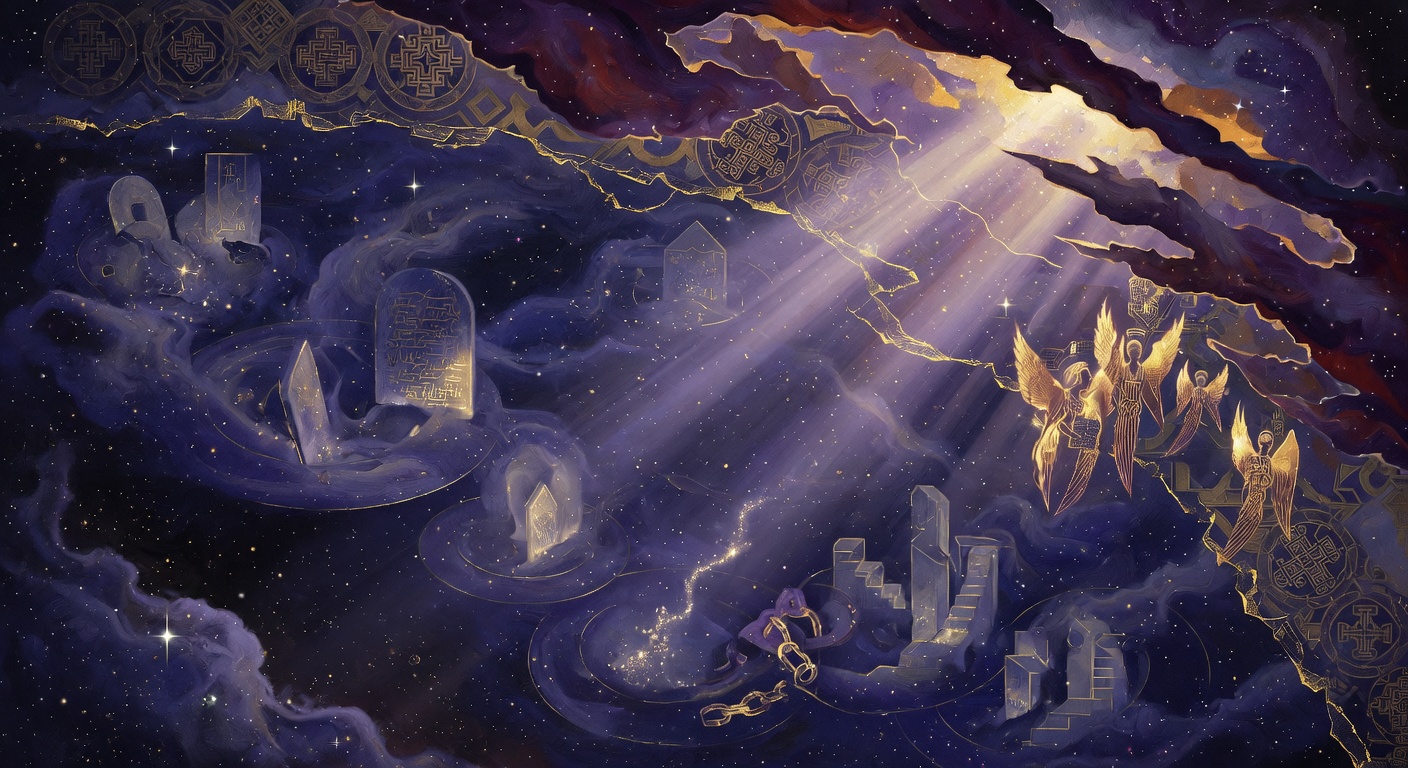
Divine Providence is the conviction running through all three books that history unfolds according to a predetermined plan recorded on the heavenly tablets - human choices and angelic rebellions alike operate within boundaries set before creation. Jubilees makes this explicit through its framework of jubilee cycles that organize all history into mathematically precise periods. The Book of Enoch reveals the plan through Enoch's visions of past and future. Jasher demonstrates it narratively through the pattern of apparent setbacks (Joseph's slavery, Moses' exile) that prove to be divine positioning. Together these texts present a world where nothing is accidental and every event serves the ultimate restoration of cosmic order. Within the interconnected tradition preserved across the Book of Enoch, the Book of Jubilees, and the Book of Jasher, this concept resonates with broader patterns of divine order, human response, and cosmic consequence. The pseudepigraphal sources provide perspectives and details absent from other ancient texts, offering readers a more complete understanding of how ancient communities understood the relationship between heavenly realities and earthly experience. These expanded accounts invite sustained reflection on the enduring significance of this tradition within the larger framework of Second Temple Jewish thought and its influence on later religious imagination.
-
Deliverance and Rescue
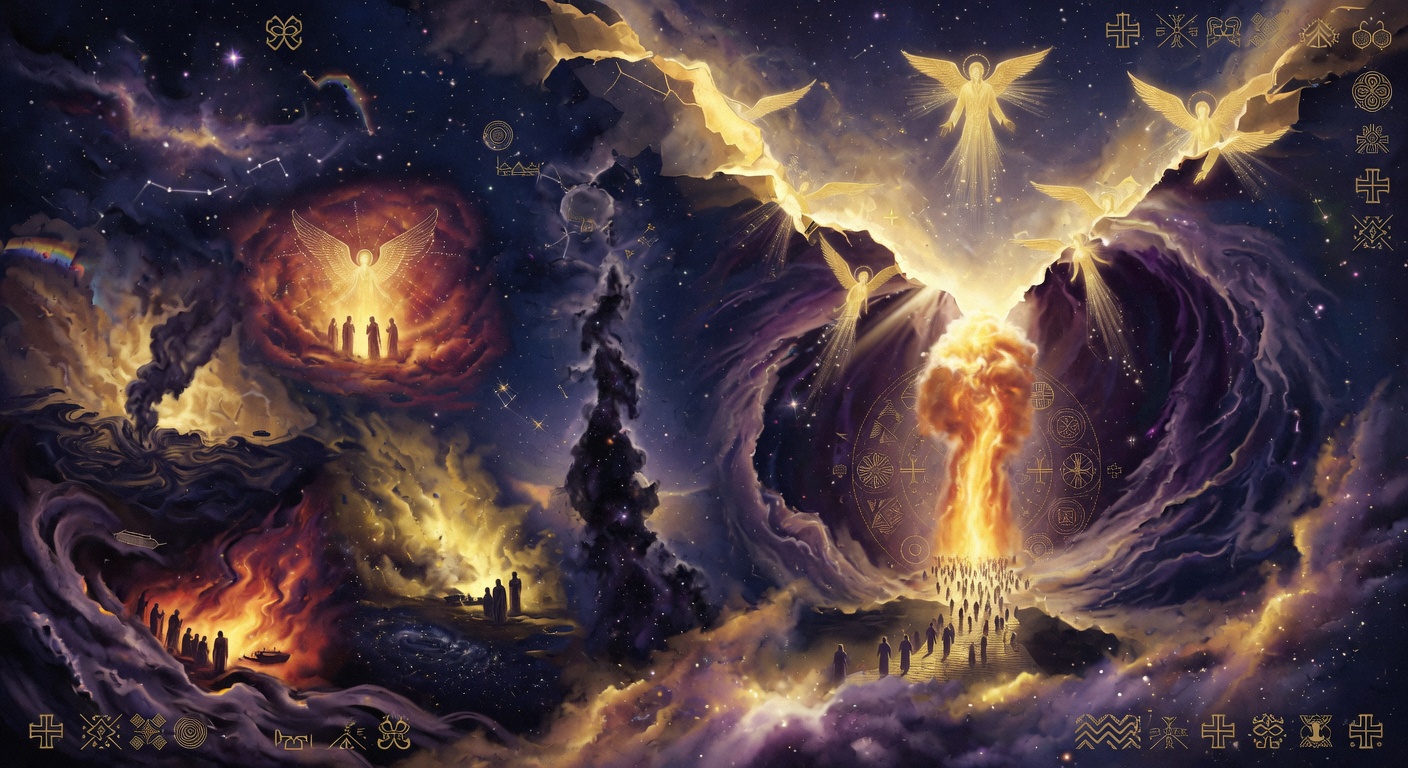
Deliverance is the recurring divine intervention that rescues the faithful from overwhelming danger - from Noah through the Flood, Lot from Sodom, Abraham from the furnace, Joseph from the pit, and Israel from Egypt. Each deliverance follows a pattern: the righteous are surrounded by forces of destruction, cry out or maintain faith, and God intervenes through angels, natural phenomena, or circumstantial reversal. The Exodus is the climactic deliverance, combining all prior patterns into a single national event. These rescues are not mere escapes but covenant confirmations - each one proves that divine promises remain active. Within the interconnected tradition preserved across the Book of Enoch, the Book of Jubilees, and the Book of Jasher, this concept resonates with broader patterns of divine order, human response, and cosmic consequence. The pseudepigraphal sources provide perspectives and details absent from other ancient texts, offering readers a more complete understanding of how ancient communities understood the relationship between heavenly realities and earthly experience. These expanded accounts invite sustained reflection on the enduring significance of this tradition within the larger framework of Second Temple Jewish thought and its influence on later religious imagination.