Battles & Wars
24 battles that shaped the story of Israel - from the Red Sea to Armageddon.
Patriarchal
-
War of the Kings (Chedorlaomer)
Abraham + allies vs. Chedorlaomer coalition
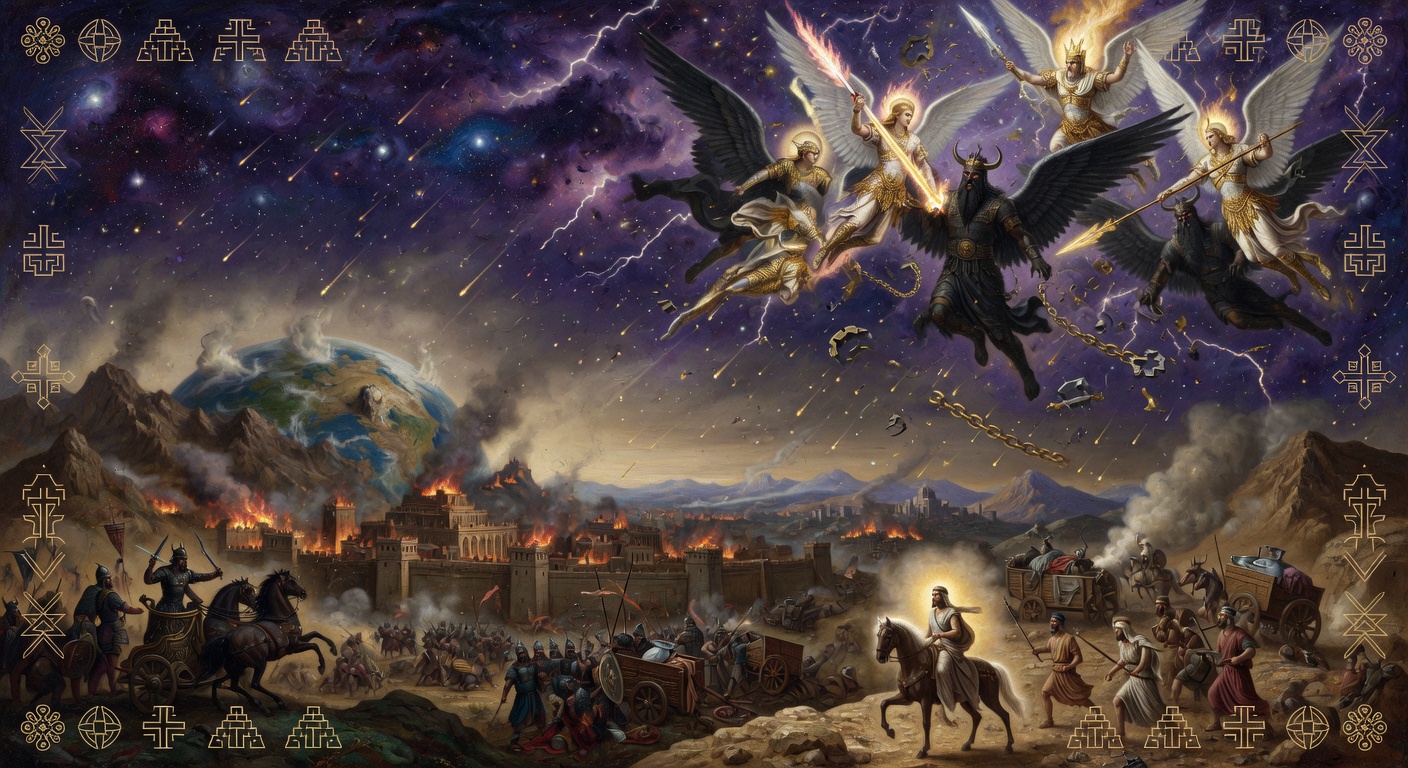
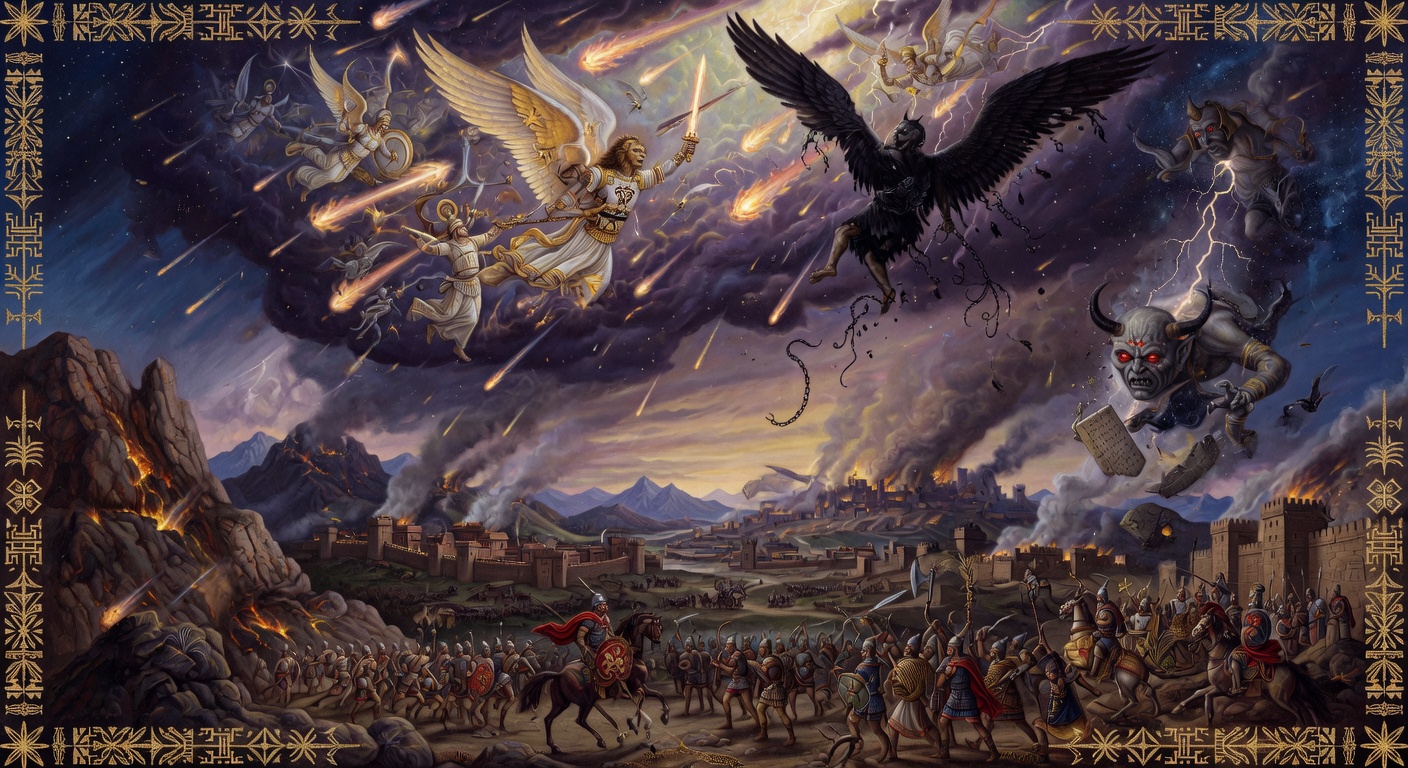
The ancient accounts of conflict among eastern monarchs and the cities of the plain receive notable elaboration in the Book of Jasher and the Book of Jubilees, both of which expand upon the terse Genesis narrative to highlight themes of covenant fidelity and divine deliverance. In these texts the campaign originates when the rulers of Elam, Shinar, Ellasar, and the Goiim demand tribute from the five cities of the plain; the refusal by Sodom and its allies precipitates a decisive invasion. Jasher devotes extended chapters to the military preparations, the route of the invading forces through the Jordan Valley, and the subsequent capture of goods and persons, including Lot, while Jubilees 13 condenses the same sequence into a few verses that underscore Abraham’s immediate response as an act of kinship loyalty. Abraham’s pursuit with a force of 318 trained retainers is presented in both works as a nocturnal assault near Dan that scatters the coalition and recovers all that had been taken. Jasher supplies additional tactical detail, noting the division of the company and the surprise attack that leaves the enemy kings in disarray, whereas Jubilees stresses the swift return of the captives and the subsequent encounter with Melchizedek. These embellishments serve to portray the patriarch not merely as a sojourner but as an active defender of his household, a characterization consistent with the broader patriarchal history preserved in the Enochic and Jubilean traditions. Within the wider corpus the episode functions as an early illustration of the principle that the righteous, though few, prevail when aligned with divine purpose. The texts thereby link Abraham’s victory to the same cosmic order of judgment and protection that Enoch witnesses in his heavenly journeys, reinforcing the continuity between primeval history and the patriarchal age. Readers encounter a narrative that celebrates both martial courage and the refusal of unjust spoils, themes that reverberate through later accounts of covenant testing.
-
War between Esau and Jacob
Esau's forces vs. Jacob's sons
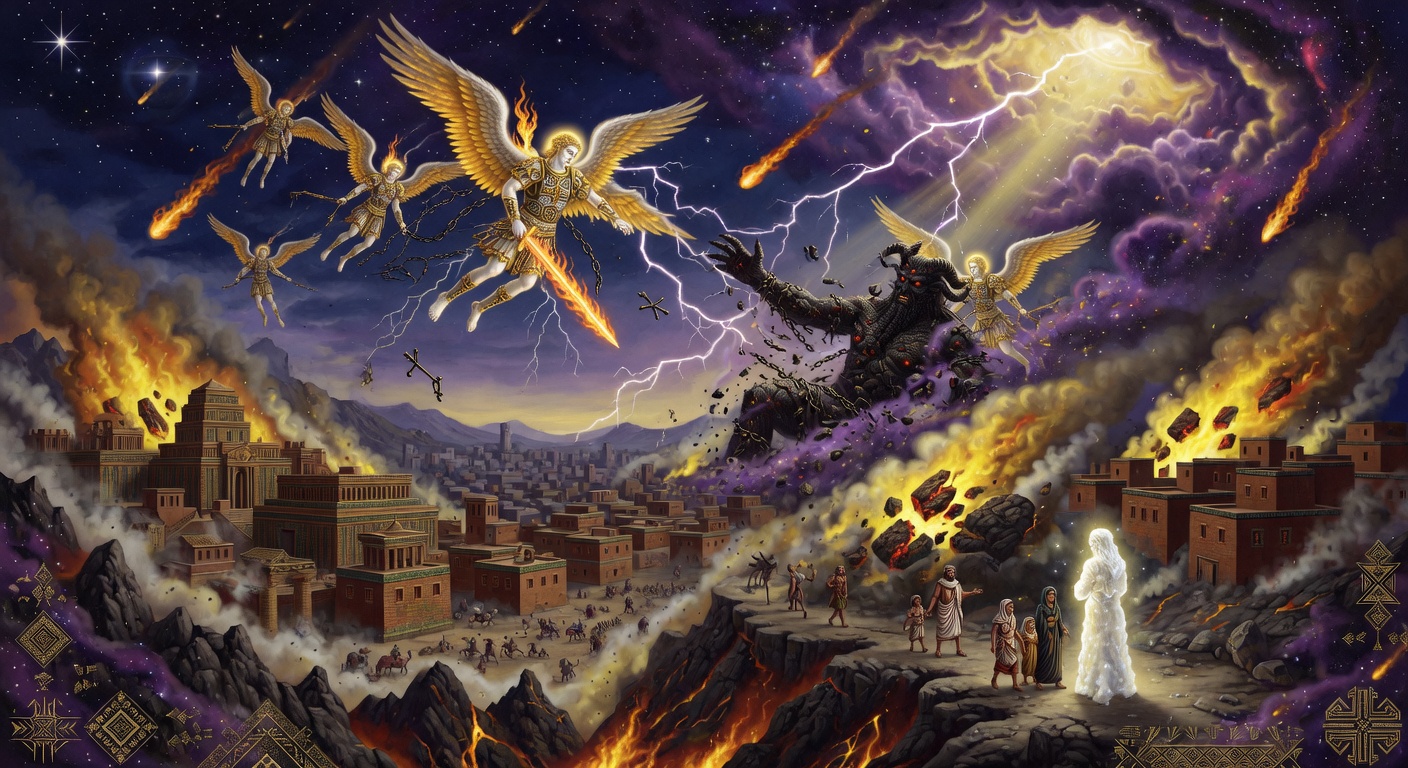
In the wake of Isaac's death, longstanding frictions between his sons over birthright and blessing ignite into armed confrontation, a pivotal episode preserved in the pseudepigraphal traditions that expand upon Genesis. These accounts portray the conflict not merely as a family quarrel but as a struggle over covenantal inheritance, with Esau's Edomite descendants arrayed against Jacob's household. The narratives underscore themes of divine election and protection that resonate across Second Temple literature, illustrating how ancestral rivalries prefigure later national hostilities between Israel and its neighbors. The Book of Jubilees provides the most structured retelling, placing the war in chapters 37 and 38. After Isaac's burial, Esau, influenced by his sons and the bitter memory of losing the blessing, assembles forces from Edom, Moab, and surrounding peoples to seize Canaan by force. Jubilees emphasizes Esau's oath-breaking and moral decline, contrasting it with Jacob's restraint; the ensuing battle sees Jacob's sons, particularly Judah, repel the invaders. Esau himself falls to Judah's arrow, fulfilling earlier patriarchal curses and securing Jacob's line in the land without direct angelic intervention, though the text implies providential oversight through the patriarch's prayers and the sons' unity. A parallel expansion appears in the Book of Jasher, especially chapters 56 and 57, which supplies tactical details of the campaign, including sieges and individual combats that heighten the drama of familial betrayal. Here the conflict extends beyond Esau's immediate challenge to involve his grandsons, reinforcing the generational stakes. Within the broader Enochic and Jubilean corpus, this episode functions as an etiological explanation for enduring enmity with Edom while echoing Enoch's own visions of cosmic judgment on rebellious powers. It thus bridges patriarchal history with apocalyptic expectations, reminding readers that fidelity to the covenant brings deliverance even amid overwhelming odds.
Judgment
Exodus
-
The Plagues as Warfare on Egypt
God/Moses vs. Pharaoh and Egypt
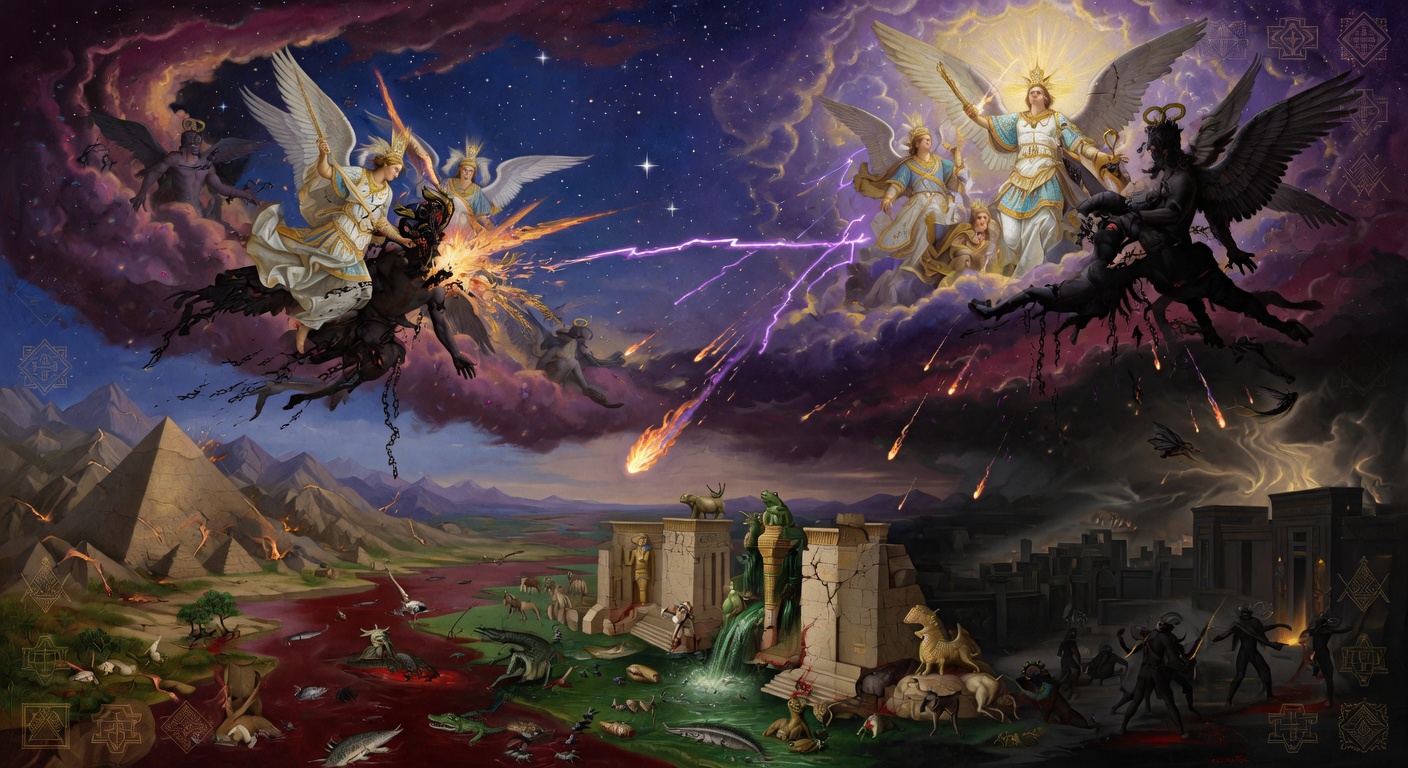
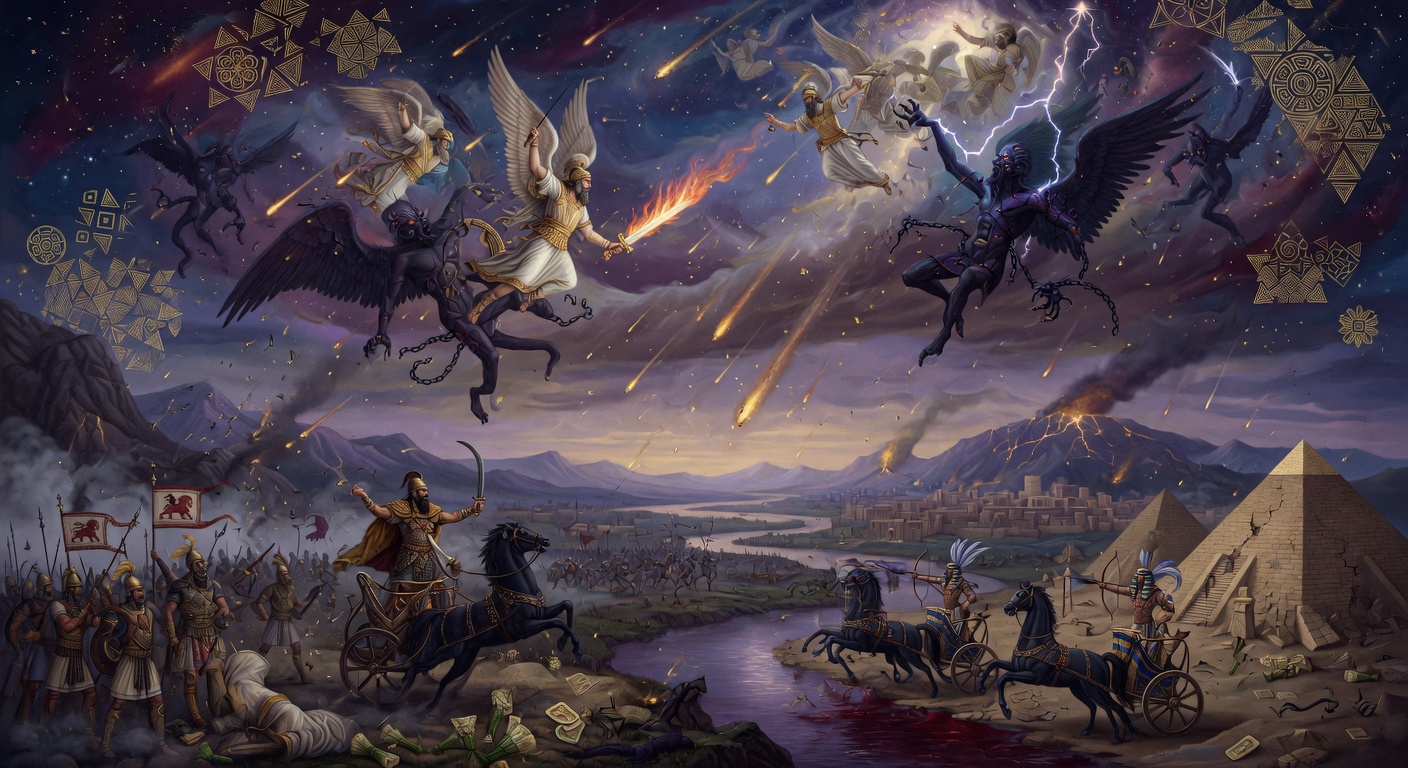
In the pseudepigraphal traditions surrounding the Exodus, the sequence of plagues functions less as isolated judgments and more as a structured campaign against the spiritual and political architecture of Egypt. The Book of Jubilees, particularly in chapter 48, frames these events within an ongoing struggle involving Mastema, the adversarial prince who empowers Pharaoh’s resistance. Here the successive afflictions—turning the Nile to blood, unleashing frogs and insects, striking livestock and human flesh—are presented as targeted reversals of Egyptian claims to divine protection, demonstrating that the gods of the land possess no independent authority once the Most High intervenes through his servants. The Book of Jasher supplies additional narrative texture, recounting how each plague directly undermined specific cultic centers and royal prerogatives. In chapters 79 and 80 the hailstorm is shown destroying crops sacred to agricultural deities, while the three-day darkness is depicted as extinguishing the ritual fires of Ra and extinguishing the authority of the magicians who had previously claimed parity with Moses. These expansions emphasize that the plagues operated simultaneously on physical and cosmic levels, eroding both the material wealth of Egypt and the perceived power of its pantheon. Although 1 Enoch itself does not recount the Exodus, its portrayal of the Watchers and their illicit transmission of heavenly knowledge provides the broader mythological backdrop against which later writers understood Egypt’s resistance. The same angelic rebellion that corrupted the earth before the flood is seen as continuing through the sorcerers and idols of Pharaoh’s court, making the plagues a further stage in the primordial conflict between the holy angels and the forces of corruption. Within this tradition the final plague against the firstborn therefore serves as the decisive blow, severing the line of transmission by which illicit power had been maintained. Taken together, these accounts present the plagues not merely as punitive measures but as deliberate warfare aimed at dismantling an entire system of rival sovereignty. Readers encounter a narrative in which natural elements become weapons, Egyptian religion is systematically exposed, and the supremacy of the divine order is reasserted through a carefully graduated series of assaults.
-
Crossing of the Red Sea
Israel vs. Egyptian Army
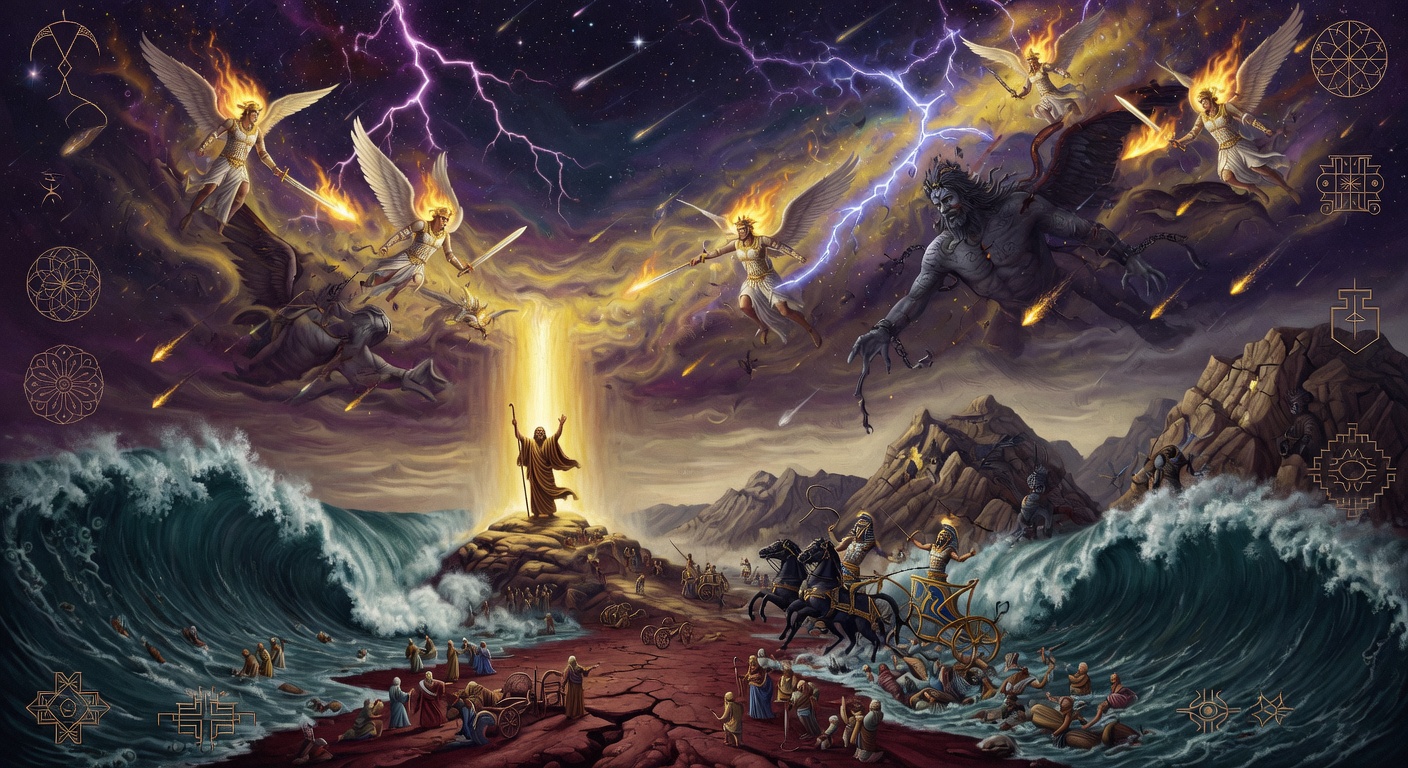
In the ancient retellings of Israel's deliverance, the confrontation at the sea stands as a decisive moment of divine judgment upon imperial power. The Book of Jubilees frames this event within a cosmic struggle involving Mastema, the adversarial prince, who incites Pharaoh to pursue the escaping Israelites with his chariots and horsemen. Jubilees 48 describes how the Egyptians, hardened in their resolve, advance into the divided waters only to face reversal, their forces engulfed as the sea returns to its strength. This account emphasizes not merely escape but the annihilation of an entire military host, underscoring themes of retribution that echo the Enochic visions of heavenly beings cast down for their rebellion. The Book of Jasher expands the narrative with vivid tactical detail, portraying the Israelite camp's passage between towering walls of water while the pursuing army, led by Pharaoh himself, becomes mired in the seabed. Chapters 81 and 82 recount how the Egyptians, confident in their superior numbers and weaponry, press forward until the waters collapse upon them at dawn, leaving no survivor among the elite forces. Such embellishments heighten the sense of a true battlefield reversal, where natural elements serve as instruments of celestial command rather than random catastrophe. Within the broader Enochian tradition, this crossing resonates with recurring motifs of separation between the righteous and the wicked, akin to the flood judgments and the binding of the Watchers in 1 Enoch. The event illustrates how divine sovereignty intervenes in human conflicts to preserve a chosen line, prefiguring eschatological battles where oppressive powers face ultimate overthrow. Readers encounter here a theology of history in which the sea itself becomes an agent of covenant fidelity, transforming a moment of peril into the foundation for Israel's identity as a people delivered through overwhelming might.
-
Battle with Amalek at Rephidim
Israel (Joshua) vs. Amalek
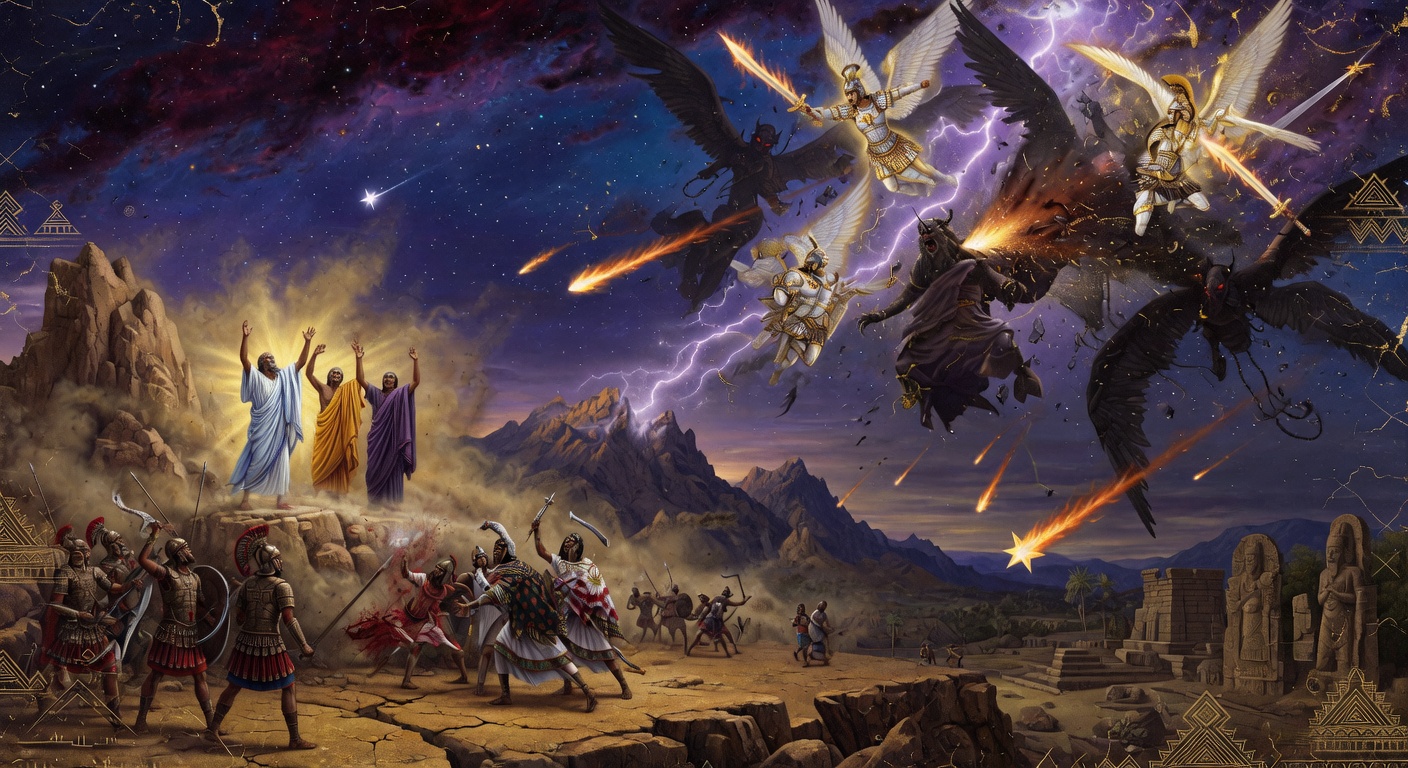
In the wake of Israel's deliverance from Egypt and the miraculous provision of water from the rock at Horeb, the fledgling nation faced its first military test in the wilderness. This confrontation with the Amalekites at Rephidim underscores the precarious transition from slavery to sovereignty, where divine aid intertwined directly with human leadership and communal resolve. The canonical account in Exodus finds notable expansion in the Book of Jasher, which supplies extended narrative details on the tactical preparations and the spiritual dynamics at play during the clash. The Book of Jasher portrays Joshua as the field commander directing the Israelite forces while Moses ascends a nearby hill with Aaron and Hur. There, the outcome hinged on Moses maintaining his hands raised in supplication, a posture that aligned Israel's fortunes with heavenly support. When fatigue caused his arms to lower, Amalek gained ground, prompting Aaron and Hur to steady him until sunset and secure victory. Jubilees situates this episode within a broader framework of covenantal testing, noting Amalek's aggression as an early manifestation of enmity from Esau's lineage that would echo through later generations. Within the wider corpus of ancient Jewish pseudepigrapha that includes 1 Enoch and Jubilees, the episode highlights themes of intercession and divine sovereignty over historical conflicts. It illustrates how the patriarchs' descendants navigated threats through a combination of martial action and ritual dependence on the divine presence, prefiguring later wilderness trials. Scholars note that such retellings emphasize the cosmic stakes involved, where earthly battles reflected larger patterns of order prevailing against chaos, inviting readers to consider the enduring lessons of faith under pressure.