Ancient Timeline
33 events spanning the full narrative of all three books - from Creation and the fall of the Watchers through the Patriarchs to the Exodus and Conquest.
Thirty-three events trace the full arc of sacred history across all three books. From Creation through the Watchers descent, the Flood, and the patriarchal age to the Exodus and Conquest of Canaan - each event reshapes the relationship between God and creation. The timeline reveals a recurring pattern: divine order established, broken by rebellion, judged, then renewed through covenant with a faithful remnant.
Primeval History
-
Creation Beginning
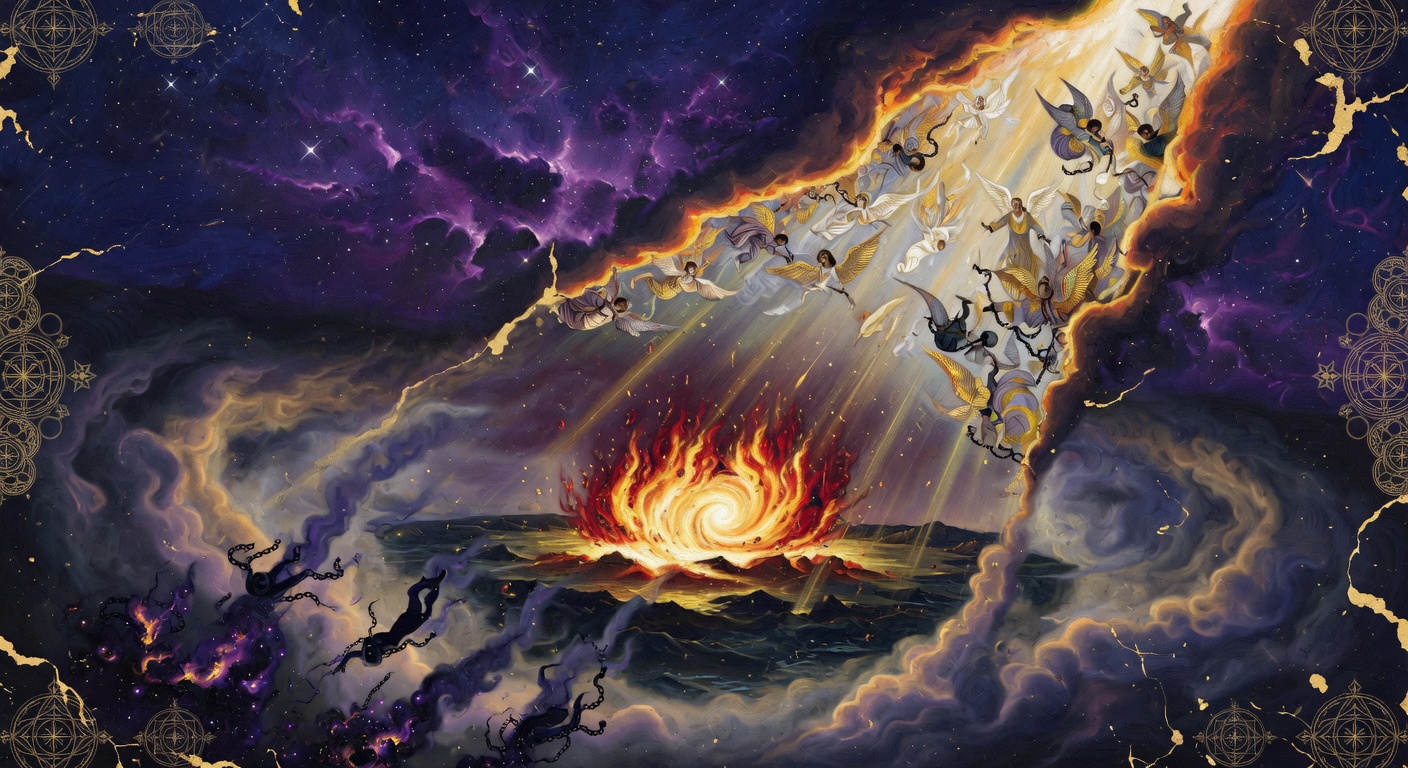
○ TraditionalCreation is the foundational event when God established heaven and earth in six days, creating angels on the first day and sanctifying the seventh as the Sabbath - the beginning of the sacred chronology. In the pseudepigraphal traditions of Second Temple Judaism, the account of creation extends far beyond the concise narrative of Genesis, unfolding instead as a revelation delivered directly to Moses during his forty days on Mount Sinai. The Book of Jubilees presents this expanded cosmogony as divine dictation, framing the six days of creation as a meticulously ordered sequence in which angels play an essential role from the outset. This retelling situates the origins of the world within a larger covenantal history, linking the primordial acts of God to the observance of festivals, sabbaths, and laws later given to Israel. Jubilees chapter 2 details the creation week with notable elaborations: on the first day God creates the heavens, the earth, and all spirits, including the angels of the presence and the angels of sanctification, while the luminaries appear only on the fourth day. The text stresses that the Sabbath was hallowed from the beginning, observed even by the highest angels, thereby establishing a pattern of sacred time that precedes humanity. These details underscore a worldview in which cosmic order and ritual law are intertwined from the moment of origin, reflecting the text’s broader concern with calendrical precision and covenant fidelity. The Book of Enoch complements this portrait through its cosmological visions, particularly in the Astronomical Book, where the movements of the heavenly bodies are traced back to their establishment at creation, governed by angelic overseers. Meanwhile, the Book of Jasher supplies additional narrative color, describing the formation of Adam from dust gathered from the four corners of the earth and the subsequent naming of the creatures. Together these works portray creation not as a distant event but as the foundation of an ongoing divine order in which human obedience participates in heavenly realities.
-
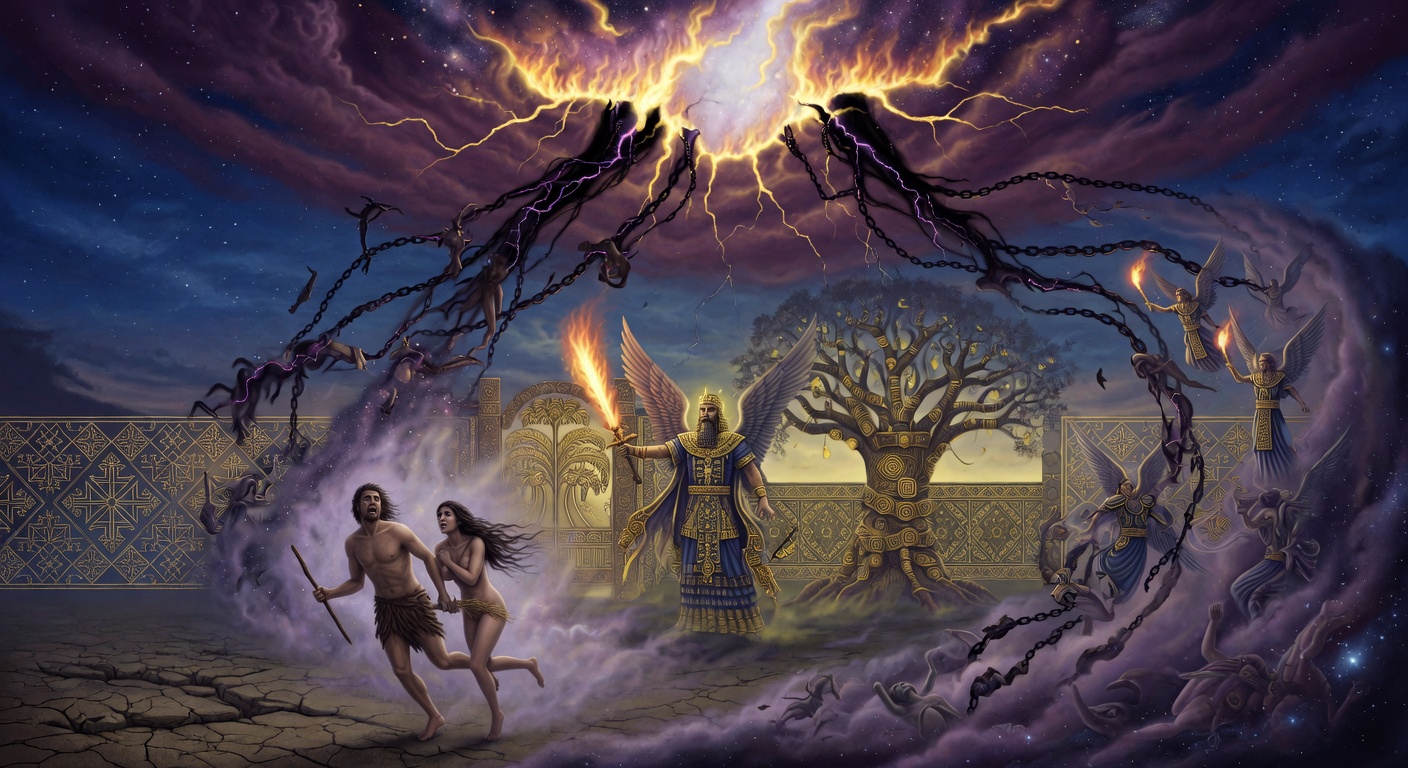
Expulsion from Eden Beginning
○ TraditionalThe Expulsion from Eden is the moment when Adam and Eve were driven from the garden after transgressing the divine command - losing access to the Tree of Life and beginning the age of mortality and toil. Jubilees 3 provides the most detailed account, specifying that Adam and Eve spent seven years in the garden before the serpent's deception. The text emphasizes that their expulsion was not merely punishment but a crossing of sacred boundaries guarded by angels. The Book of Jasher expands on the immediate aftermath, describing their grief and the beginning of agricultural labor. Within the Enochian tradition, this event establishes the pattern of sacred boundaries that the Watchers will later violate on a cosmic scale. This event represents a critical juncture in the sacred chronology that the Books of Enoch, Jubilees, and Jasher collectively preserve. Within the jubilee framework that Jubilees meticulously tracks, it occupies a precise position in the divine timetable - not an accident of history but a predetermined turning point inscribed on the heavenly tablets before creation. The expanded narratives in Jasher and the theological interpretations in Jubilees together provide a multidimensional understanding of this moment that illuminates both its immediate consequences and its role in the larger pattern of divine action spanning from creation to final judgment.
-
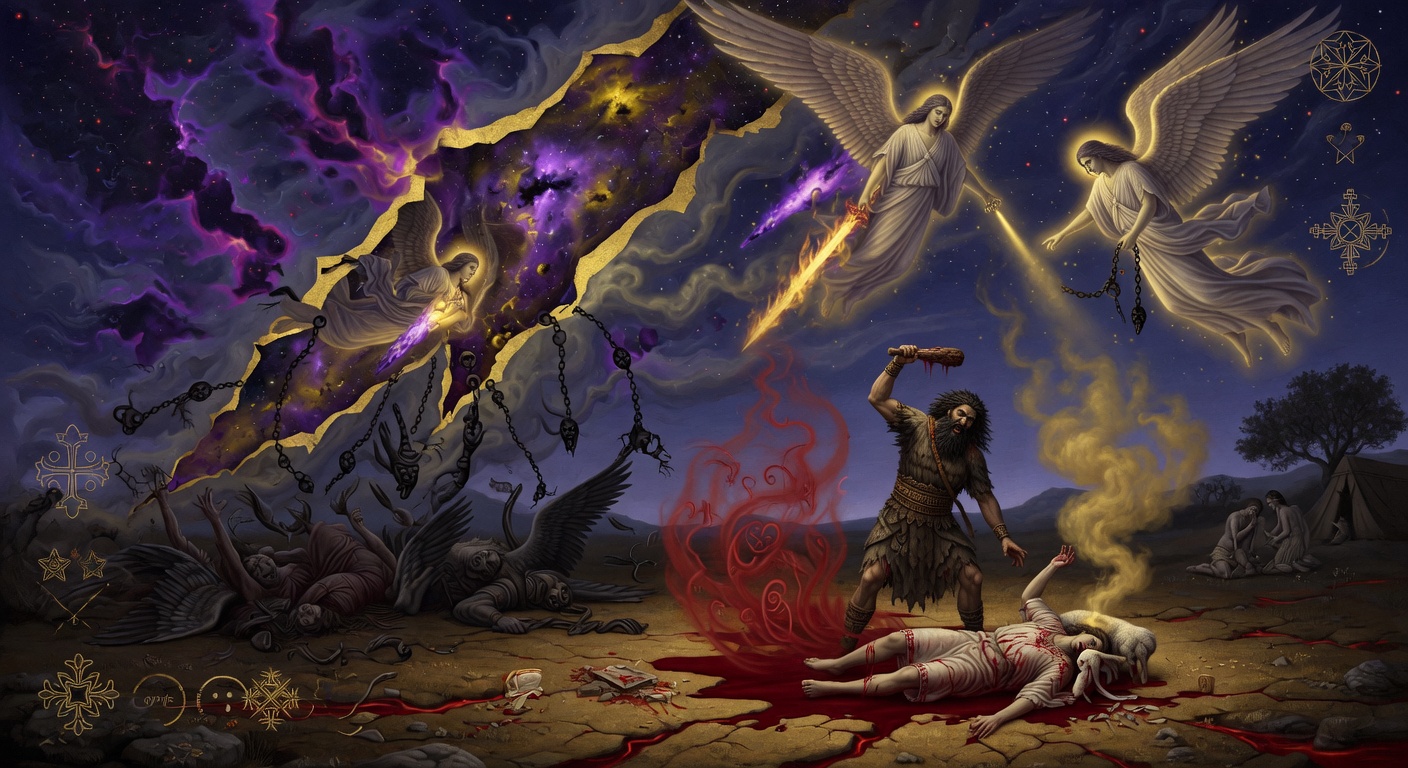
Murder of Abel Antediluvian
○ TraditionalThe Murder of Abel by his brother Cain is the first act of human violence - a fratricide born from jealousy over offerings that introduces bloodshed into the world and establishes the pattern of the righteous suffering at the hands of the wicked. Jubilees 4 records the murder within its precise jubilee chronology, emphasizing the divine curse upon Cain and the establishment of blood-guilt as a principle. Jasher expands the narrative with extended dialogue revealing Cain's motives and the immediate consequences for the family. In the Enochic tradition, Abel's blood crying from Sheol (1 Enoch 22) demonstrates that divine justice extends beyond death itself. This event represents a critical juncture in the sacred chronology that the Books of Enoch, Jubilees, and Jasher collectively preserve. Within the jubilee framework that Jubilees meticulously tracks, it occupies a precise position in the divine timetable - not an accident of history but a predetermined turning point inscribed on the heavenly tablets before creation. The expanded narratives in Jasher and the theological interpretations in Jubilees together provide a multidimensional understanding of this moment that illuminates both its immediate consequences and its role in the larger pattern of divine action spanning from creation to final judgment.
-

Translation of Enoch Antediluvian
○ TraditionalThe Translation of Enoch is the supernatural event in which the seventh patriarch was taken directly into heaven without dying - bypassing mortality as a reward for his faithfulness and establishing him as the visionary scribe of celestial secrets. Jubilees 4:17-23 describes Enoch as the first to learn writing and record the signs of heaven, noting his removal to the Garden of Eden where he records judgment. The Book of Jasher chapter 3 expands on his reign over humanity and his gradual withdrawal from the world. In 1 Enoch 70, the translation is presented as the culmination of his heavenly journeys, with angels escorting him to his permanent dwelling among the holy ones. This event represents a critical juncture in the sacred chronology that the Books of Enoch, Jubilees, and Jasher collectively preserve. Within the jubilee framework that Jubilees meticulously tracks, it occupies a precise position in the divine timetable - not an accident of history but a predetermined turning point inscribed on the heavenly tablets before creation. The expanded narratives in Jasher and the theological interpretations in Jubilees together provide a multidimensional understanding of this moment that illuminates both its immediate consequences and its role in the larger pattern of divine action spanning from creation to final judgment.
-
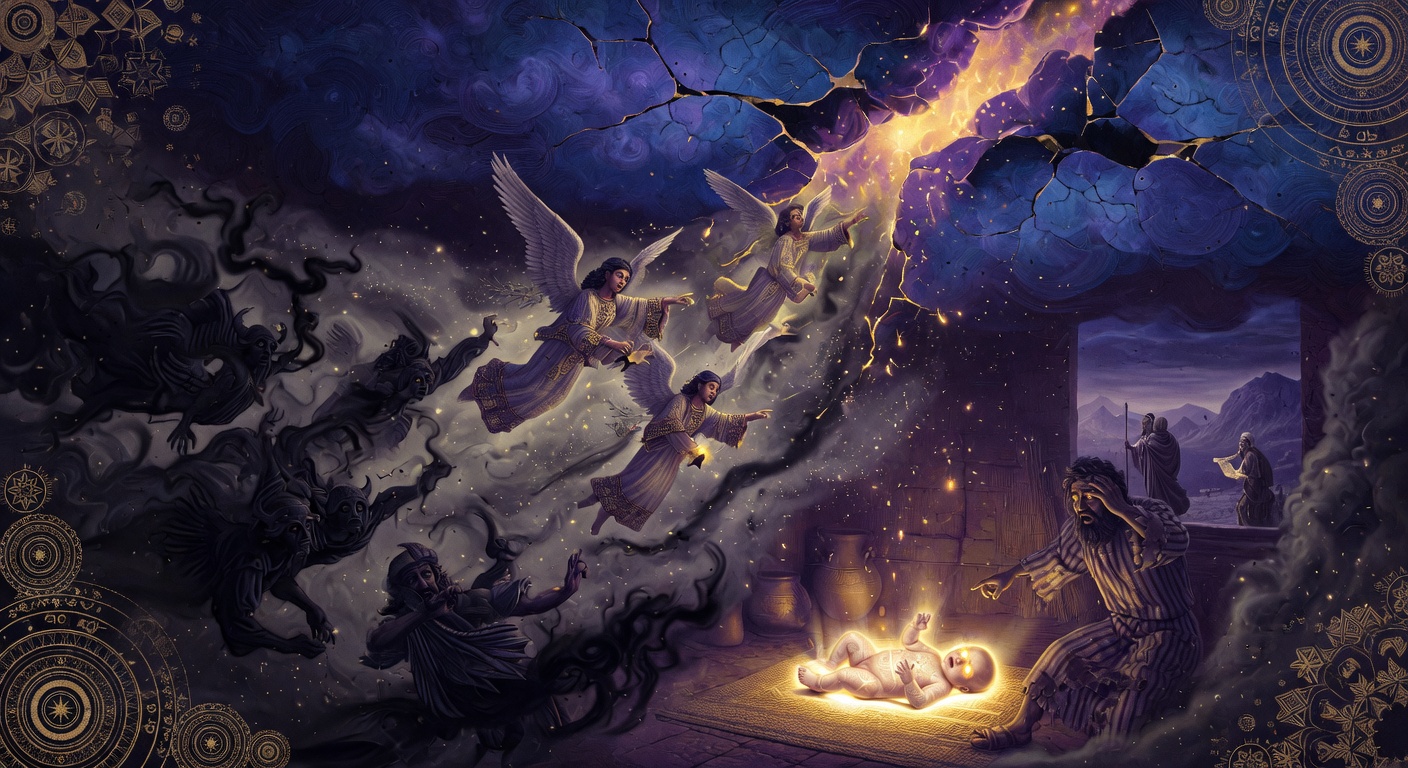
Birth of Noah Antediluvian
○ TraditionalThe Birth of Noah is marked by supernatural signs - his unusual appearance alarming his father Lamech, who consults Methuselah and ultimately Enoch's writings to understand that this child is destined to survive the coming judgment and preserve life through the Flood. 1 Enoch 106-107 describes the infant Noah glowing with unearthly brightness, his eyes illuminating the house, and Lamech fearing he was fathered by the Watchers. Methuselah travels to the ends of the earth to consult Enoch, who confirms the child is legitimate and will be the righteous remnant through whom creation survives. Jasher 4 records the birth within its genealogical framework, noting the growing corruption that makes Noah's righteousness exceptional. This event represents a critical juncture in the sacred chronology that the Books of Enoch, Jubilees, and Jasher collectively preserve. Within the jubilee framework that Jubilees meticulously tracks, it occupies a precise position in the divine timetable - not an accident of history but a predetermined turning point inscribed on the heavenly tablets before creation. The expanded narratives in Jasher and the theological interpretations in Jubilees together provide a multidimensional understanding of this moment that illuminates both its immediate consequences and its role in the larger pattern of divine action spanning from creation to final judgment.
-
Fall of the Watchers Antediluvian
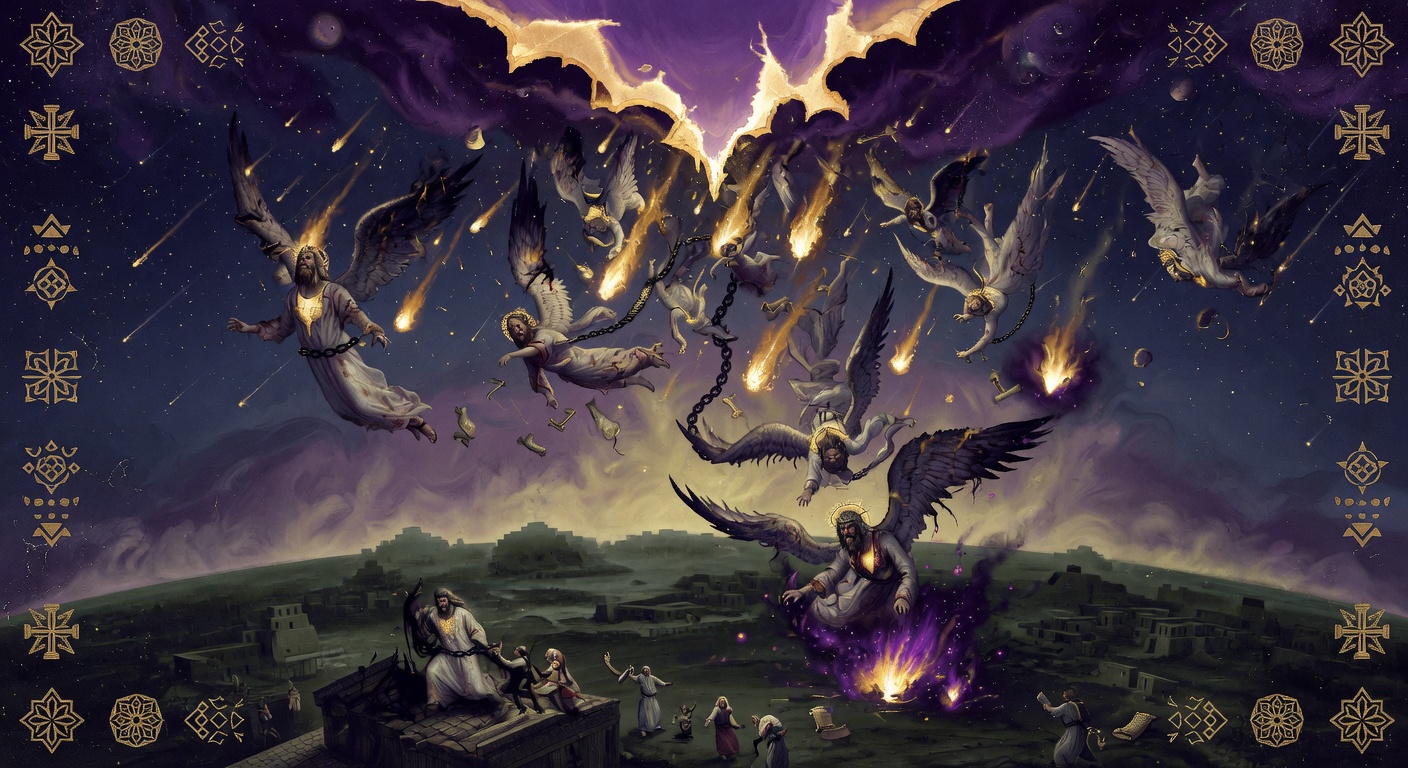
○ TraditionalThe Fall of the Watchers is the catastrophic event when two hundred angels descended upon Mount Hermon in the days of Jared, swearing an oath to take human wives and share forbidden knowledge. In the landscape of Second Temple Jewish apocalyptic writings, accounts of rebellious angels descending to earth serve as a crucial framework for understanding the spread of wickedness that culminates in the biblical flood. These narratives expand upon the terse reference in Genesis 6 to the "sons of God" who took human wives, transforming a brief notice into an elaborate etiology of sin, forbidden knowledge, and cosmic disorder. Within this tradition the event functions not merely as backstory but as a theological explanation for violence, idolatry, and the corruption of the natural order that necessitated divine intervention through Noah. The primary source for this episode appears in the Book of Enoch, particularly chapters 6 through 16. There the angels, identified as Watchers, number two hundred and descend upon Mount Hermon, where they bind themselves by oath under the leadership of Semjaza and Azazel. They take human wives, beget giant offspring known as the Nephilim, and impart illicit arts including metallurgy, cosmetics, sorcery, and the making of weapons. These revelations accelerate human depravity, while the giants themselves ravage the earth. The text then describes the archangels' report to the Most High and the subsequent divine decree of judgment, binding the Watchers until the final day and consigning their progeny to mutual destruction. Parallels and elaborations occur in the Book of Jubilees and the Book of Jasher. Jubilees 4:15 and 5:1-2 portray the Watchers as descending in the days of Jared to instruct humanity, only to become ensnared by lust and to produce beings whose bloodshed pollutes the land. Jasher likewise records the descent of the "sons of God" and the resulting moral collapse, emphasizing the giants' tyranny. Together these works situate the episode within an Enochic worldview that links angelic transgression, human suffering, and the necessity of eschatological judgment, offering readers a coherent narrative bridge between primeval history and later apocalyptic expectations.
-
The Great Flood Antediluvian
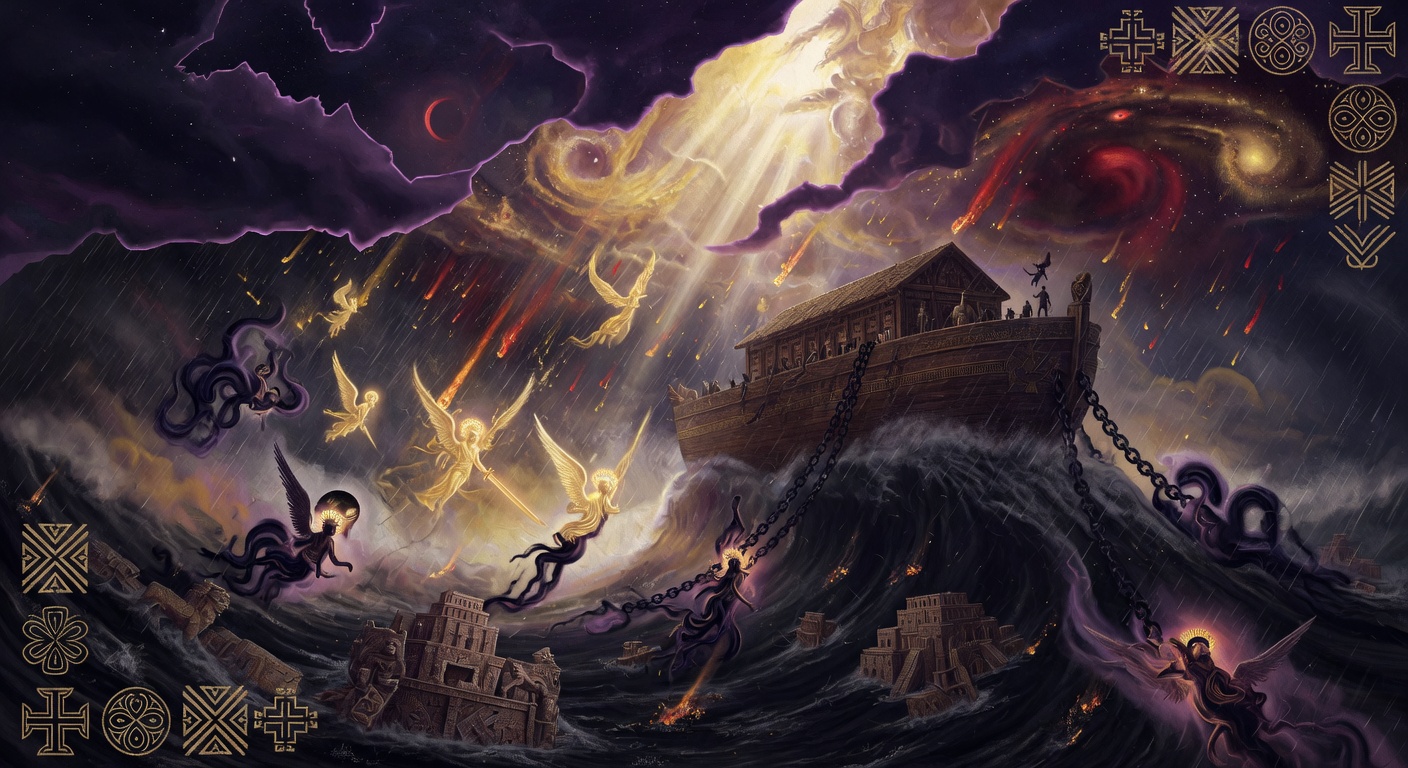
○ TraditionalThe Flood is the divine judgment that destroyed all life on earth except Noah and those preserved in the Ark - the necessary purge of corruption introduced by the Watchers and their giant offspring. In the Enochian tradition, the cataclysmic deluge emerges as the inevitable consequence of profound cosmic disorder, where the boundaries between the heavenly and earthly realms were violently breached. The Book of Enoch describes how a cadre of angels, led by Semjaza and Azazel, descended upon Mount Hermon and took human wives, imparting forbidden knowledge of metallurgy, cosmetics, and warfare that fueled rampant violence and moral decay across the earth. This transgression produced the monstrous Nephilim, whose insatiable appetites ravaged both humanity and the natural order, prompting the archangels to petition the Most High for judgment as recounted in chapters 6 through 11. The Book of Jubilees elaborates on this narrative by framing the flood within a structured chronology of jubilees, emphasizing that the Watchers’ defilement of sacred laws accelerated the earth’s pollution through bloodshed and idolatry. Noah stands apart as the sole righteous figure who receives divine instruction to construct an ark, preserving not only his family but also the seeds of future life, a detail harmonized across Jubilees 5 and the visionary warnings in 1 Enoch 65-67. These texts portray the event less as arbitrary punishment and more as a necessary purification, restoring balance after the angelic rebellion had threatened the created order itself. The Book of Jasher supplies further narrative texture, depicting the pre-flood generations’ escalating wickedness and Noah’s repeated, unheeded calls for repentance over the course of many decades. Within this broader corpus, the deluge functions as a pivotal turning point that severs the antediluvian age from the renewed covenant established afterward, underscoring themes of divine justice tempered by mercy toward the faithful remnant. Readers encounter here a worldview in which human and angelic actions carry cosmic weight, with the flood serving as both historical rupture and enduring moral exemplar for subsequent generations.
Post-Flood Era
-
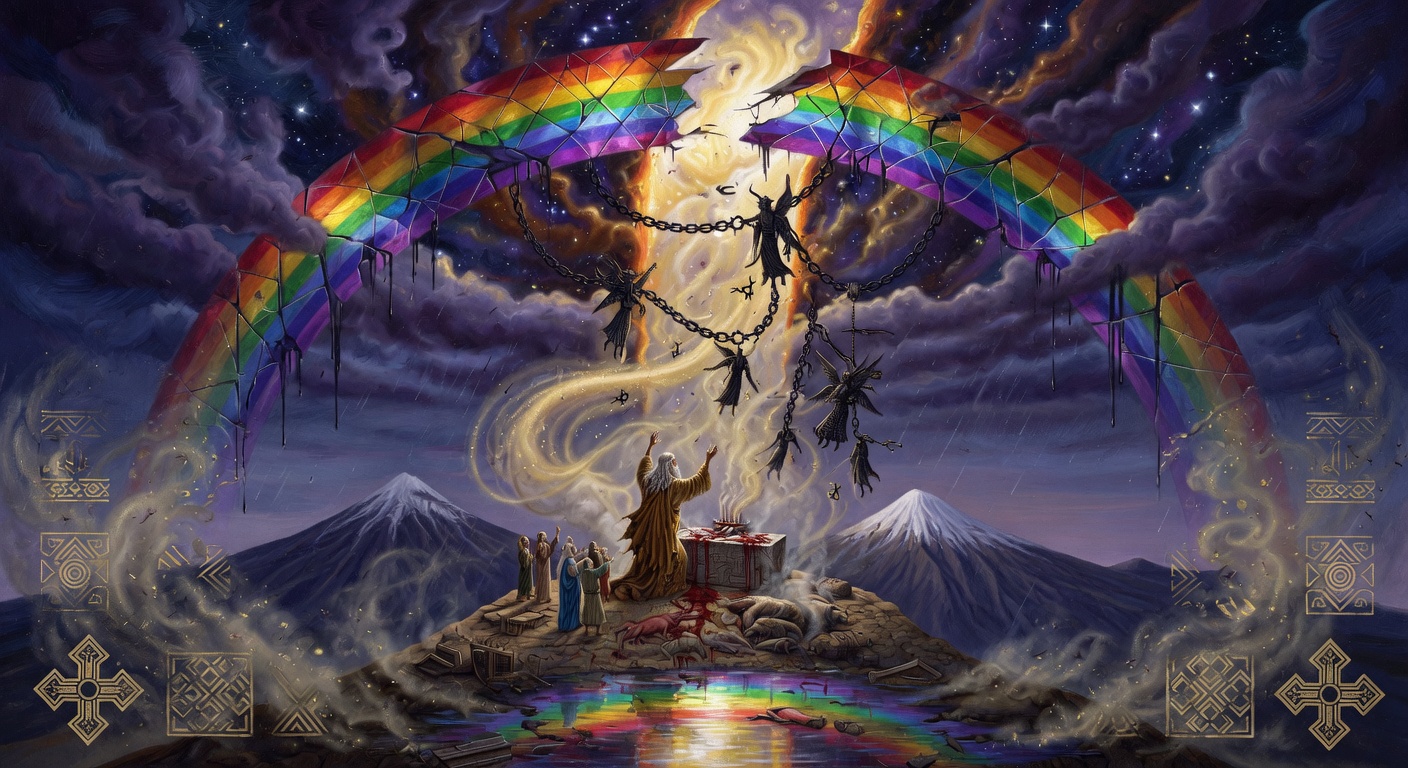
Noah's Covenant and the Rainbow Post-Flood
○ TraditionalNoah's Covenant is the universal promise made after the Flood, sealed by the rainbow - God's self-imposed oath never to destroy the earth by water again, establishing the first post-diluvian moral order with the prohibition of blood. Jubilees 6 provides the most detailed account, specifying that the covenant was renewed annually at the Feast of Weeks and included precise dietary laws. The Book of Jasher records Noah's altar on Ararat and the immediate establishment of laws governing bloodshed. Within the Enochian tradition, this covenant represents the pivot between the antediluvian chaos caused by the Watchers and the structured renewal of human civilization. This event represents a critical juncture in the sacred chronology that the Books of Enoch, Jubilees, and Jasher collectively preserve. Within the jubilee framework that Jubilees meticulously tracks, it occupies a precise position in the divine timetable - not an accident of history but a predetermined turning point inscribed on the heavenly tablets before creation. The expanded narratives in Jasher and the theological interpretations in Jubilees together provide a multidimensional understanding of this moment that illuminates both its immediate consequences and its role in the larger pattern of divine action spanning from creation to final judgment.
-
Rise of Nimrod Post-Flood
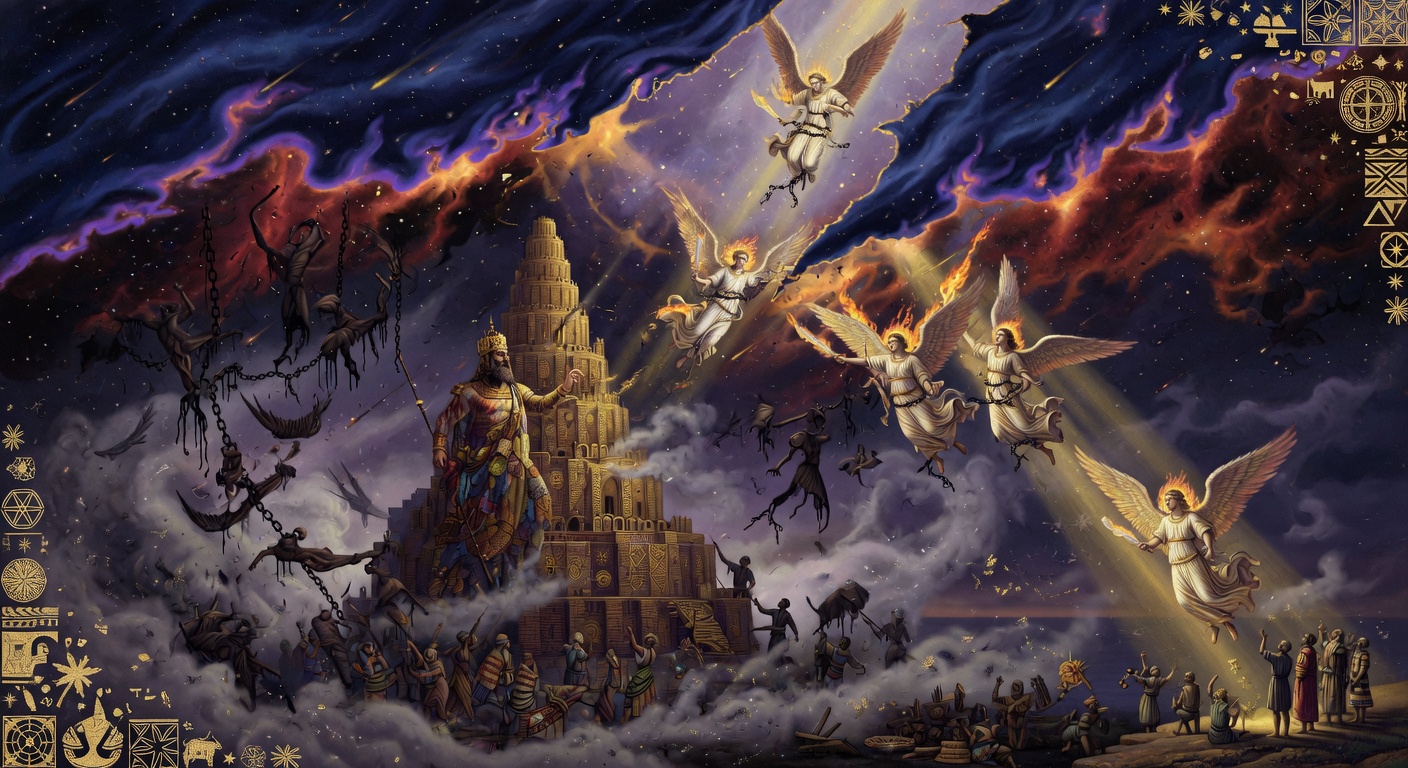
○ TraditionalThe Rise of Nimrod is the emergence of the first post-flood tyrant - a mighty hunter who establishes centralized human power in opposition to divine order, builds the first empire, and persecutes those who worship God alone. Jasher 7 provides the most detailed portrait, describing how Nimrod acquired the garments of Adam (stolen by Ham), which gave him power over animals and men. He gathers followers, establishes Babel and other cities, and demands worship as a god-king. His reign represents the human echo of the Watchers' rebellion - ambition that refuses divine boundaries. His later conflict with Abraham dramatizes the clash between tyrannical idolatry and emerging monotheism. This event represents a critical juncture in the sacred chronology that the Books of Enoch, Jubilees, and Jasher collectively preserve. Within the jubilee framework that Jubilees meticulously tracks, it occupies a precise position in the divine timetable - not an accident of history but a predetermined turning point inscribed on the heavenly tablets before creation. The expanded narratives in Jasher and the theological interpretations in Jubilees together provide a multidimensional understanding of this moment that illuminates both its immediate consequences and its role in the larger pattern of divine action spanning from creation to final judgment.
-
Division of the Earth Post-Flood
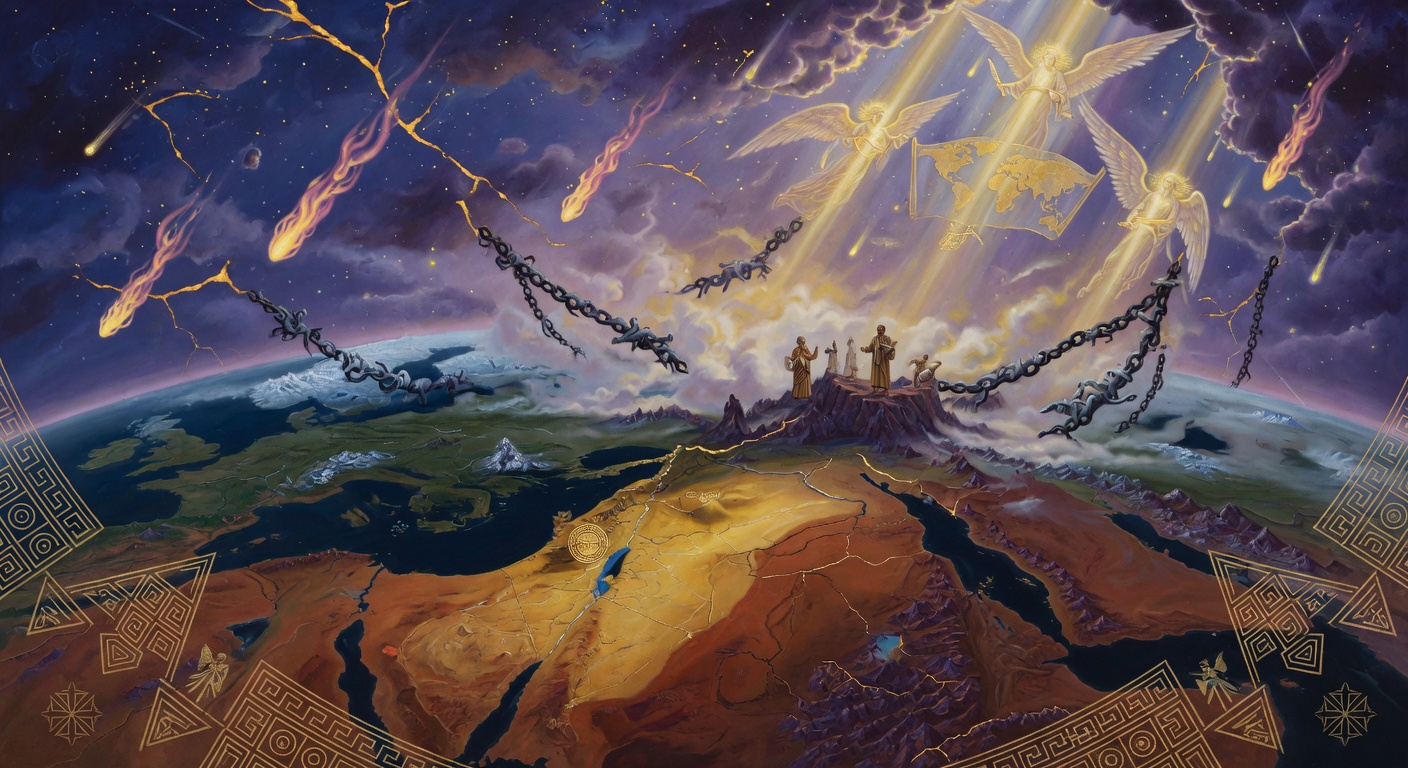
○ TraditionalThe Division of the Earth is the sacred apportionment of all lands among Noah's three sons by lot and divine oath - establishing territorial boundaries that Canaan would later illegally violate, setting up the conflict over the promised land. Jubilees 8-9 provides the most detailed geographic description of any ancient source, mapping Shem's central portion (including the future promised land), Ham's southern territories, and Japheth's northern expanses. The texts emphasize that these boundaries were sworn and sealed, making Canaan's later seizure of Shem's territory a violation of cosmic order. This event represents a critical juncture in the sacred chronology that the Books of Enoch, Jubilees, and Jasher collectively preserve. Within the jubilee framework that Jubilees meticulously tracks, it occupies a precise position in the divine timetable - not an accident of history but a predetermined turning point inscribed on the heavenly tablets before creation. The expanded narratives in Jasher and the theological interpretations in Jubilees together provide a multidimensional understanding of this moment that illuminates both its immediate consequences and its role in the larger pattern of divine action spanning from creation to final judgment.
-
Tower of Babel Post-Flood
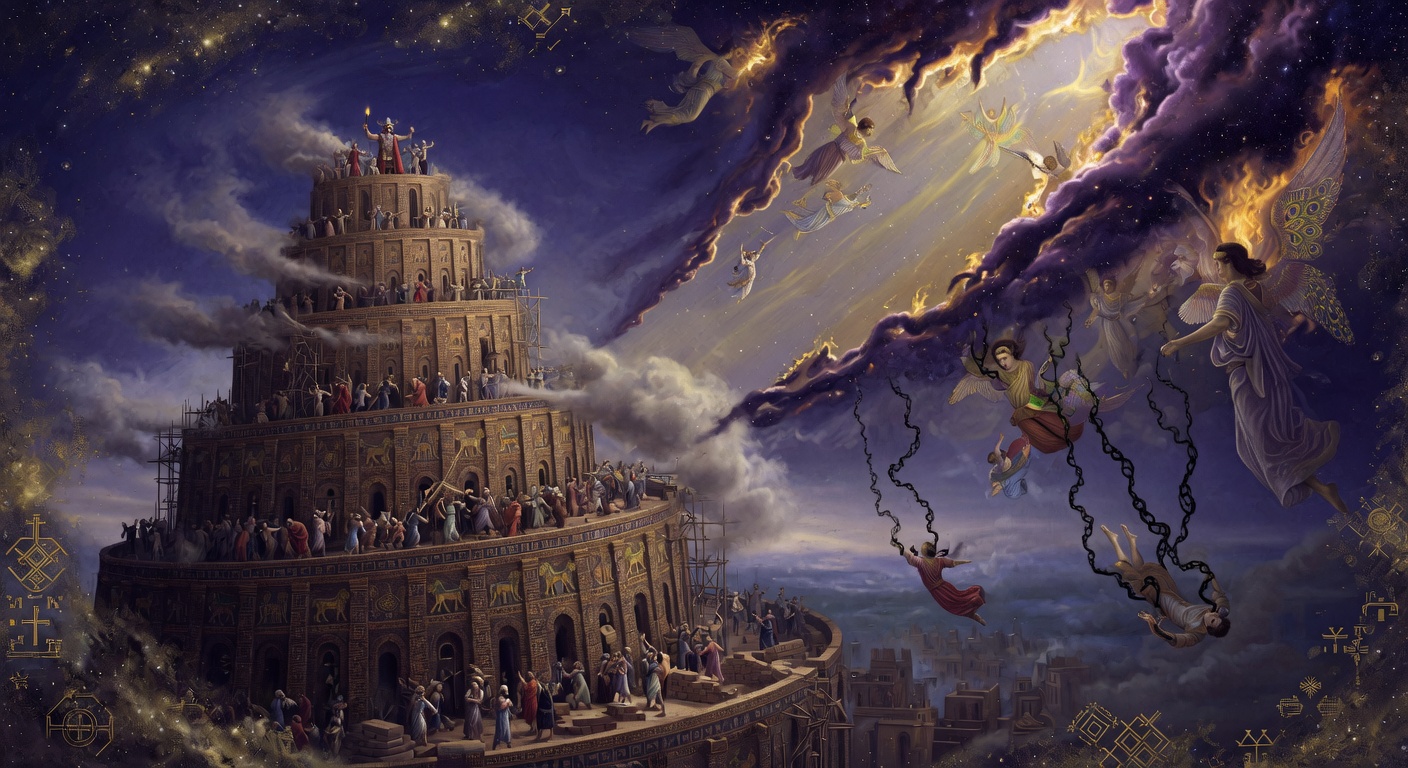
○ TraditionalThe Tower of Babel is the post-flood attempt by Nimrod and united humanity to build a structure reaching heaven - divine intervention through language confusion scattered the nations across the earth. Following the renewal of humanity after the flood waters receded, the descendants of Noah sought to reclaim dominion over the earth by constructing an immense structure in the plain of Shinar. Ancient accounts preserved in the Book of Jubilees and the Book of Jasher portray this endeavor as a collective act of defiance against the divine command to disperse and multiply across the lands. Under the leadership of Nimrod, whose lineage traces back through Cush, the people resolved to erect a city and a towering edifice whose summit would reach into the heavens, ensuring their name endured and shielding them from future judgments. Jubilees 10:18-21 notes how they baked bricks and used bitumen, laboring for years in unified purpose until the project provoked heavenly intervention. The texts emphasize that this ambition stemmed not merely from architectural pride but from a deeper rejection of the covenantal order established with Noah. In Jasher 9:23-35, Nimrod is depicted rallying the people with promises of security and renown, while the Book of Jubilees records the descent of divine beings who confused their single language into seventy tongues, halting construction and scattering the builders. This division is presented as a measured act of restraint rather than total destruction, preserving the human race while reasserting boundaries between heaven and earth. Within the broader Enochian corpus, such events echo the earlier transgressions of the Watchers, illustrating recurring patterns of human-angelic overreach that necessitate renewed divine oversight. These narratives situate the tower within a larger framework of generational accountability, where the confusion of speech marks the origin of distinct nations and the transmission of sacred knowledge through select lineages. The accounts underscore how linguistic fragmentation preserved fragments of primordial wisdom, later entrusted to figures like Enoch whose heavenly journeys reveal the mechanisms of cosmic order. Readers encounter here a meditation on unity's perils and the enduring tension between human aspiration and heavenly sovereignty.
Patriarchs
-
Abraham in the Fiery Furnace Patriarchal
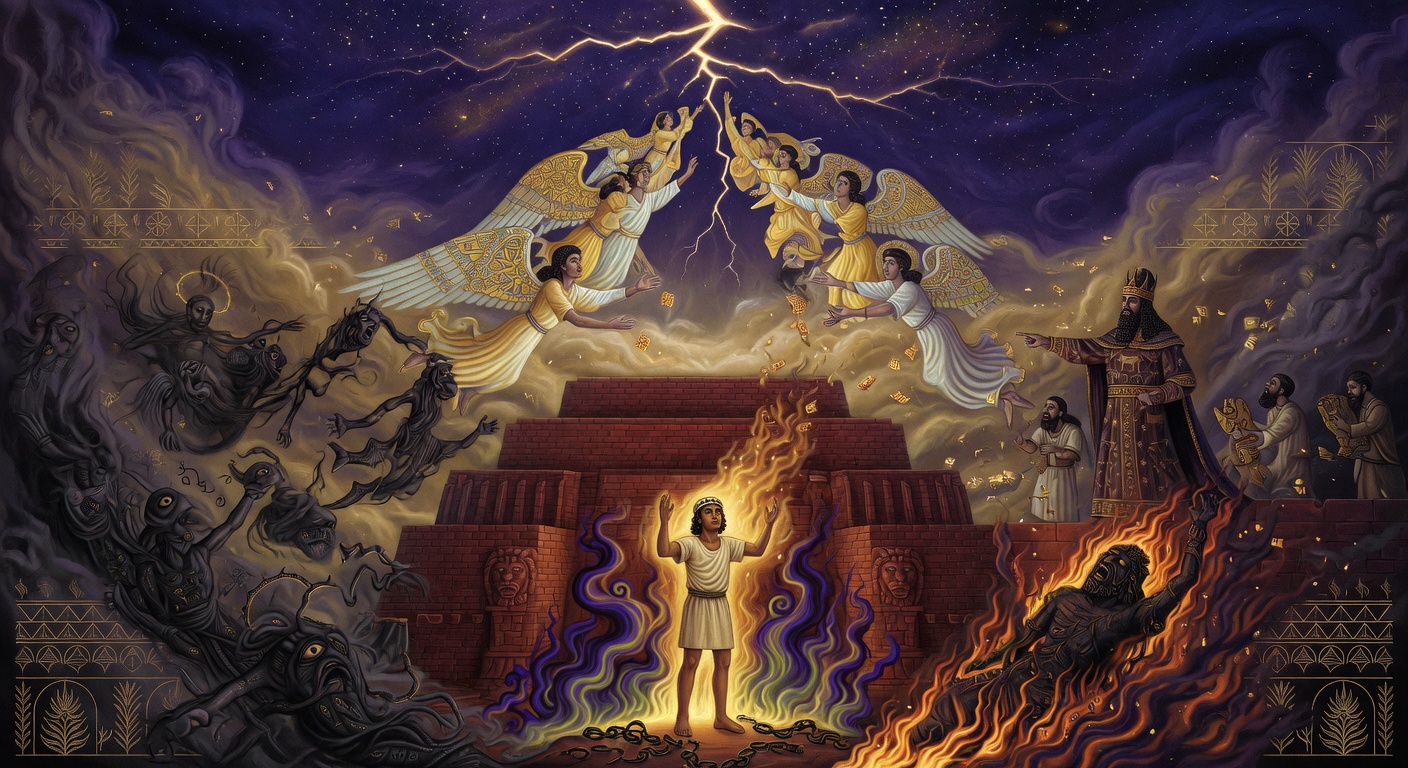
○ TraditionalAbraham in the Fiery Furnace is the dramatic episode unique to the Book of Jasher in which the young Abraham, condemned by Nimrod for destroying his father's idols, is cast into a furnace and miraculously delivered - his faith tested by fire before it would later be tested by sacrifice. Jasher 12 provides the full narrative: Abraham publicly challenges idol worship, Terah betrays him to Nimrod, and the king orders execution by burning. Abraham's brother Haran, who hesitated in his loyalty, perishes in the flames while Abraham emerges unharmed. This episode establishes Abraham's credentials as one who rejected the corrupted knowledge-systems descended from the Watchers' era. This event represents a critical juncture in the sacred chronology that the Books of Enoch, Jubilees, and Jasher collectively preserve. Within the jubilee framework that Jubilees meticulously tracks, it occupies a precise position in the divine timetable - not an accident of history but a predetermined turning point inscribed on the heavenly tablets before creation. The expanded narratives in Jasher and the theological interpretations in Jubilees together provide a multidimensional understanding of this moment that illuminates both its immediate consequences and its role in the larger pattern of divine action spanning from creation to final judgment.
-
Abraham Departs for Canaan Patriarchal
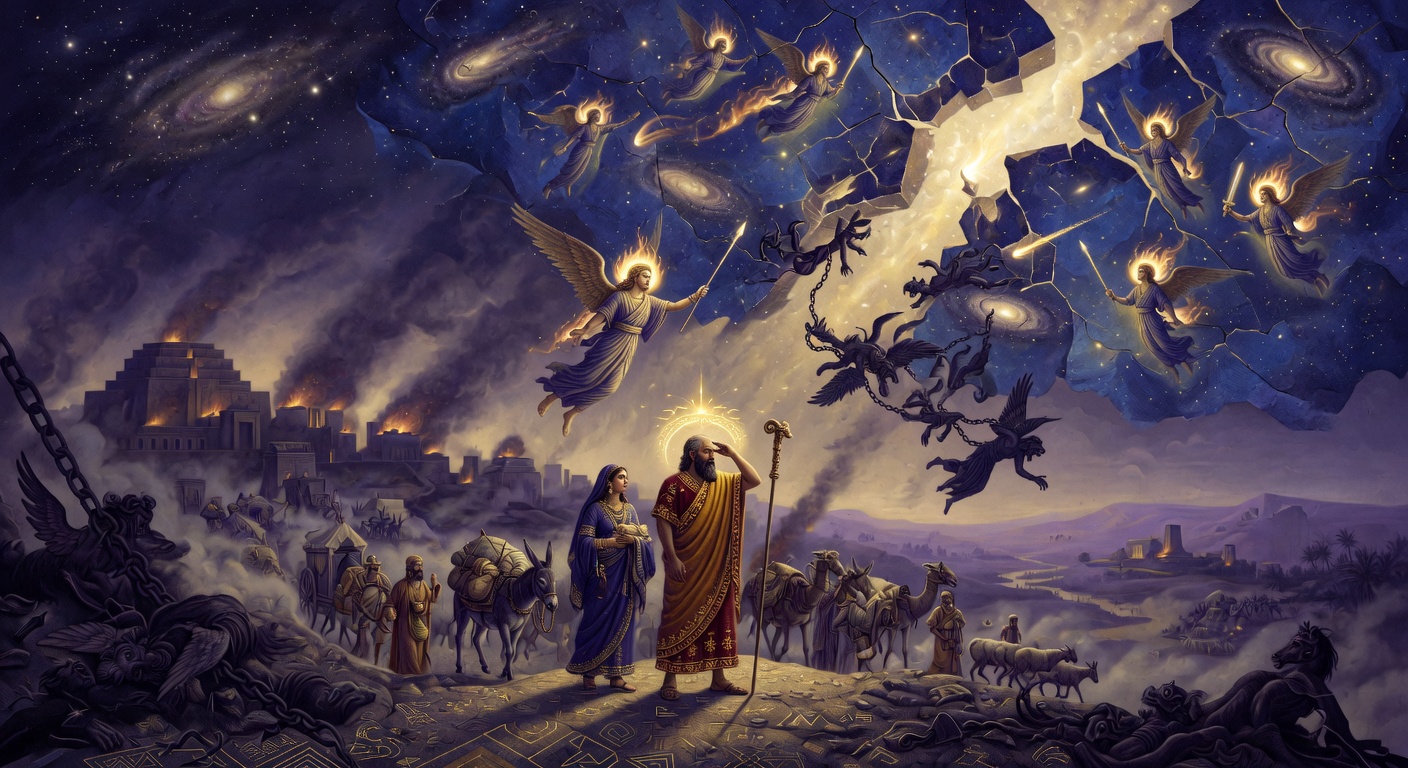
○ TraditionalAbraham's Departure for Canaan is the decisive break with the idolatrous world of Mesopotamia - a journey of faith from Ur through Haran into an unknown land, following a divine command that would reshape all subsequent history. Jubilees 12:28-31 records the divine command and Abraham's immediate obedience, departing Haran at age seventy-five with Sarai, Lot, and all they possessed. Jasher 13 expands on the family dynamics - Terah's reluctance, the years in Haran, and the final journey south. This departure is presented not merely as relocation but as the beginning of a new covenant community separated from the nations corrupted since Babel. This event represents a critical juncture in the sacred chronology that the Books of Enoch, Jubilees, and Jasher collectively preserve. Within the jubilee framework that Jubilees meticulously tracks, it occupies a precise position in the divine timetable - not an accident of history but a predetermined turning point inscribed on the heavenly tablets before creation. The expanded narratives in Jasher and the theological interpretations in Jubilees together provide a multidimensional understanding of this moment that illuminates both its immediate consequences and its role in the larger pattern of divine action spanning from creation to final judgment.
-
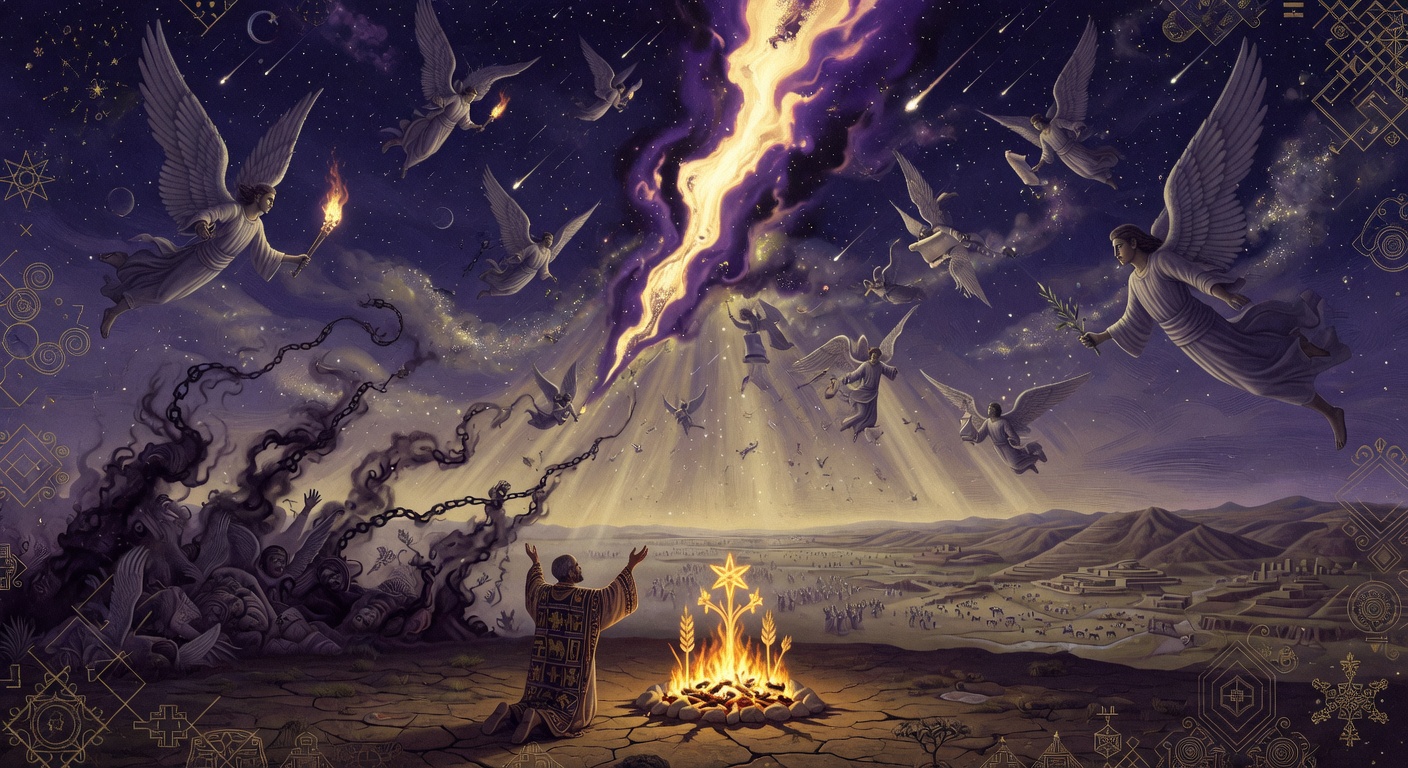
Covenant with Abraham Patriarchal
○ TraditionalThe Covenant with Abraham is the pivotal moment when God binds himself by oath to give land, descendants, and blessing to one man's lineage - the promise that shapes all subsequent patriarchal history. In the rich narratives of Second Temple Jewish literature, the divine assurances extended to Abraham represent a decisive renewal of the cosmic order first articulated after the flood, positioning the patriarch as a central figure in the restoration of righteousness amid a world still shadowed by ancient rebellions. These texts portray the promises of numerous descendants, possession of the land, and blessings extending to all nations not merely as personal favors but as elements inscribed within the heavenly tablets that govern history itself, linking Abraham's fidelity to the broader arc of divine election and judgment. The Book of Jubilees provides the most detailed elaboration, particularly in chapters 14 and 15, where the covenant is formalized through the command of circumcision as an eternal sign, with the promises reiterated during Abraham's vision of the land and his intercession for Sodom's inhabitants. This account stresses the covenant's unbreakable nature, recorded on heavenly tablets, and ties it explicitly to the calendar and festivals observed by the angels. The Book of Jasher complements this by narrating the surrounding trials, including Abraham's departure from Ur and his encounters that test and affirm these commitments, thereby illustrating the patriarch's active role in upholding the divine word across generations. Within the Enochian tradition, which emphasizes the preordination of events as disclosed to the antediluvian scribe, Abraham's covenant functions as a vital bridge between the era of the watchers and the emergence of Israel. Jubilees frequently invokes Enoch's revelations to contextualize these promises, showing how they counteract the lingering effects of primordial transgression and ensure the preservation of a righteous lineage destined to inherit the earth. This framework invites readers to see the covenant as both a historical pivot and an eschatological signpost, underscoring themes of obedience, renewal, and universal blessing that resonate throughout the apocryphal corpus.
-

Institution of Circumcision Patriarchal
○ TraditionalThe Institution of Circumcision is the establishment of the physical covenant sign that permanently marks Abraham's lineage as separated from all other peoples - presented in Jubilees as an eternal ordinance inscribed on heavenly tablets from creation itself. Jubilees 15:1-34 provides the most extensive treatment, claiming that angels in heaven are created already circumcised and that uncircumcised males are destined for destruction. Jasher 17 records the practical implementation - Abraham circumcising himself, Ishmael, and all males of his household. The eighth-day timing aligns with creation's week-plus-one pattern, connecting bodily marking to cosmic order. This event represents a critical juncture in the sacred chronology that the Books of Enoch, Jubilees, and Jasher collectively preserve. Within the jubilee framework that Jubilees meticulously tracks, it occupies a precise position in the divine timetable - not an accident of history but a predetermined turning point inscribed on the heavenly tablets before creation. The expanded narratives in Jasher and the theological interpretations in Jubilees together provide a multidimensional understanding of this moment that illuminates both its immediate consequences and its role in the larger pattern of divine action spanning from creation to final judgment.
-
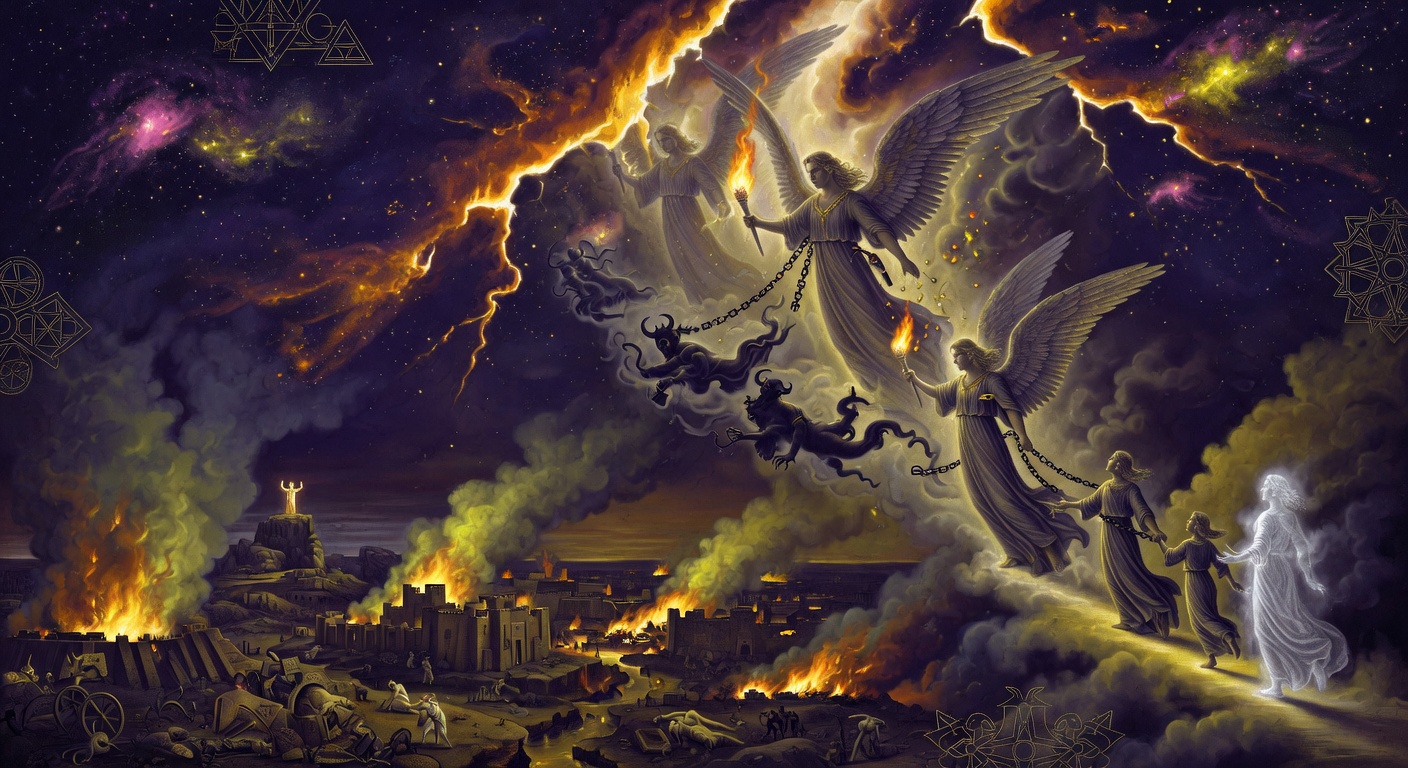
Destruction of Sodom Patriarchal
○ TraditionalThe Destruction of Sodom is the catastrophic judgment by fire and brimstone upon the cities of the plain - executed by angels in a single night, rescuing Lot while annihilating civilizations whose wickedness had reached its full measure. Jubilees 16:5-9 frames the destruction within Abraham's lifetime, with the patriarch interceding while angels descend to execute judgment. Jasher 19 provides the most extensive account of Sodom's perverse laws and the angels' rescue of Lot. Within the Enochic tradition, this event functions as a prototype for eschatological judgment, echoing the burning valleys prepared for the wicked. This event represents a critical juncture in the sacred chronology that the Books of Enoch, Jubilees, and Jasher collectively preserve. Within the jubilee framework that Jubilees meticulously tracks, it occupies a precise position in the divine timetable - not an accident of history but a predetermined turning point inscribed on the heavenly tablets before creation. The expanded narratives in Jasher and the theological interpretations in Jubilees together provide a multidimensional understanding of this moment that illuminates both its immediate consequences and its role in the larger pattern of divine action spanning from creation to final judgment.
-
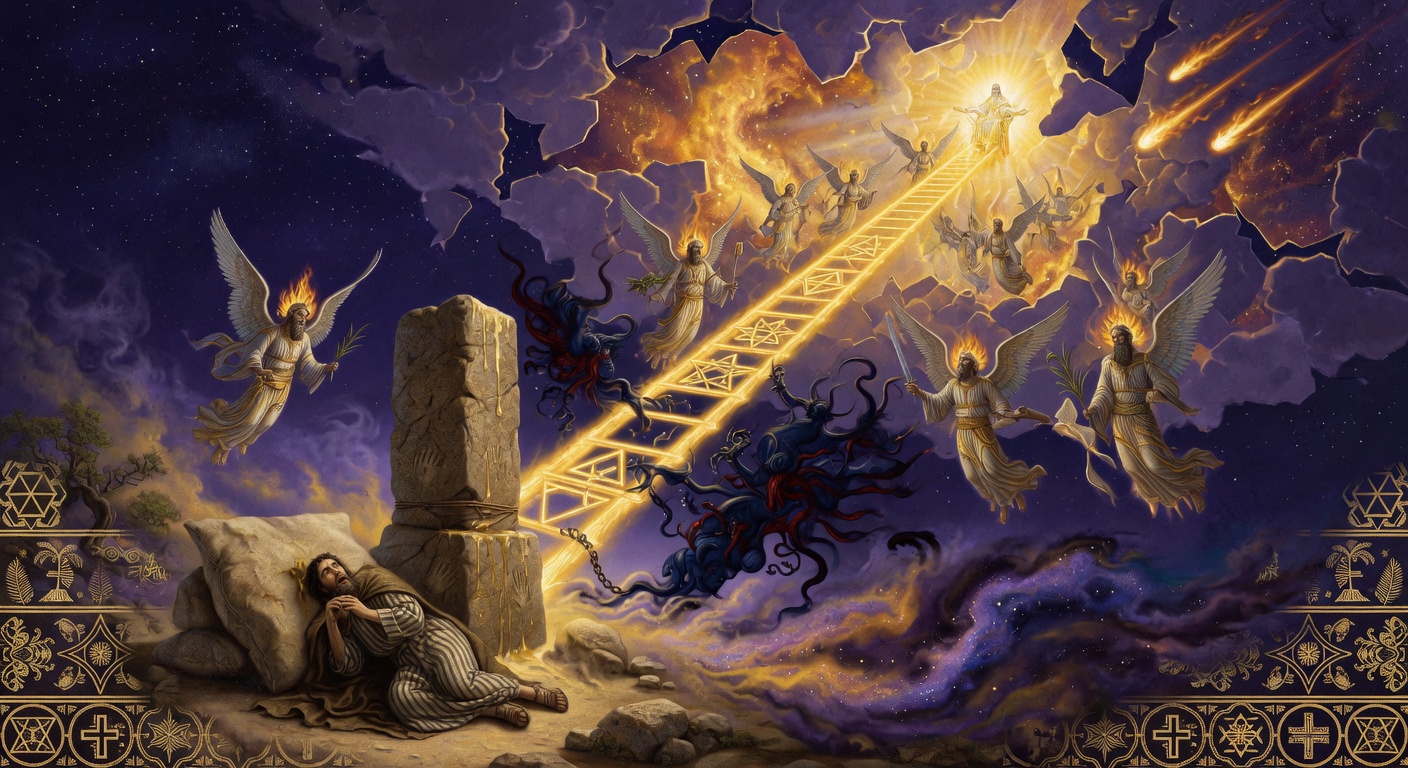
Jacob's Vision at Bethel Patriarchal
○ TraditionalJacob's Vision at Bethel is the supernatural encounter in which the patriarch beholds a ladder reaching from earth to heaven with angels ascending and descending - a revelation that heaven and earth are connected and that the covenant promises continue through his line. Jubilees 27:19-27 provides the covenantal context, with God reaffirming the Abrahamic promises to Jacob at this site. Jasher 30 expands on Jacob's emotional state fleeing from Esau and the stone pillar he erects as a memorial. The vision establishes Bethel as a permanent sacred site - a place where the boundary between realms becomes visible. This event represents a critical juncture in the sacred chronology that the Books of Enoch, Jubilees, and Jasher collectively preserve. Within the jubilee framework that Jubilees meticulously tracks, it occupies a precise position in the divine timetable - not an accident of history but a predetermined turning point inscribed on the heavenly tablets before creation. The expanded narratives in Jasher and the theological interpretations in Jubilees together provide a multidimensional understanding of this moment that illuminates both its immediate consequences and its role in the larger pattern of divine action spanning from creation to final judgment.
-
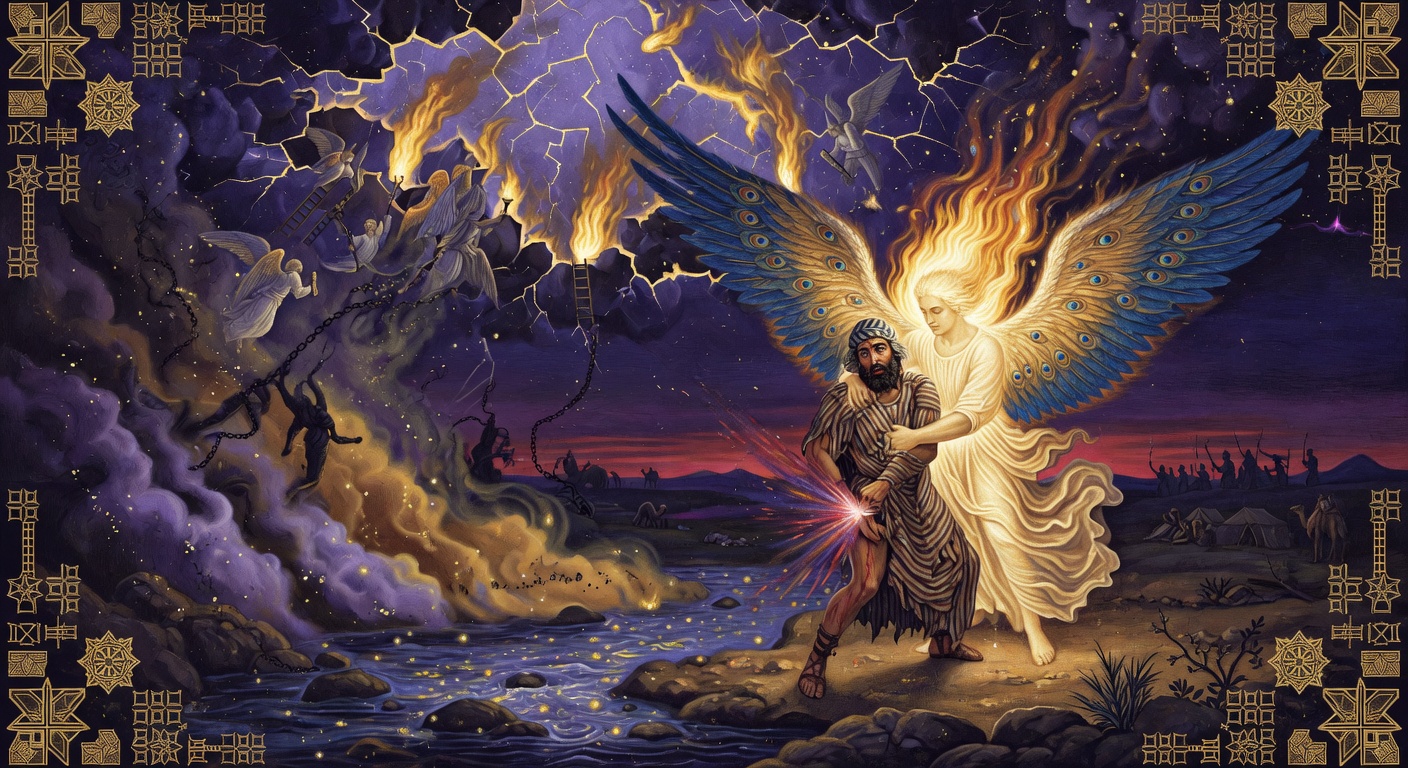
Jacob Wrestles the Angel Patriarchal
○ TraditionalJacob Wrestles the Angel is the mysterious nighttime encounter at the Jabbok river in which the patriarch contends with a divine being until dawn, receives a dislocated hip, and emerges with a new name - Israel, meaning 'one who strives with God.' Jasher 32 provides the fullest narrative context, describing Jacob's terror at approaching Esau with 400 men and his desperate prayer through the night. The wrestling match transforms Jacob from a man defined by deception into one defined by direct encounter with the divine. His limp becomes a permanent mark of the struggle, and his new name establishes the identity of the entire nation that will descend from him. This event represents a critical juncture in the sacred chronology that the Books of Enoch, Jubilees, and Jasher collectively preserve. Within the jubilee framework that Jubilees meticulously tracks, it occupies a precise position in the divine timetable - not an accident of history but a predetermined turning point inscribed on the heavenly tablets before creation. The expanded narratives in Jasher and the theological interpretations in Jubilees together provide a multidimensional understanding of this moment that illuminates both its immediate consequences and its role in the larger pattern of divine action spanning from creation to final judgment.
-
Joseph Sold into Slavery Patriarchal
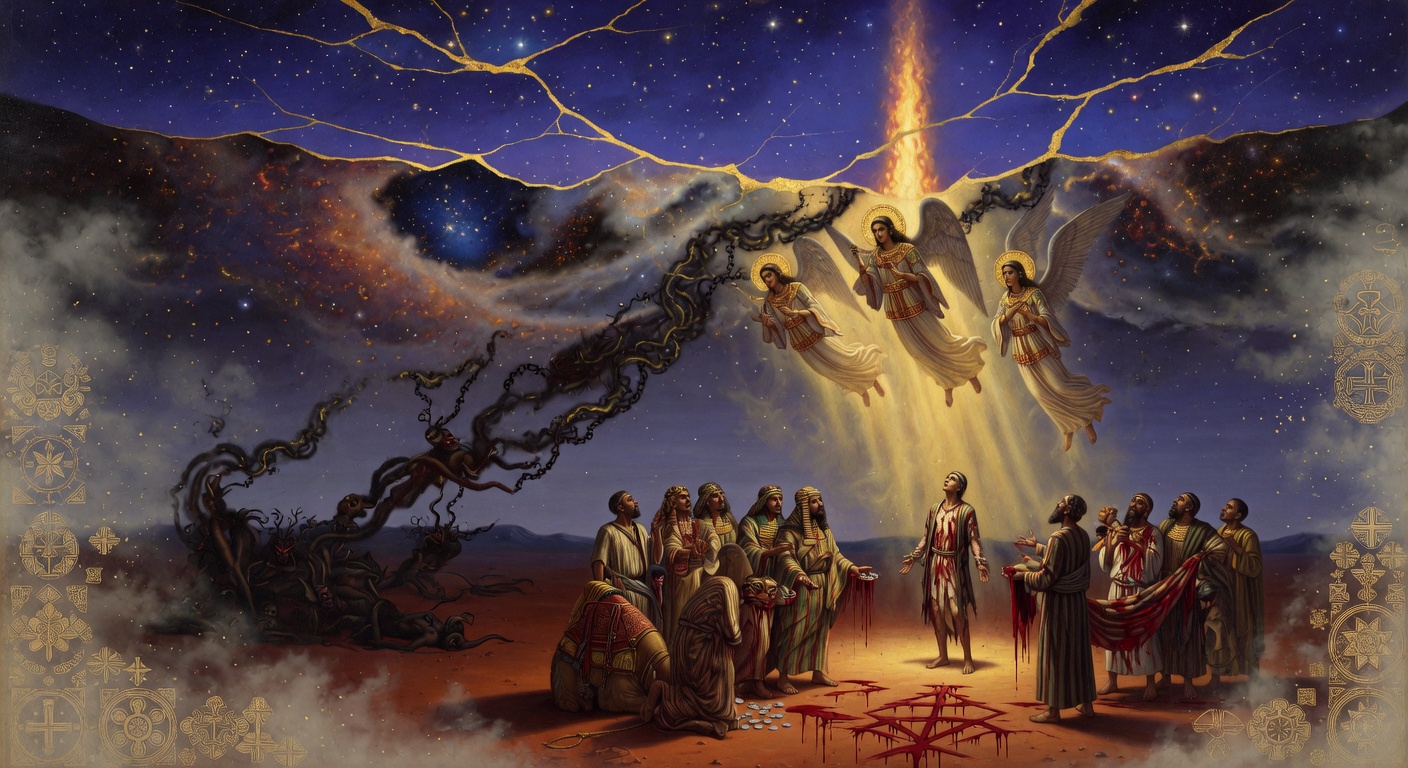
○ TraditionalJoseph Sold into Slavery is the pivotal act of brotherly betrayal that sets in motion the descent of Jacob's family into Egypt - a seemingly tragic event that the texts present as divine positioning for the preservation of the covenant line during famine. Jasher 41-42 provides the most detailed account of the brothers' plot, Joseph's sale to Midianites and then Ishmaelites, and the deception practiced on Jacob with the bloodied coat. Jubilees 34:10-19 connects the event to the Day of Atonement, with Jacob's annual grief establishing the fast. The narrative illustrates how divine providence operates through human wickedness to accomplish redemptive purposes. This event represents a critical juncture in the sacred chronology that the Books of Enoch, Jubilees, and Jasher collectively preserve. Within the jubilee framework that Jubilees meticulously tracks, it occupies a precise position in the divine timetable - not an accident of history but a predetermined turning point inscribed on the heavenly tablets before creation. The expanded narratives in Jasher and the theological interpretations in Jubilees together provide a multidimensional understanding of this moment that illuminates both its immediate consequences and its role in the larger pattern of divine action spanning from creation to final judgment.
-
Binding of Isaac (Akedah) Patriarchal
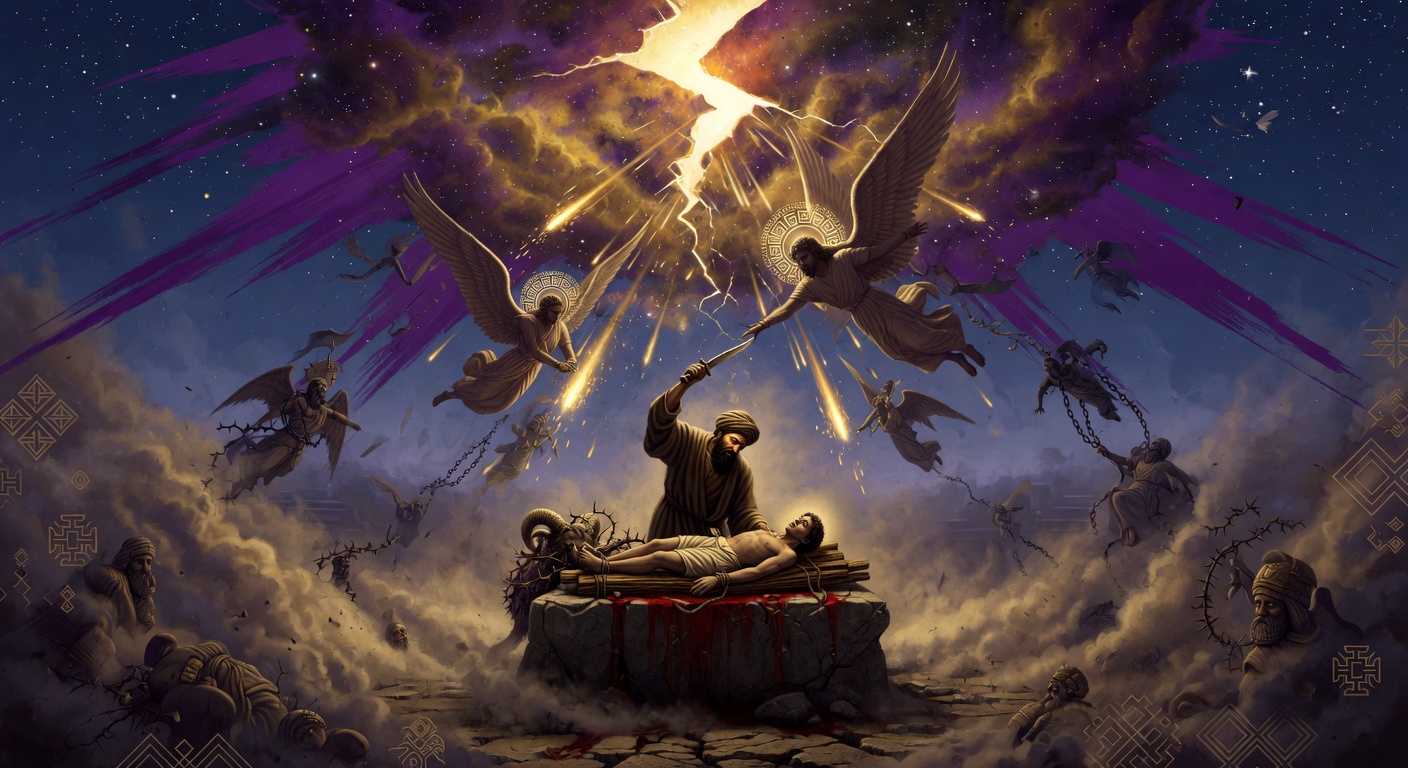
○ TraditionalThe Sacrifice of Isaac (the Binding) is the supreme test of Abraham's faith - prompted by Mastema in Jubilees - where obedience to the point of offering his son is rewarded by divine provision of a substitute. In the ancient interpretive traditions surrounding the Hebrew patriarchs, the account of Abraham's near-sacrifice of his son emerges as a pivotal moment of divine testing and angelic mediation, elaborated most fully in the Book of Jubilees. This text frames the event not merely as a personal ordeal but as part of a cosmic contest involving Mastema, the adversarial prince who seeks to undermine the covenantal line. Jubilees 17:15-18:19 recounts how Mastema proposes the trial to God, prompting the command for Abraham to offer Isaac on Mount Moriah; throughout the journey, the narrative emphasizes Abraham's unwavering obedience while angels of the presence intervene at the critical moment to halt the blade and affirm the substitutionary ram. Such details underscore the text's concern with calendrical precision and covenantal renewal, situating the episode in the month of Nisan and linking it to future festivals of deliverance. The Book of Jasher expands these motifs with additional narrative texture, portraying the journey to the mountain as fraught with supernatural opposition. In Jasher 22:1-23:15, Satan appears repeatedly in disguise to dissuade both father and son, attempting to exploit human doubts about the promise of descendants; these encounters highlight themes of spiritual warfare that resonate with the Enochic literature's depictions of fallen angels and their influence over human affairs. Although 1 Enoch itself does not narrate the Akedah directly, its Animal Apocalypse in chapters 89-90 symbolically encodes Abraham's lineage within a broader vision of Israel's history, where divine watchers guide and protect the chosen flock amid trials, providing a theological backdrop for understanding angelic roles in later retellings like Jubilees. These expansions within the Enochian and related apocryphal corpus elevate the story beyond its biblical outline, presenting it as a paradigm of faithful resistance to adversarial forces and a foreshadowing of redemptive substitution. Readers encounter an emphasis on the transmission of covenantal promises through generations, with Isaac's survival ensuring the continuity of the line that will ultimately confront the Watchers' legacy of corruption. Such interpretations invite contemplation of how divine sovereignty operates through human agency and heavenly intercession, themes that permeate the pseudepigraphal texts and reward careful cross-referencing across the corpus.
-

Joseph Elevated to Governor Patriarchal
○ TraditionalJoseph Elevated to Governor is the dramatic reversal in which a Hebrew slave, imprisoned on false charges, rises to become the second most powerful man in Egypt through divinely-given dream interpretation - positioning him to save both Egypt and his own family from famine. Jasher 48-49 provides the most detailed account of Pharaoh's dreams, the failure of Egyptian magicians, and Joseph's interpretation that predicts seven years of plenty followed by seven years of famine. Jubilees 40 condenses the narrative while emphasizing divine providence. Joseph's elevation demonstrates the principle running through all three books: that faithfulness in adversity is ultimately vindicated through divine intervention. This event represents a critical juncture in the sacred chronology that the Books of Enoch, Jubilees, and Jasher collectively preserve. Within the jubilee framework that Jubilees meticulously tracks, it occupies a precise position in the divine timetable - not an accident of history but a predetermined turning point inscribed on the heavenly tablets before creation. The expanded narratives in Jasher and the theological interpretations in Jubilees together provide a multidimensional understanding of this moment that illuminates both its immediate consequences and its role in the larger pattern of divine action spanning from creation to final judgment.
-
Jacob's Descent to Egypt Patriarchal
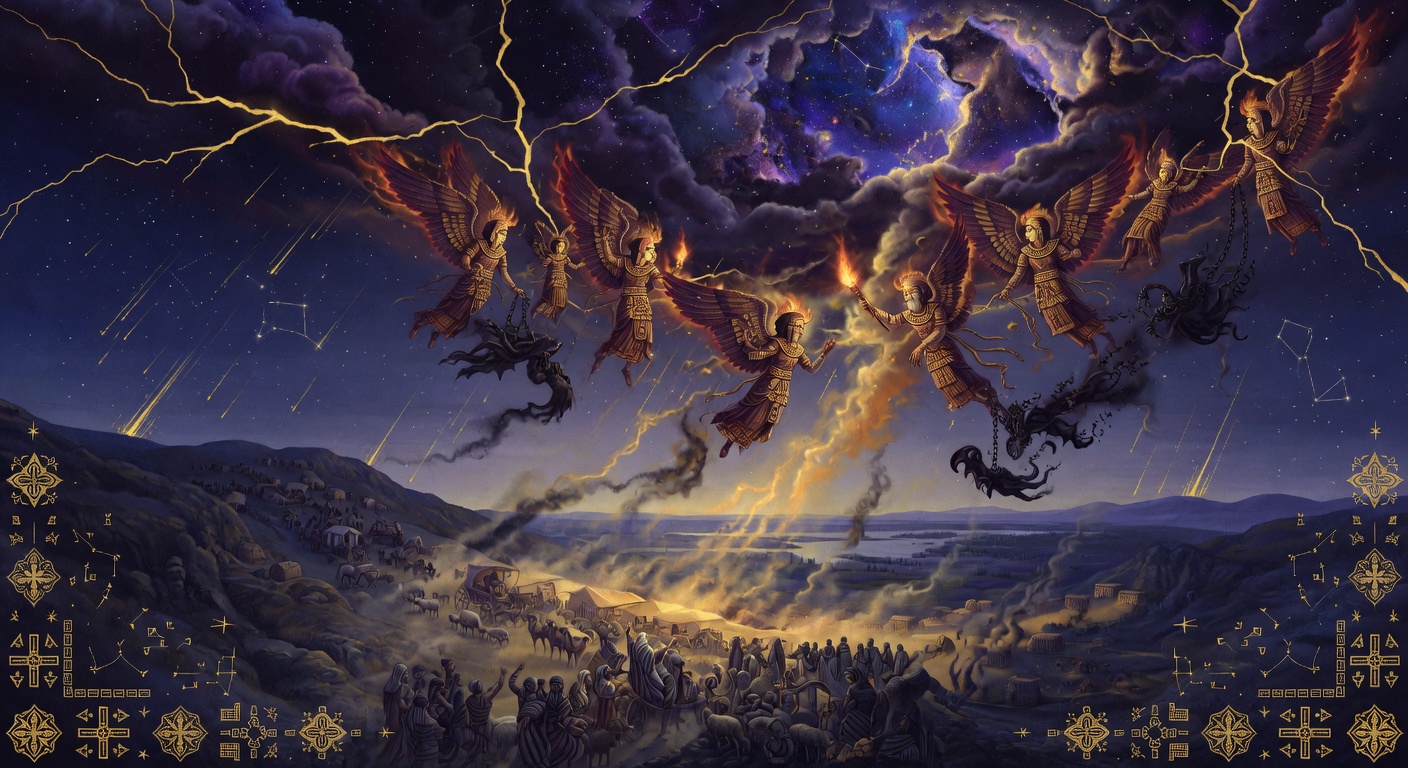
○ TraditionalJacob's Descent to Egypt marks the transition from patriarchal wandering to national formation - the entire family of seventy souls entering the land that would become both their refuge during famine and their place of bondage for centuries. Jubilees 44 records the journey within its precise chronological framework, noting the divine command for Jacob to go and the promise of future deliverance. Jasher 55 expands on the emotional reunion with Joseph and the settling in Goshen. This event closes the patriarchal era and opens the chapter of national oppression that will culminate in the Exodus. This event represents a critical juncture in the sacred chronology that the Books of Enoch, Jubilees, and Jasher collectively preserve. Within the jubilee framework that Jubilees meticulously tracks, it occupies a precise position in the divine timetable - not an accident of history but a predetermined turning point inscribed on the heavenly tablets before creation. The expanded narratives in Jasher and the theological interpretations in Jubilees together provide a multidimensional understanding of this moment that illuminates both its immediate consequences and its role in the larger pattern of divine action spanning from creation to final judgment.
Exodus
-
Enslavement of Israel Exodus
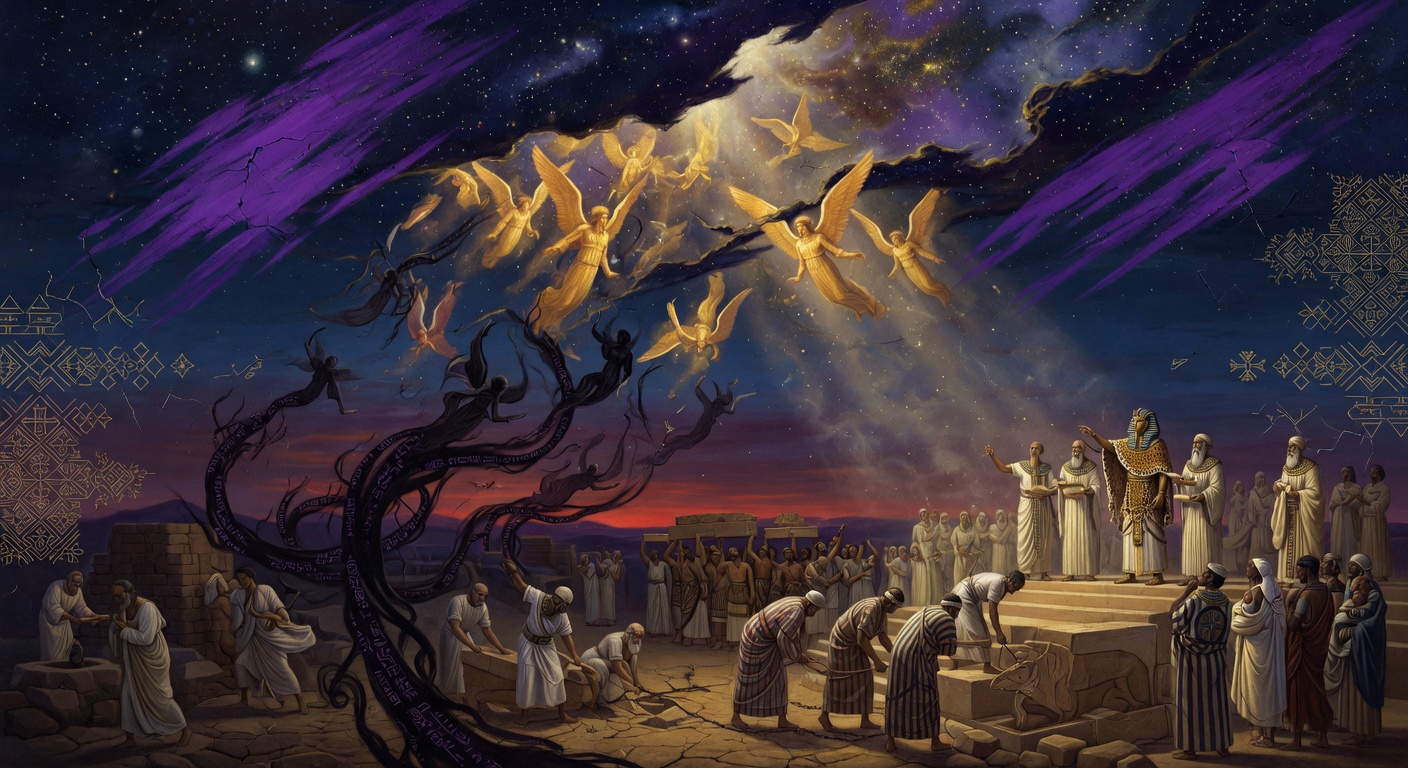
○ TraditionalThe Enslavement of Israel is the transformation of Jacob's family from honored guests to brutalized slaves under a new Pharaoh who did not know Joseph - a political reversal that sets the stage for the entire Exodus narrative. Jasher 65 provides the most detailed account of the Egyptian elders' conspiracy to reduce Israel through forced labor, describing how they cunningly introduced progressively harder tasks. Jubilees 46 frames the oppression within its chronological scheme, noting that it begins within a generation of Joseph's death. The transition from favor to slavery demonstrates how quickly political memory fades and how covenant promises persist through periods of apparent abandonment. This event represents a critical juncture in the sacred chronology that the Books of Enoch, Jubilees, and Jasher collectively preserve. Within the jubilee framework that Jubilees meticulously tracks, it occupies a precise position in the divine timetable - not an accident of history but a predetermined turning point inscribed on the heavenly tablets before creation. The expanded narratives in Jasher and the theological interpretations in Jubilees together provide a multidimensional understanding of this moment that illuminates both its immediate consequences and its role in the larger pattern of divine action spanning from creation to final judgment.
-

Birth of Moses Exodus
○ TraditionalThe Birth of Moses is the providential preservation of the deliverer during Pharaoh's decree to kill all Hebrew male infants - a child of promise hidden by his mother, discovered by Pharaoh's daughter, and raised in the very palace of the oppressor. Jasher 68 provides the most dramatic account, describing how Egyptian women acted as spies and how Moses was discovered in the Nile. Jubilees 47 situates the birth within its jubilee chronology and emphasizes the divine orchestration. The infant Moses placing Pharaoh's crown on his own head (Jasher 70) foreshadows his future confrontation with Egyptian power. This event represents a critical juncture in the sacred chronology that the Books of Enoch, Jubilees, and Jasher collectively preserve. Within the jubilee framework that Jubilees meticulously tracks, it occupies a precise position in the divine timetable - not an accident of history but a predetermined turning point inscribed on the heavenly tablets before creation. The expanded narratives in Jasher and the theological interpretations in Jubilees together provide a multidimensional understanding of this moment that illuminates both its immediate consequences and its role in the larger pattern of divine action spanning from creation to final judgment.
-
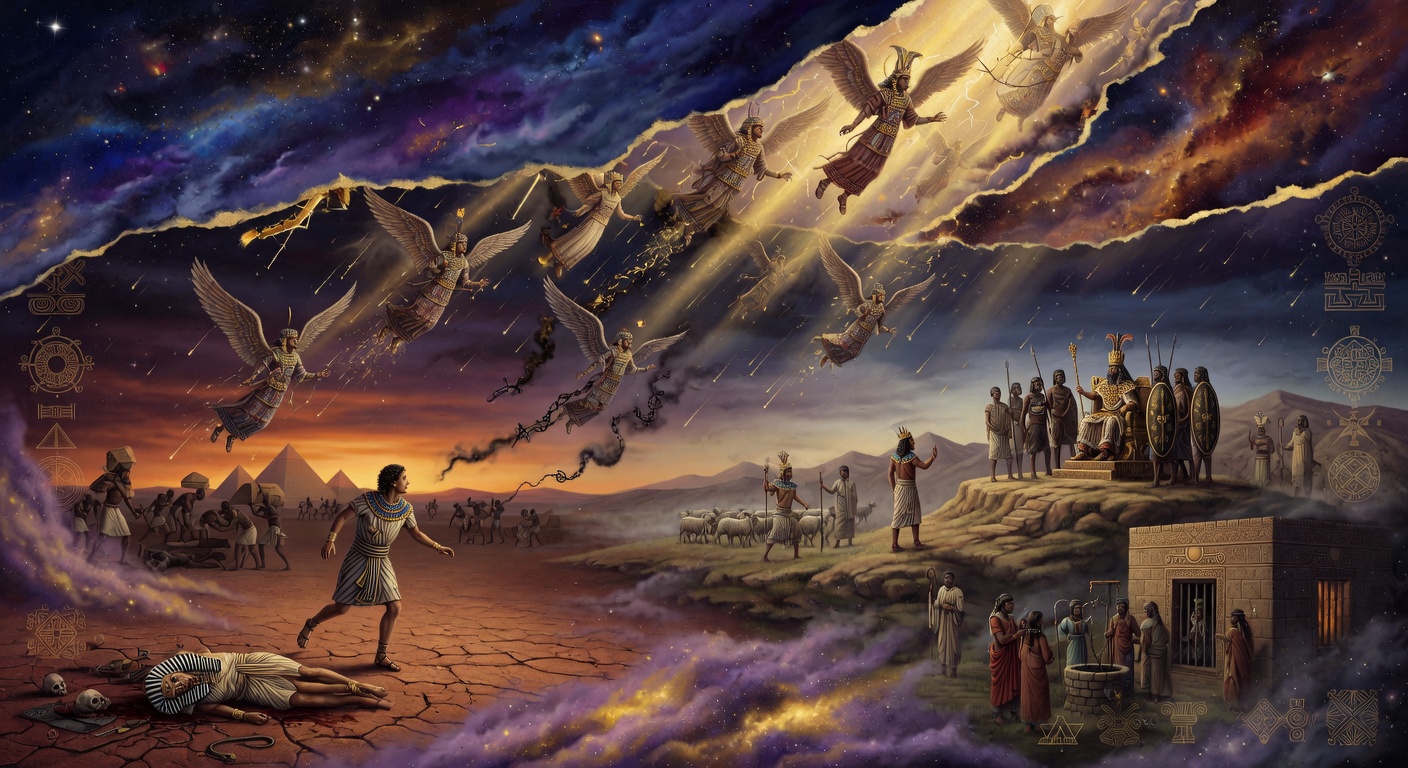
Moses Flees to Midian Exodus
○ TraditionalMoses Flees to Midian after killing an Egyptian taskmaster - beginning forty years of exile that transforms him from an Egyptian prince into a shepherd prepared for divine encounter at the burning bush. Jasher 71 provides the immediate context - Moses discovers the oppression, strikes the Egyptian, and flees when discovered. But Jasher uniquely expands his exile: chapters 72-73 describe Moses becoming king of Cush (Ethiopia) for forty years before departing for Midian. Jasher 76-77 covers his arrival at Reuel's house, his imprisonment, and eventual marriage to Zipporah. This extended exile period matures Moses from impulsive violence to patient readiness for divine commission. This event represents a critical juncture in the sacred chronology that the Books of Enoch, Jubilees, and Jasher collectively preserve. Within the jubilee framework that Jubilees meticulously tracks, it occupies a precise position in the divine timetable - not an accident of history but a predetermined turning point inscribed on the heavenly tablets before creation. The expanded narratives in Jasher and the theological interpretations in Jubilees together provide a multidimensional understanding of this moment that illuminates both its immediate consequences and its role in the larger pattern of divine action spanning from creation to final judgment.
-
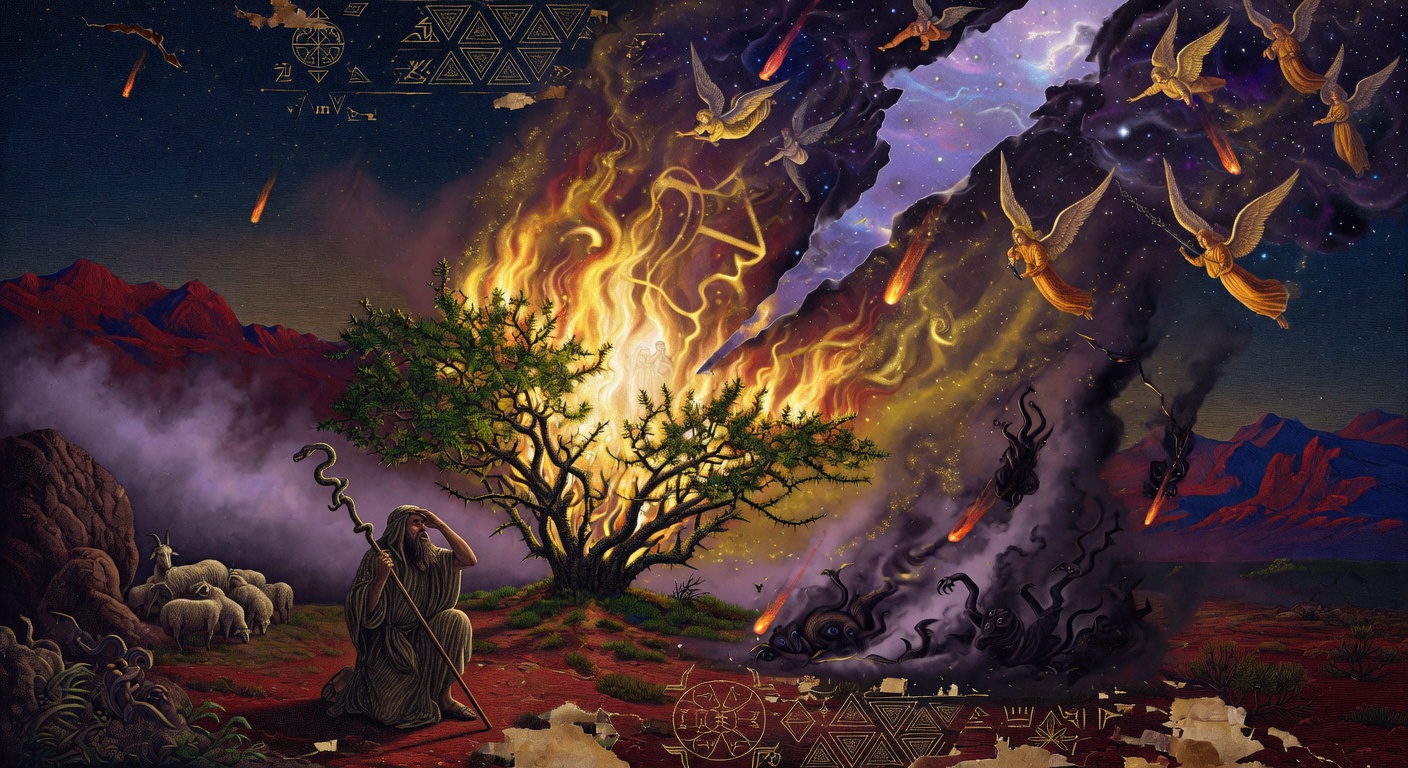
The Burning Bush Exodus
○ TraditionalThe Burning Bush is God's direct appearance to Moses in the wilderness of Midian - a fire that burns without consuming, from which the divine voice commissions the reluctant shepherd to return to Egypt and deliver Israel from bondage. Jasher 79 describes the encounter after Moses has spent years tending Reuel's flocks in the wilderness. The bush that burns without being consumed demonstrates that divine presence can inhabit creation without destroying it. Moses receives his commission, his staff becomes a sign, and Aaron is appointed as his spokesman. This theophany bridges the forty years of preparation with the confrontation with Pharaoh that will follow. This event represents a critical juncture in the sacred chronology that the Books of Enoch, Jubilees, and Jasher collectively preserve. Within the jubilee framework that Jubilees meticulously tracks, it occupies a precise position in the divine timetable - not an accident of history but a predetermined turning point inscribed on the heavenly tablets before creation. The expanded narratives in Jasher and the theological interpretations in Jubilees together provide a multidimensional understanding of this moment that illuminates both its immediate consequences and its role in the larger pattern of divine action spanning from creation to final judgment.
-
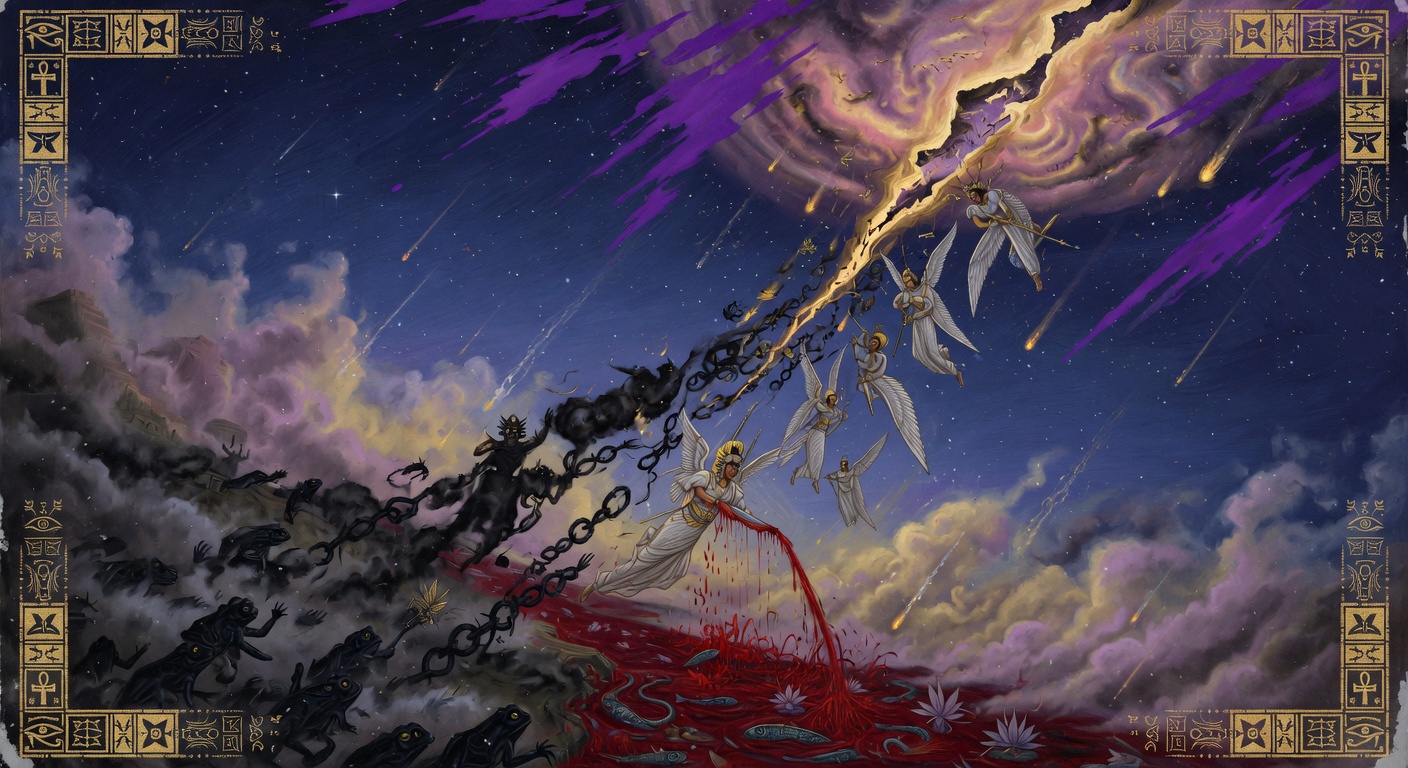
The Ten Plagues Exodus
○ TraditionalThe Ten Plagues are the series of divine judgments that systematically dismantled Egypt's gods, economy, and political power - a structured campaign escalating from nuisance to catastrophe until Pharaoh's resistance was broken by the death of the firstborn. Jubilees 48 frames the plagues as a cosmic battle involving Mastema, the adversarial prince who empowered Pharaoh's magicians. Jasher 80 supplies extended narrative detail, describing how each plague targeted specific Egyptian deities and how the magicians' power progressively failed. Together these texts present the plagues not as arbitrary punishment but as deliberate warfare against an entire system of false sovereignty. This event represents a critical juncture in the sacred chronology that the Books of Enoch, Jubilees, and Jasher collectively preserve. Within the jubilee framework that Jubilees meticulously tracks, it occupies a precise position in the divine timetable - not an accident of history but a predetermined turning point inscribed on the heavenly tablets before creation. The expanded narratives in Jasher and the theological interpretations in Jubilees together provide a multidimensional understanding of this moment that illuminates both its immediate consequences and its role in the larger pattern of divine action spanning from creation to final judgment.
-
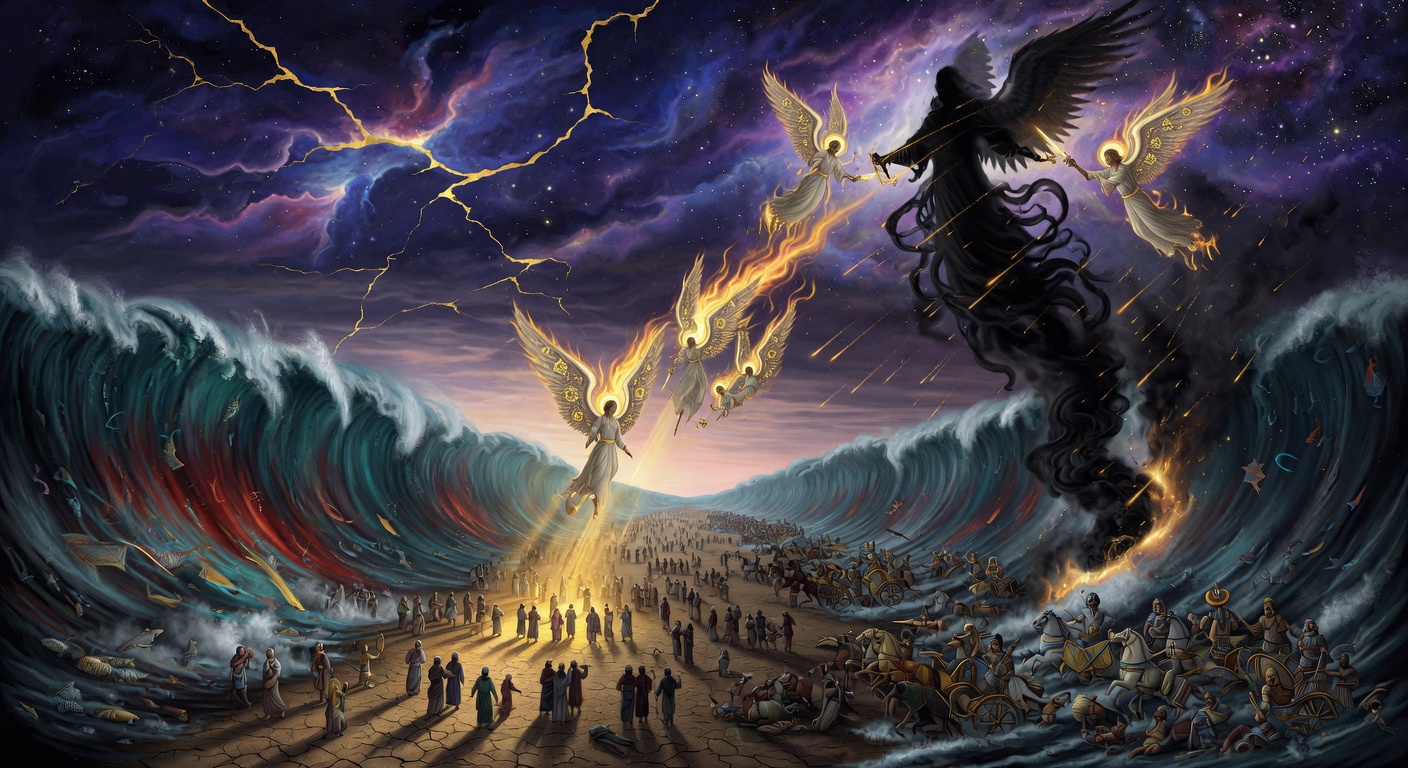
Crossing of the Red Sea Exodus
○ TraditionalThe Crossing of the Red Sea is the climactic deliverance in which Israel passed through divided waters on dry ground while the pursuing Egyptian army was drowned - the foundational miracle of Israel's identity as a people delivered by divine power. Jubilees 48:12-19 describes Mastema being bound during the crossing, removing the spiritual power behind Pharaoh's pursuit. Jasher 81 provides tactical detail of the pursuit and the waters collapsing at dawn. This event becomes the primary reference point for Israel's faith - the definitive proof that God intervenes in history to preserve the covenant people. This event represents a critical juncture in the sacred chronology that the Books of Enoch, Jubilees, and Jasher collectively preserve. Within the jubilee framework that Jubilees meticulously tracks, it occupies a precise position in the divine timetable - not an accident of history but a predetermined turning point inscribed on the heavenly tablets before creation. The expanded narratives in Jasher and the theological interpretations in Jubilees together provide a multidimensional understanding of this moment that illuminates both its immediate consequences and its role in the larger pattern of divine action spanning from creation to final judgment.
-
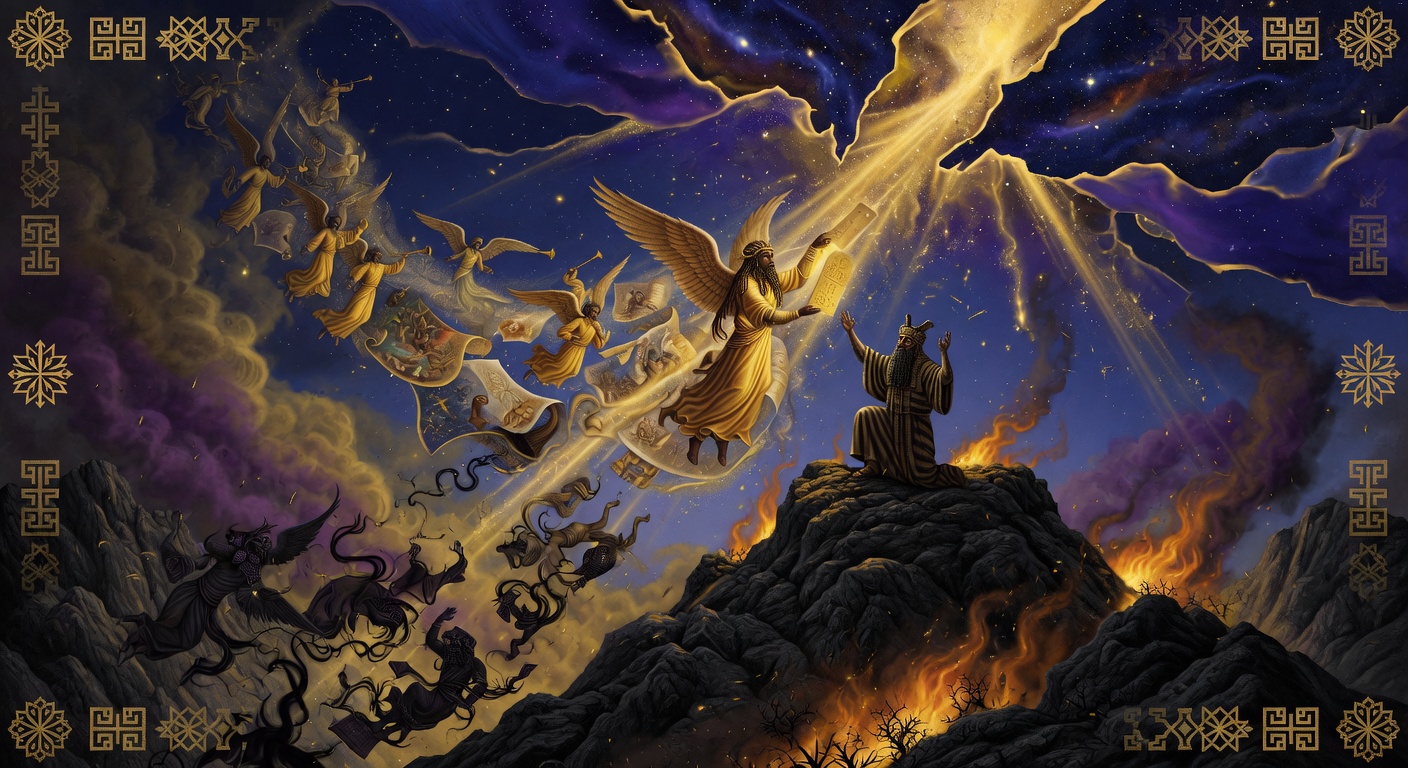
Giving of the Law at Sinai Exodus
○ TraditionalThe Giving of the Law at Sinai is the revelation to Moses of the complete divine will - not just commandments but the entire hidden history of the world from creation onward, dictated by the Angel of the Presence. In the landscape of Second Temple Jewish writings, the revelation on Mount Sinai represents a decisive transmission of divine knowledge, where Moses encounters an angelic mediator who unfolds both the commandments and the entire sweep of sacred history. This event bridges the antediluvian revelations granted to Enoch with the covenantal framework established for Israel, underscoring how heavenly secrets are preserved and renewed across generations. Within these traditions, Sinai is not merely a legal moment but a continuation of the same angelic instruction that shaped earlier patriarchs, ensuring that cosmic order and moral law remain intertwined. The Book of Jubilees provides the most detailed account, portraying Moses ascending the mountain for forty days and nights while the Angel of the Presence dictates the narrative from creation onward. In Jubilees 1, the angel instructs Moses to record the words spoken on Sinai, recounting how the law was inscribed on heavenly tablets from the beginning of time and emphasizing its eternal validity, including festivals, sabbaths, and prohibitions against idolatry. This retelling integrates the Exodus events with Genesis material, revealing that the commandments given to Moses were already observed by the patriarchs and rooted in the same divine order Enoch had glimpsed during his heavenly tours. The Book of Jasher expands the human drama surrounding the theophany, describing the thunder, fire, and trembling of the people as Moses receives the tablets, while also noting how prior knowledge from figures like Enoch informed the expectations of the covenant. Enochic literature, though centered on pre-flood visions, supplies the conceptual foundation through its emphasis on angelic scribes and watchers who mediate knowledge of the heavens, a pattern that Jubilees extends directly to Sinai. Together these texts present the giving of the law as the culmination of an ongoing heavenly archive, where angels ensure that truth endures despite human frailty. This framing invites readers to see Sinai as the point where Enoch’s apocalyptic insights become practical legislation for a chosen people, preserving the unity of history, calendar, and ethics across the pseudepigraphic corpus.
-
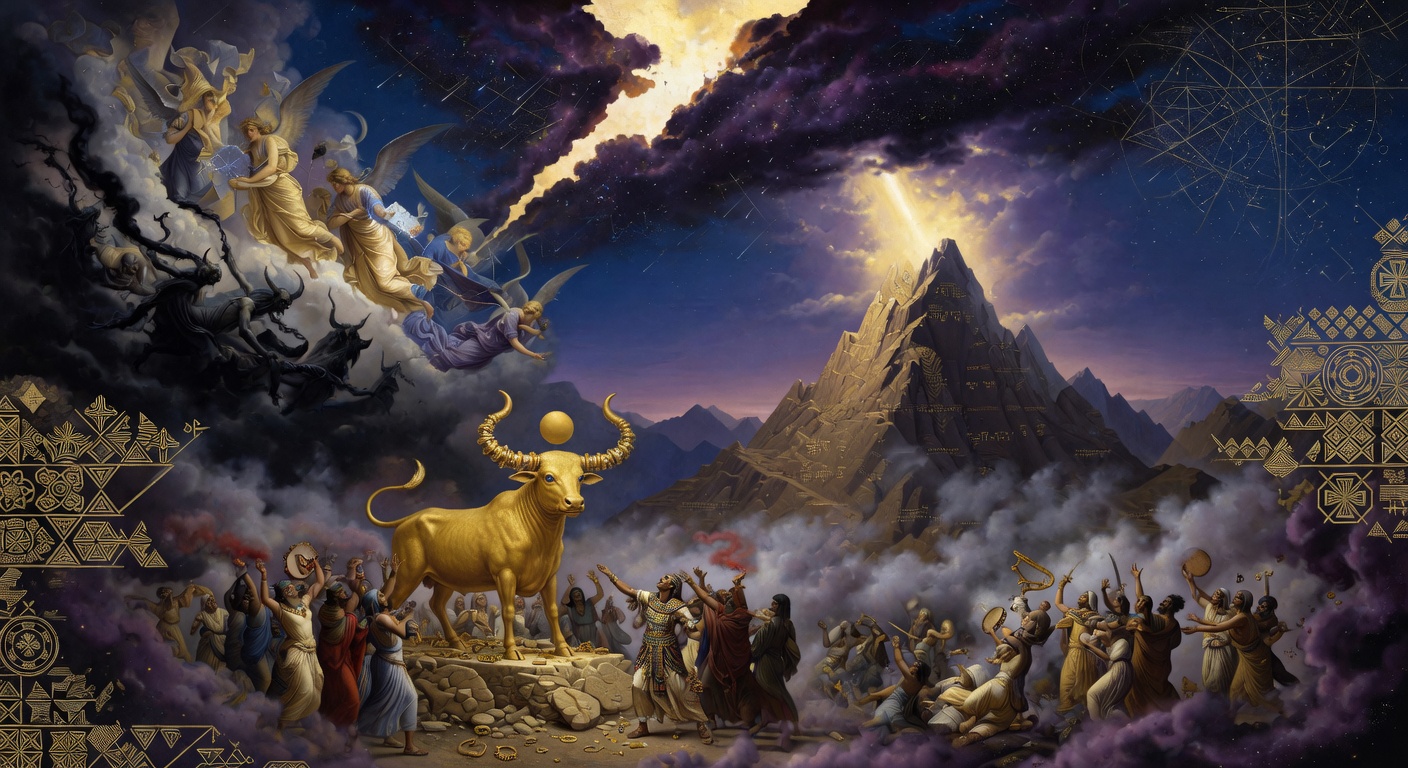
The Golden Calf Exodus
○ TraditionalThe Golden Calf is Israel's catastrophic failure at the foot of Sinai - fashioning and worshiping an idol while Moses received the Law on the mountain above, demonstrating how quickly liberated people revert to the corrupted worship patterns that trace back to the Watchers' era. Jasher 82 provides the narrative context, describing Aaron's capitulation under pressure and the subsequent civil conflict. Within the broader tradition, the episode illustrates the persistent pull of idolatry that Abraham had rejected generations earlier, proving that external deliverance from Egypt did not automatically produce internal transformation. This event represents a critical juncture in the sacred chronology that the Books of Enoch, Jubilees, and Jasher collectively preserve. Within the jubilee framework that Jubilees meticulously tracks, it occupies a precise position in the divine timetable - not an accident of history but a predetermined turning point inscribed on the heavenly tablets before creation. The expanded narratives in Jasher and the theological interpretations in Jubilees together provide a multidimensional understanding of this moment that illuminates both its immediate consequences and its role in the larger pattern of divine action spanning from creation to final judgment.
-

Joshua Crosses the Jordan Exodus
○ TraditionalJoshua Crosses the Jordan marks the beginning of Israel's possession of the promised land - the fulfillment of covenants made to Abraham centuries earlier, as the new generation enters the inheritance their parents forfeited through unbelief. Jasher 88 records Joshua preparing the people, the miraculous crossing on dry ground, and the initial campaign. This event closes the wilderness era and begins the conquest, demonstrating that the promises delayed by one generation's failure remain available to the next generation's faith. This event represents a critical juncture in the sacred chronology that the Books of Enoch, Jubilees, and Jasher collectively preserve. Within the jubilee framework that Jubilees meticulously tracks, it occupies a precise position in the divine timetable - not an accident of history but a predetermined turning point inscribed on the heavenly tablets before creation. The expanded narratives in Jasher and the theological interpretations in Jubilees together provide a multidimensional understanding of this moment that illuminates both its immediate consequences and its role in the larger pattern of divine action spanning from creation to final judgment.
-
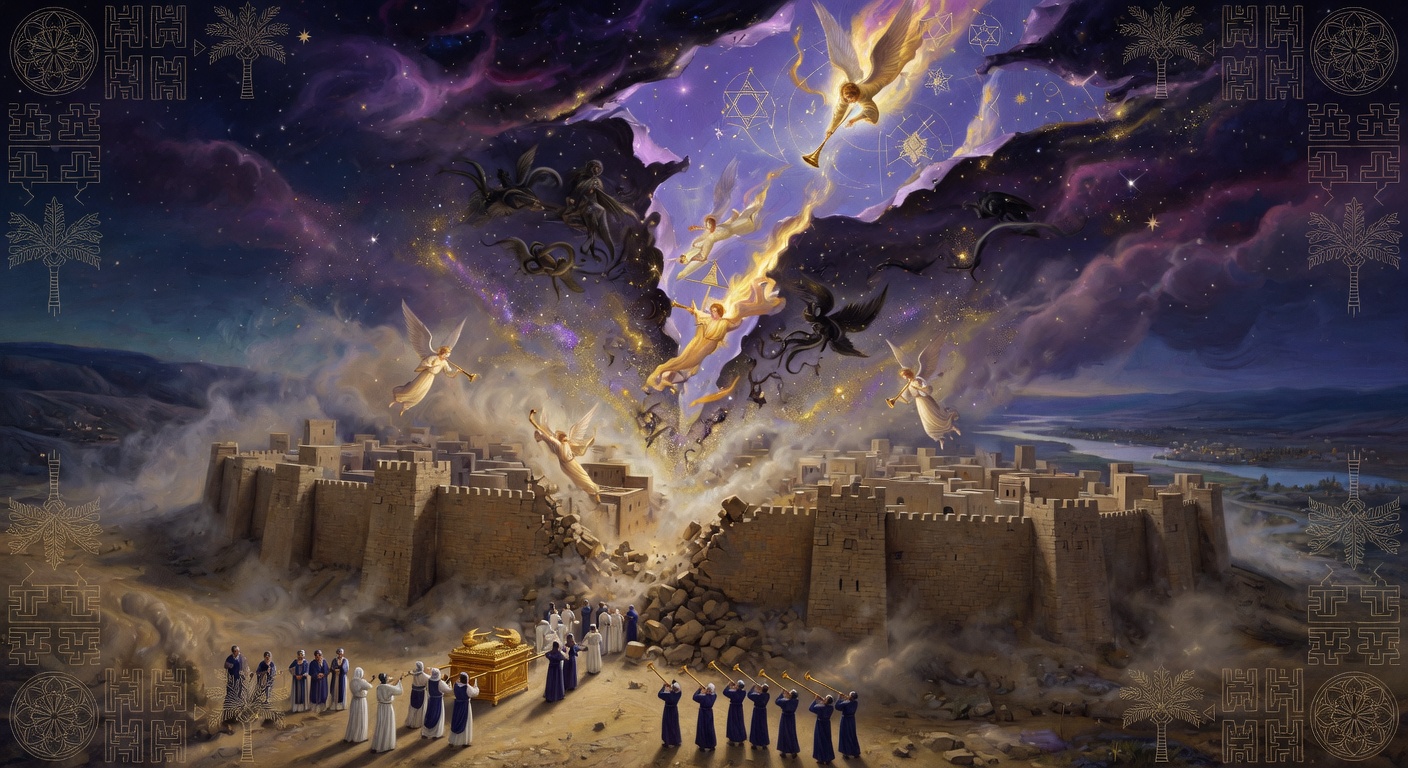
Fall of Jericho Exodus
○ TraditionalThe Fall of Jericho is the first conquest victory in which seven days of ritual procession and trumpet blasts caused the city walls to collapse inward - demonstrating that the promised land would be taken through obedience to divine instruction rather than conventional military force. Jasher 88 describes the prescribed ritual in detail: seven days of silent marching with priests carrying the ark, trumpets sounding each circuit, and on the seventh day a unified shout that brings the walls down. The pattern of sevens connects to the sabbatical and jubilee structures that govern all of Jubilees' chronology. This first city falls not through siege or assault but through liturgical procession - warfare as worship. This event represents a critical juncture in the sacred chronology that the Books of Enoch, Jubilees, and Jasher collectively preserve. Within the jubilee framework that Jubilees meticulously tracks, it occupies a precise position in the divine timetable - not an accident of history but a predetermined turning point inscribed on the heavenly tablets before creation. The expanded narratives in Jasher and the theological interpretations in Jubilees together provide a multidimensional understanding of this moment that illuminates both its immediate consequences and its role in the larger pattern of divine action spanning from creation to final judgment.
-
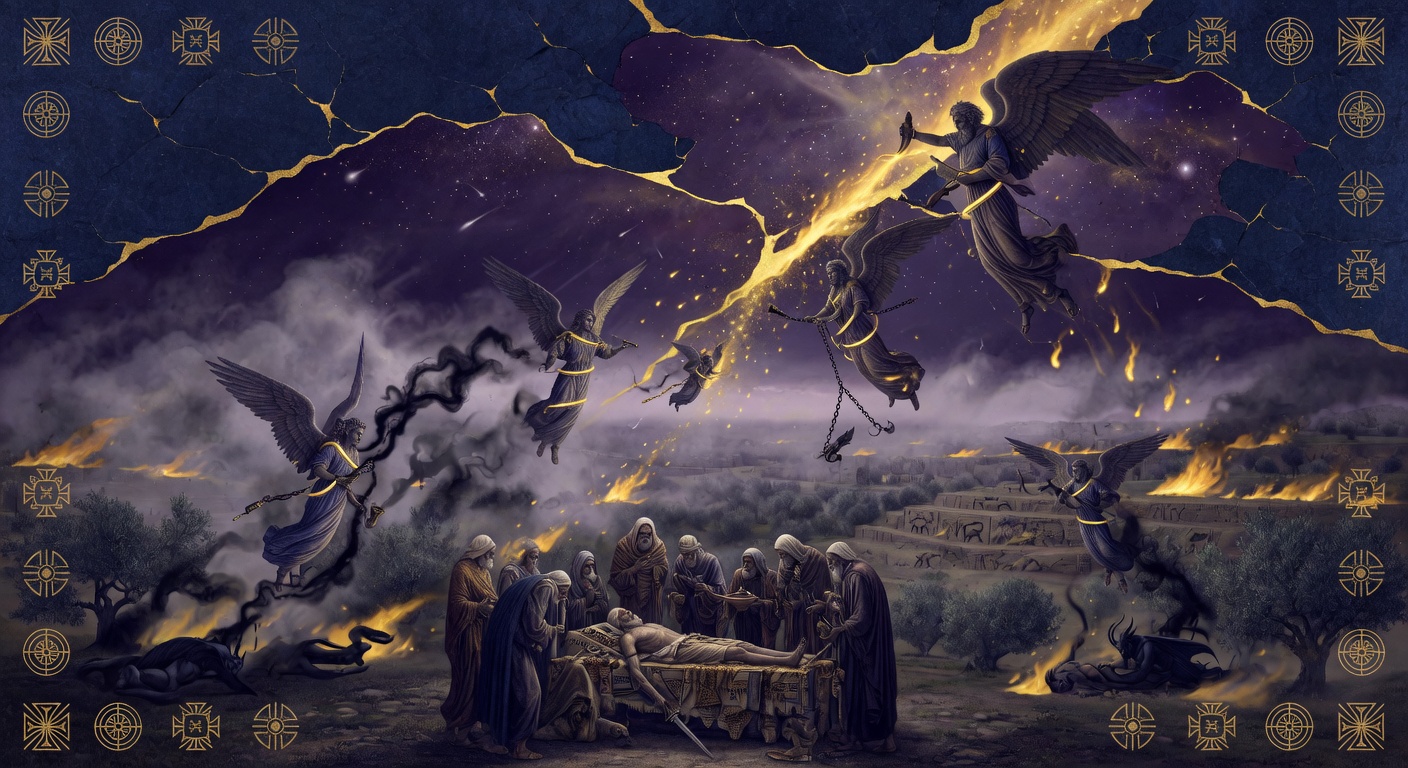
Death of Joshua and the Judges Exodus
○ TraditionalThe Death of Joshua marks the end of the conquest era and the beginning of the Judges period - the final event recorded in the Book of Jasher, closing the narrative arc that began with Creation and concluding with Israel established in the promised land. Jasher 90-91 describes Joshua's final years, the division of the land among the tribes, and his death. The elders who outlive Joshua maintain faithfulness, but the text hints at the instability to come. This ending completes Jasher's sweeping narrative from Adam through the settlement of Canaan - the entire scope of the 'upright record' of ancient history that the book claims to preserve. This event represents a critical juncture in the sacred chronology that the Books of Enoch, Jubilees, and Jasher collectively preserve. Within the jubilee framework that Jubilees meticulously tracks, it occupies a precise position in the divine timetable - not an accident of history but a predetermined turning point inscribed on the heavenly tablets before creation. The expanded narratives in Jasher and the theological interpretations in Jubilees together provide a multidimensional understanding of this moment that illuminates both its immediate consequences and its role in the larger pattern of divine action spanning from creation to final judgment.