Rikayon
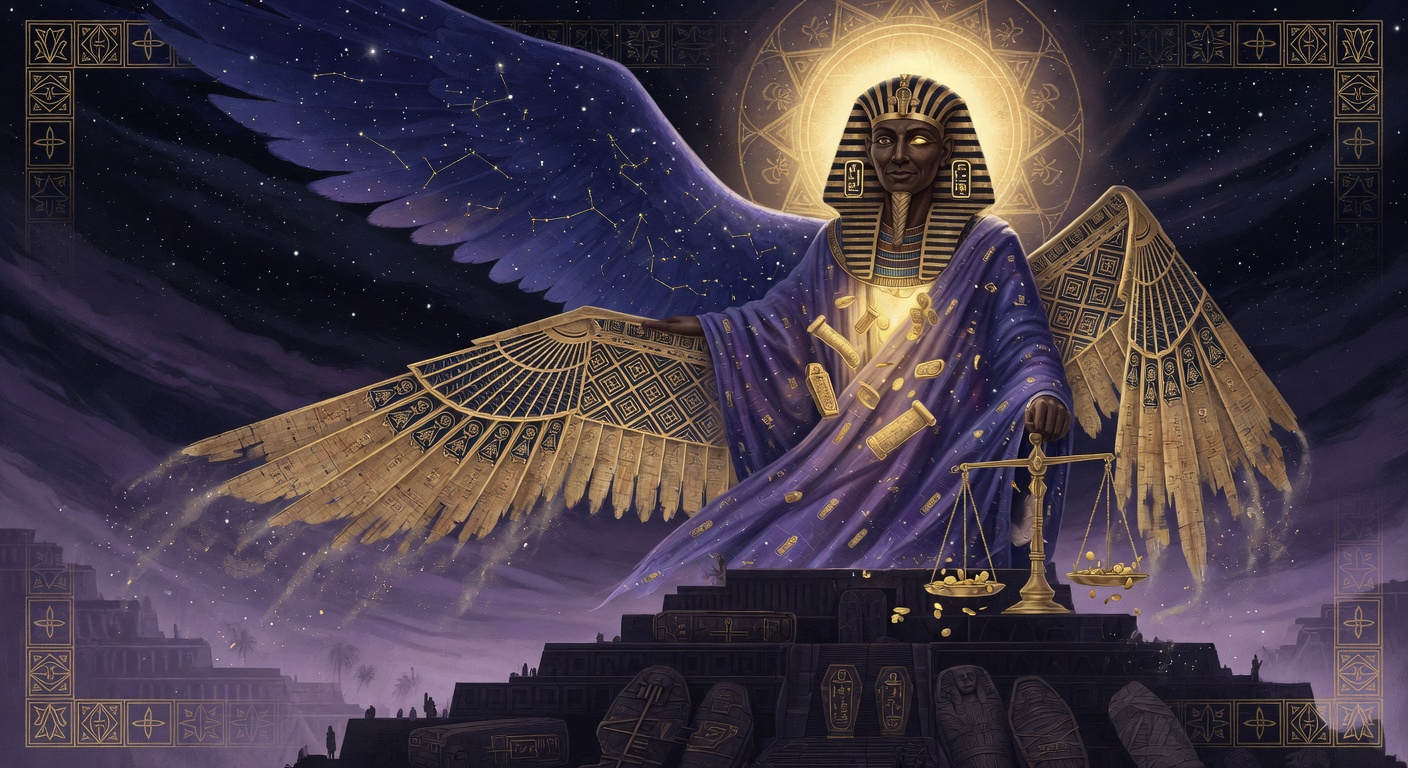
In the expansive retellings of patriarchal history preserved in the Book of Jasher, the Egyptian court during the era of Abraham becomes a stage for intricate schemes of power that illuminate broader themes of human ambition and divine oversight found across related apocryphal works. This text, which parallels and amplifies episodes from Genesis while sharing narrative concerns with Jubilees and the Enochic corpus, portrays Egypt as a land where economic innovation intersects with ritual practice, revealing how societal structures could be manipulated for personal gain amid the wanderings of the Hebrew ancestors. Such accounts underscore the texts' interest in explaining the origins of foreign customs and rulers that later influence Israel's story, situating them within a cosmic framework where earthly events echo heavenly judgments. The narrative details a calculated exploitation of Egypt's burial customs, in which the dead were traditionally interred without cost in designated cities of the deceased. A shrewd outsider devises a royal decree imposing a mandatory tax on every corpse brought for burial, enforced through guards at the city gates and justified as a contribution to the pharaoh's treasury. Collections from this system rapidly accumulate vast wealth, allowing the architect of the policy to secure favor at court, suppress rivals through strategic gifts, and eventually assume a position of authority that reshapes Egyptian governance. Jasher situates these events in chapters 14 and 15, contemporaneous with Abraham's descent into Egypt, thereby linking the rise of this influential administrator to the biblical timeline and highlighting tensions between Canaanite migrants and established powers. Within the wider Enochian and Jubilean tradition, such figures serve to illustrate the proliferation of wickedness and cleverness among the nations after the flood, echoing Enoch's visions of wayward angels and corrupted knowledge that lead humanity astray. The account invites reflection on how temporal authority often rests on foundations of deception, much like the Watchers' transmission of forbidden arts in 1 Enoch, yet it also preserves a sense of providential order as Abraham's presence subtly challenges these systems. Readers exploring these texts encounter a layered portrait of Egypt not merely as an antagonist but as a complex realm whose internal dynamics prefigure later conflicts and exoduses.
Biography
- Occupation
- Tax Collector / Ruler
- Era
- Patriarchal
- Nationality
- Egyptian
Key Chapters
Key Passages
Rikayon's Tax on the Dead
The Book of Jasher 14:1-20
Rikayon devises a scheme to tax the living for burying their dead in Egypt. He becomes extremely wealthy and is honored by Pharaoh.
 1n those days there was in the land of Shinar a wise man who had understanding in all wisdom, and of a beautiful appearance, but he was poor and indigent; his name was Rikayon and he was hard set to support himself.
Did You Know?
Rikayon was a clever Egyptian who invented a tax on burying the dead and became powerful.
He rose to high position in Pharaoh's court during Abraham's time.
Rikayon posted guards at city gates to enforce a mandatory tax on every corpse brought for burial.
Vast wealth from Rikayon's tax let him secure court favor and suppress rivals through strategic gifts.
The Book of Jasher situates Rikayon's decree and governance changes specifically in chapters 14 and 15.