The Jordan River
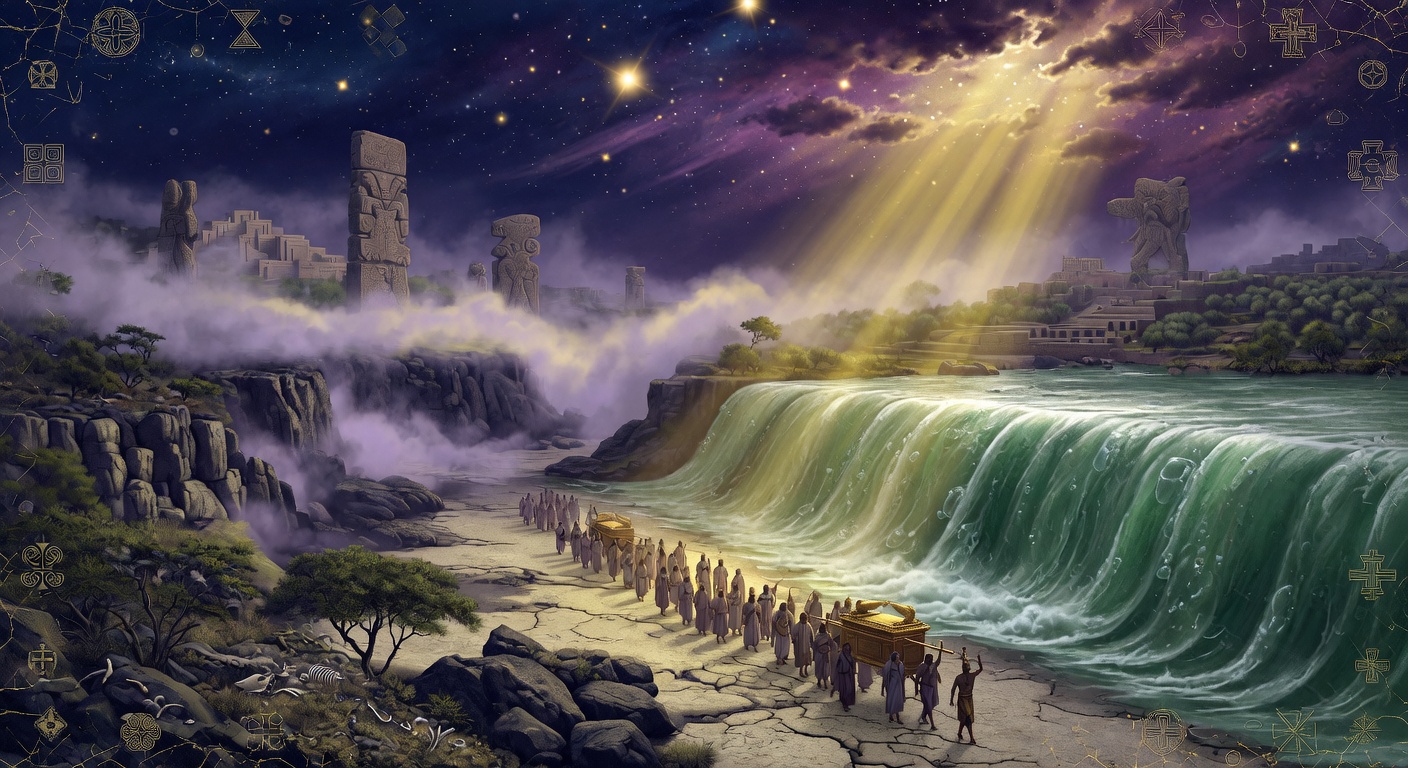
The Jordan River is the boundary between the wilderness and the promised land - the final barrier Israel must cross under Joshua to enter their inheritance, mirroring the Red Sea crossing that began their journey. Jasher 88 describes Joshua leading the people across on dry ground, with the waters standing in a heap as they did at the Red Sea. The river functions as a threshold between eras - the wilderness of testing on one side, the land of promise on the other. Within the broader geographical and theological framework of these three ancient texts, The Jordan River serves as more than a mere physical location - it functions as a site where divine purpose intersects with human history. The pseudepigraphal traditions preserved in Enoch, Jubilees, and Jasher provide perspectives on this place that illuminate its spiritual significance beyond what other ancient sources record. Each visit, encounter, or event that occurs here contributes to the larger pattern of covenant geography that these texts trace from the primordial garden through the patriarchal wanderings to the settlement of the promised land.
Details
- Region
- Earth
Key Chapters
Key Passages
Crossing the Jordan
The Book of Jasher 88:1-10
And it was after the death of Moses that the Lord said to Joshua the son of Nun, saying,...
 1nd it was after the death of Moses that the Lord said to Joshua the son of Nun, saying,
Did You Know?
The crossing mirrors the Red Sea - waters divided for passage on dry ground.
Joshua sets up twelve stones as a memorial of the crossing.
The river marks the boundary between wandering and inheritance.
Its waters stop flowing when the priests' feet touch the edge.
Crossing the Jordan completes the journey that began at the Red Sea forty years earlier.