Abel
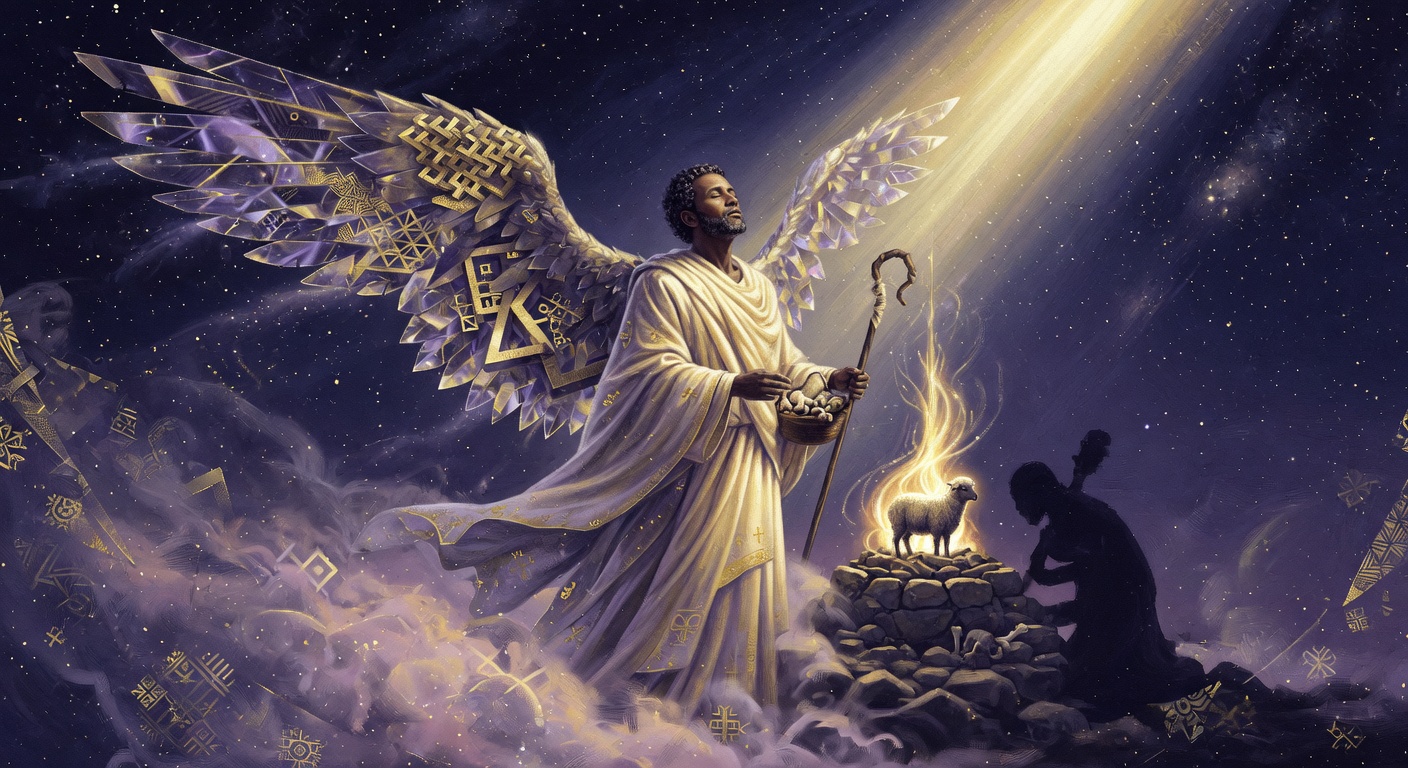
Abel is Adam's second son, the righteous shepherd whose murder by Cain represents the first human violence - his blood still cries out from Sheol in Enoch's vision. Within the apocryphal traditions that expand upon the earliest biblical narratives, the younger son of the first humans emerges as a pivotal figure whose life and death illuminate themes of divine favor, fraternal strife, and the cry for justice that echoes through the ages. The Book of Jubilees places his birth in the third week of the second jubilee, describing him as a keeper of sheep whose offering of the firstfruits from his flock finds acceptance before the Lord, in contrast to his brother's produce from the earth. This acceptance precipitates the fatal jealousy recounted in both Jubilees 4 and the Book of Jasher, where the texts detail how the elder brother strikes him down in a field after a dispute over the proper manner of sacrifice, marking the first instance of bloodshed among humanity and establishing a pattern of martyrdom that later apocalyptic writers would invoke. The Book of Jasher elaborates further on the brothers' occupations and the precise circumstances of the conflict, noting that the slain shepherd's blood is said to have soaked into the ground, an image that resonates with the legal and moral concerns of these texts regarding the pollution of the earth. Such details underscore Abel's role not merely as a victim but as the inaugural witness to righteousness whose death exposes the growing corruption that prompts the later judgments described in Enochic literature. These expansions move beyond the terse Genesis account to emphasize moral accountability and the consequences of envy, situating the event within a broader chronology of human decline that includes the descent of the Watchers. Particularly significant in the Enochian corpus is the portrayal of his enduring voice in the visionary journey of 1 Enoch 22, where the spirit of the slain one is depicted among the hollow places of the dead, crying out for vengeance until divine judgment is rendered. This scene integrates Abel into the text's elaborate geography of the underworld and its concern with the fate of the righteous and the wicked, reinforcing his status as the prototype of those whose blood testifies before the throne. Across these works, his story thus serves as a foundational thread linking primordial history to the eschatological expectations that define the Enochic tradition, inviting readers to contemplate the persistence of justice amid human violence.
Biography
- Occupation
- Keeper of Sheep
- Father
- Adam
- Mother
- Eve
- Era
- Antediluvian
Family
Key Chapters
Key Passages
Abel's Offering
The Book of Jubilees 4:1-5
Abel brings the firstlings of his flock with their fat. God has respect for Abel and his offering, establishing the pattern of acceptable sacrifice.
 1nd in the third week in the second jubilee 64-70 A.M. she gave birth to Cain, and in the fourth 71-77 A.M. she gave birth to Abel, and in the fifth 78-84 A.M. she gave birth to her daughter Âwân.
The Murder
The Book of Jasher 1:1-5
Cain speaks with Abel in the field and rises up against him and slays him. Abel's blood cries from the ground to God.
1nd God said, Let us make man in our image, after our likeness, and God created man in his own image.
Did You Know?
Abel was a keeper of sheep whose offering was accepted by God.
He was the first righteous martyr, slain by his brother Cain.
According to the Book of Jubilees Abel was born in the third week of the second jubilee.
Cain struck Abel down in a field after a dispute over the proper manner of sacrifice in Jubilees and Jasher.
In 1 Enoch 22 the spirit of Abel cries out for vengeance among the hollow places of the dead.