Abrahamic Covenant
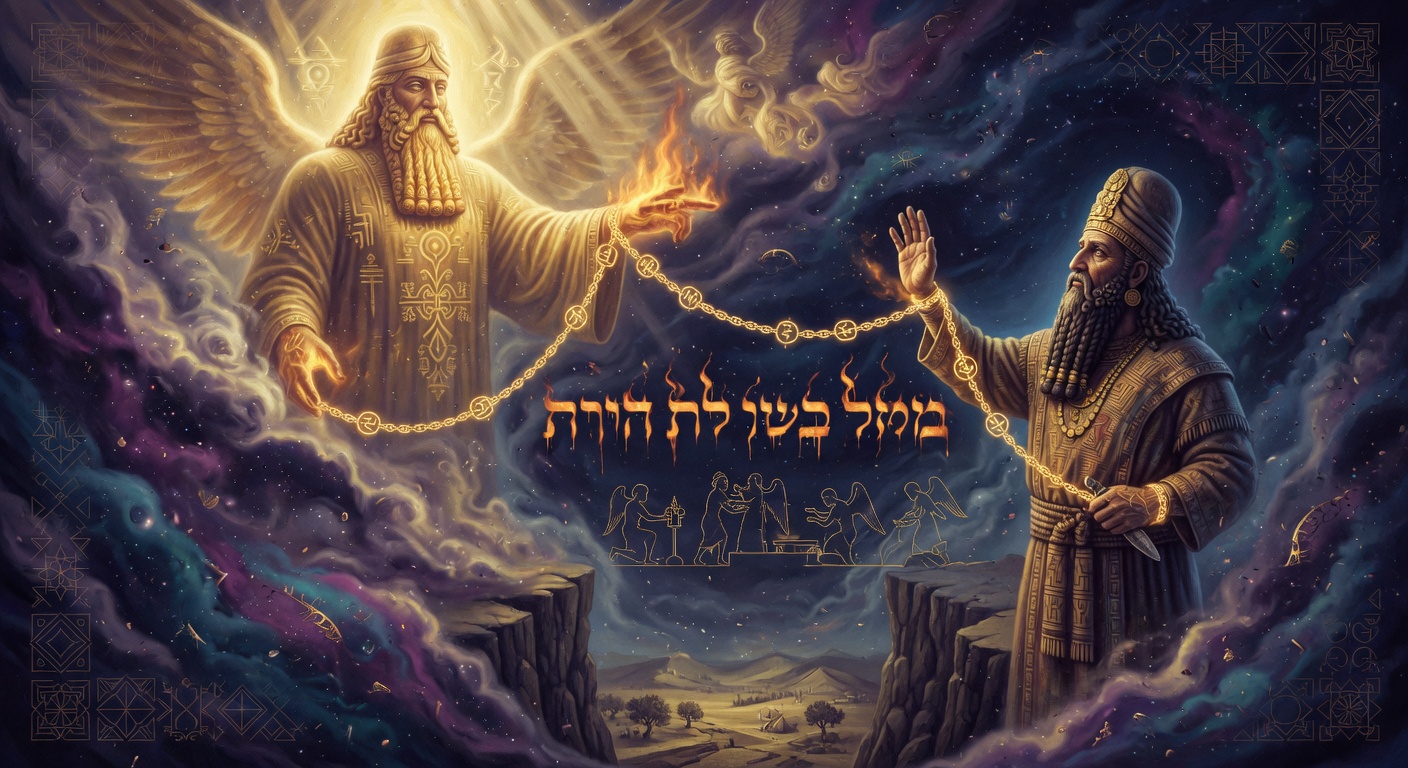
The Abrahamic Covenant is the foundational promise of land, descendants, and blessing made to Abraham - sealed by a mysterious ceremony of split animals and confirmed through circumcision. In the patriarchal narratives preserved within the ancient pseudepigraphal traditions, the divine assurances extended to Abraham establish a foundational bond centered on the multiplication of his seed, possession of the land of Canaan, and the extension of blessing to all nations through his lineage. The Book of Jubilees elaborates these commitments across chapters 12 through 15, portraying them not merely as isolated promises but as elements woven into a broader divine order that aligns with the calendrical and ethical frameworks revealed to earlier figures. This presentation situates Abraham's role as a renewal of the righteous path disrupted by the Watchers, linking his obedience to the cosmic patterns first disclosed in Enochic visions of judgment and restoration. Central to this arrangement in Jubilees 15 is the command for circumcision, enacted on the eighteenth day of the fifth month when Abraham, Ishmael, and the males of his household submit to the sign that marks perpetual fidelity. The text specifies that this token applies across generations, with failure to observe it resulting in exclusion from the covenantal community, thereby emphasizing both the conditional and enduring qualities of the relationship. Such details underscore how the agreement functions as a safeguard against the moral corruption detailed in earlier Enochic accounts, preserving a distinct lineage amid surrounding nations. These assurances receive explicit reaffirmation with Isaac and Jacob, as Jubilees 17 and 27 recount the renewal of the land and progeny promises during periods of famine and sojourn, while the Book of Jasher chapters 16 and 22 depict similar divine encounters that stress continuity through trials and familial succession. The narratives highlight Jacob's receipt of the blessing at Bethel, extending the scope to twelve tribes destined to fill the earth. Within the Enochian tradition, these patriarchal developments echo the eschatological hopes of 1 Enoch, where the survival and ultimate vindication of the righteous seed counterbalance the primordial rebellions, framing Abraham's covenant as a pivotal chapter in the ongoing divine plan for cosmic renewal.
Covenant Details
- Parties
- God and Abraham/his seed
- Sign
- Circumcision
Key Chapters
Key Passages
Covenant with Abram
The Book of Jubilees 15:1-34
And in the fifth year of the fourth week of this jubilee, 1979 A.M. in the third month, in the middle of the month, Abra...
 1nd in the fifth year of the fourth week of this jubilee, 1979 A.M. in the third month, in the middle of the month, Abram celebrated the feast of the first-fruits of the grain harvest.
Renewed with Isaac
The Book of Jubilees 24:1-10
And it came to pass after the death of Abraham, that the Lord blessed Isaac his son, and he arose from Hebron and went a...
1nd it came to pass after the death of Abraham, that the Lord blessed Isaac his son, and he arose from Hebron and went and dwelt at the Well of the Vision in the first year of the third week 2073 A.M. of this jubilee, seven years.
Circumcision in Jasher
The Book of Jasher 17:1-15
And in those days, in the ninety-first year of the life of Abram, the children of Chittim made war with the children of ...
1nd in those days, in the ninety-first year of the life of Abram, the children of Chittim made war with the children of Tubal, for when the Lord had scattered the sons of men upon the face of the earth, the children of Chittim went and embodied themselves in the plain of Canopia, and they built themselves cities there and dwelt by the river Tibreu.
Did You Know?
Circumcision is the sign given to Abraham as a perpetual mark.
The covenant is unconditional in its promises but conditional in blessing.
The smoking furnace and flaming torch that pass between the pieces represent God alone swearing the oath.
Jubilees places this ceremony during the Feast of Weeks, linking it to the broader calendar.
The promise of land stretches from the river of Egypt to the Euphrates - far beyond what Israel ever occupied.