The Watchers' Oath
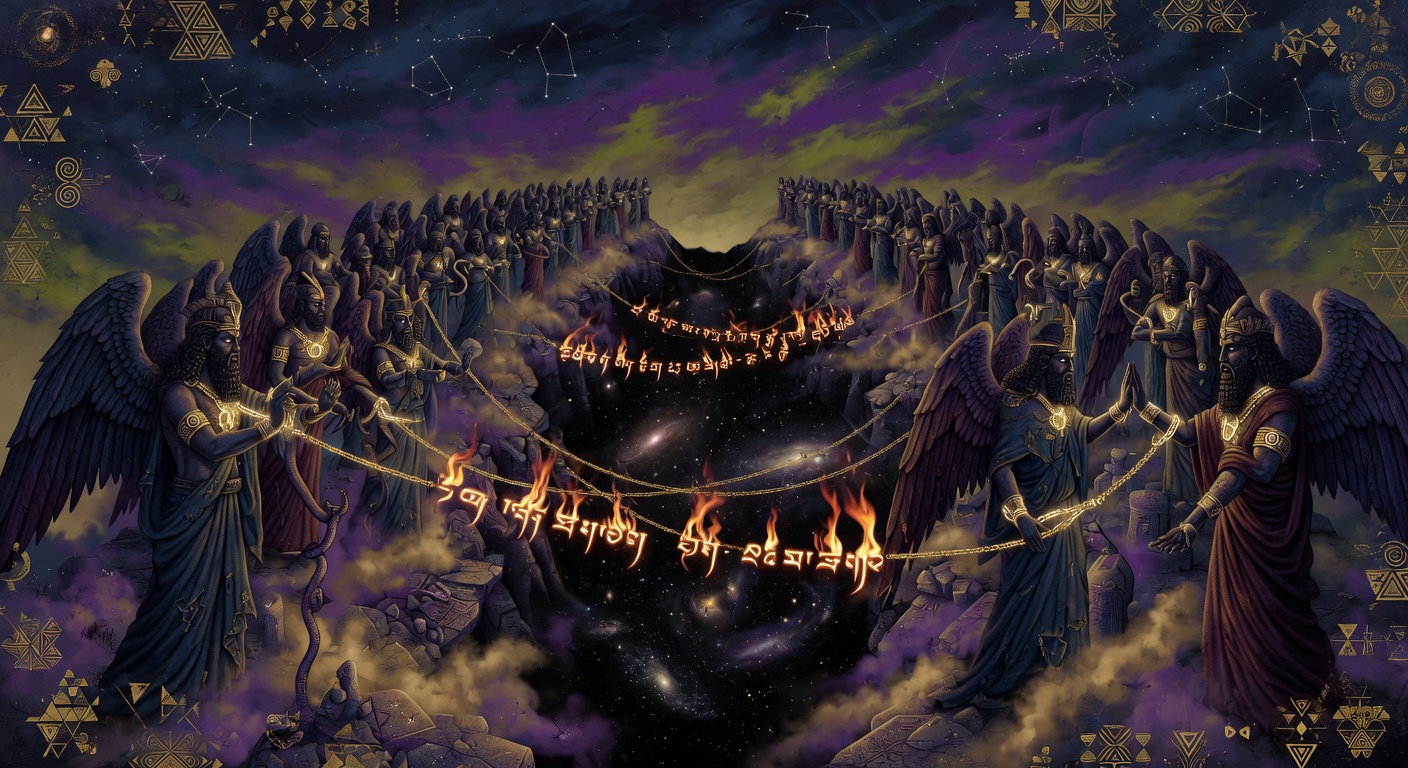
The Watchers' Oath is the dark counter-covenant sworn by two hundred rebellious angels on Mount Hermon - a mutual pact of transgression that mirrors and mocks divine covenant-making. In a dark inversion of divine covenant, the two hundred rebellious angels bind themselves by mutual imprecation on the summit of Mount Hermon, swearing that none shall turn back from their plan to descend and take human wives. This pact, detailed in 1 Enoch 6:4-6, functions as a counter-covenant that mirrors and mocks the sacred agreements between God and humanity, establishing solidarity in transgression rather than righteousness. The oath's significance extends beyond its immediate narrative purpose. Within the Enochic tradition it serves as the foundational act that unleashes forbidden knowledge, produces the giants, and ultimately provokes the Flood. The binding nature of the oath - and its catastrophic consequences - illustrates the text's teaching that covenantal structures, whether holy or profane, carry irrevocable weight in the cosmic order.
Covenant Details
- Parties
- The 200 Watchers among themselves
- Sign
- Mutual oath on Mount Hermon
Key Chapters
Key Passages
The Oath on Hermon
The Book of Enoch 6:1-8
And it came to pass when the children of men had multiplied that in those days were born unto them beautiful and comely ...
 1nd it came to pass when the children of men had multiplied that in those days were born unto them beautiful and comely daughters.
Did You Know?
The oath was sworn by all 200 Watchers together so that none could shift blame to another.
The very name 'Hermon' is explained as derived from the curse (herem) they invoked upon themselves.
The mutual oath prevents any single Watcher from claiming innocence or shifting blame.
The number 200 may represent completeness of rebellion - a full company turning against their commission.
Their oath-making parodies divine covenant-making, using sacred forms for profane purposes.