Passover
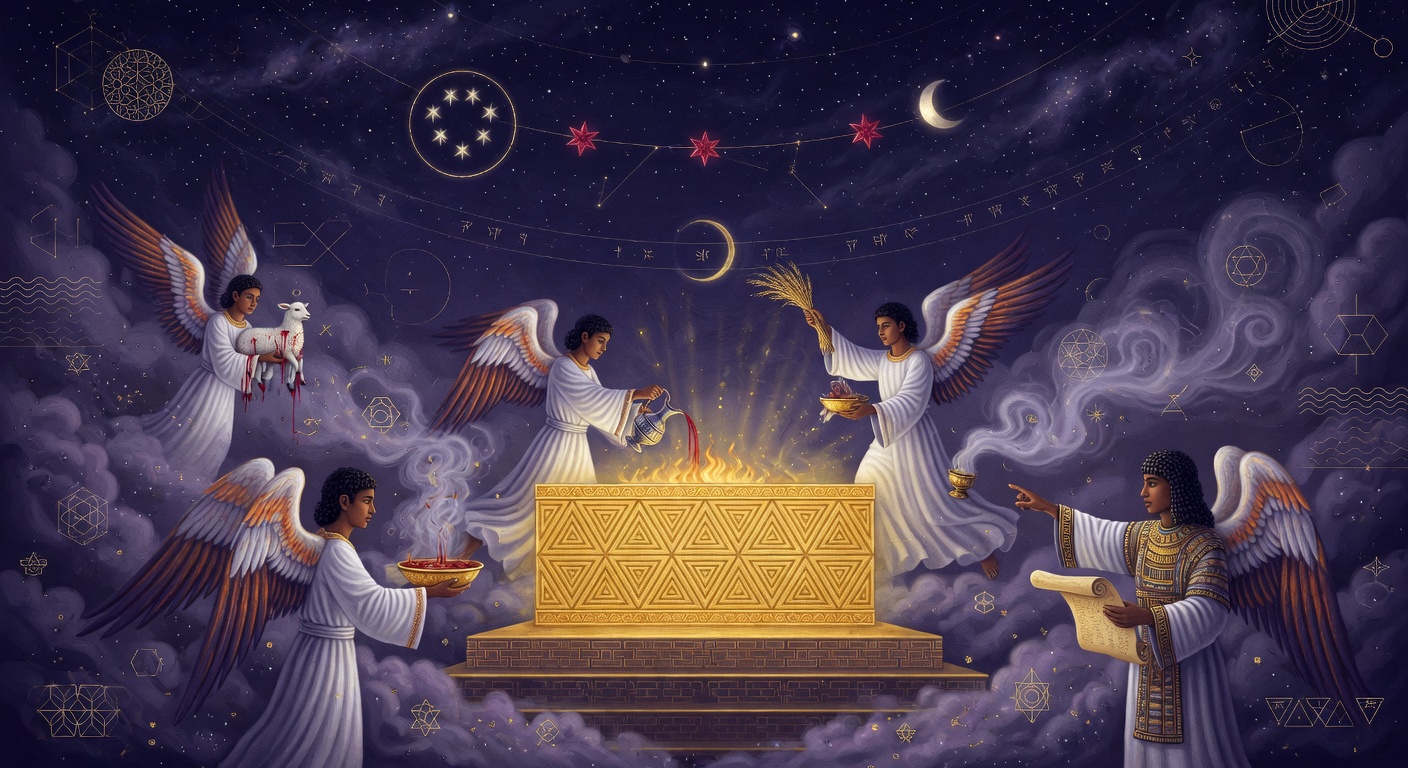
Passover is the annual commemoration of Israel's deliverance from Egyptian bondage - the night when the destroying angel passed over houses marked with lamb's blood, as prescribed in Jubilees 49. The annual commemoration of Israel's deliverance from bondage in Egypt holds a central place in the calendrical and ritual traditions preserved within these ancient pseudepigraphal works. Far from a simple historical memorial, the observance is presented as an eternal statute binding upon future generations, one that reinforces the covenantal relationship between the divine and the chosen people. In the Book of Jubilees, this festival is woven into the fabric of sacred time, aligning the events of the Exodus with a divinely ordained solar calendar that ensures its perpetual recurrence on the fourteenth day of the first month. Particular emphasis falls on the precise manner of its celebration within the sanctuary. Jubilees 49 outlines strict requirements for the sacrifice of a year-old lamb or kid, its blood to be sprinkled on the altar, and the meat to be roasted whole without breaking any bone. Participants are instructed to eat the meal in haste, girded and prepared for departure, while the ritual itself must be conducted only at the central sanctuary after the tabernacle or temple has been established. These regulations underscore the text's concern for purity and centralized worship, transforming the meal into an act of atonement and remembrance that protects the community from plague and affirms their separation from surrounding nations. The Book of Jasher supplies the narrative backdrop to these prescriptions, recounting the final plague and the hurried departure from Egypt in chapters that detail the smearing of blood on doorposts and the subsequent flight. Within the wider Enochic corpus, such observances echo broader themes of heavenly tablets and predetermined festivals, linking the earthly ritual to cosmic order. Together these accounts portray the festival not merely as historical recollection but as an ongoing mechanism for covenant renewal and communal identity.
Details
- Category
- Spring
- Timing
- 14th of Nisan (1st month)
- Season
- Spring
Key Chapters
Key Passages
Institution of Passover
The Book of Jubilees 49:1-23
Remember the commandment which the Lord commanded thee concerning the passover, that thou shouldst celebrate it in its s...
 1emember the commandment which the Lord commanded thee concerning the passover, that thou shouldst celebrate it in its season on the fourteenth of the first month, that thou shouldst kill it before it is evening, and that they should eat it by night on the evening of the fifteenth from the time of the setting of the sun.
Passover and exodus
The Book of Jubilees 48:1-19
And in the sixth year of the third week of the forty-ninth jubilee thou didst depart and dwell in 2372 A.M. the land of ...
 1nd in the sixth year of the third week of the forty-ninth jubilee thou didst depart and dwell in 2372 A.M. the land of Midian, five weeks and one year. And thou didst return into Egypt in the second week in the second year in the fiftieth jubilee.
Did You Know?
Jubilees insists it must be kept only in the sanctuary, not in homes.
The date is tied to the solar calendar exactly.
Jubilees prohibits celebrating it at home - it must be eaten at the central sanctuary, unlike other traditions.
No bone of the lamb may be broken - the animal must be roasted whole and completely consumed.
The date is fixed to the solar calendar, preventing it from ever drifting to the wrong season.