Feast of Unleavened Bread
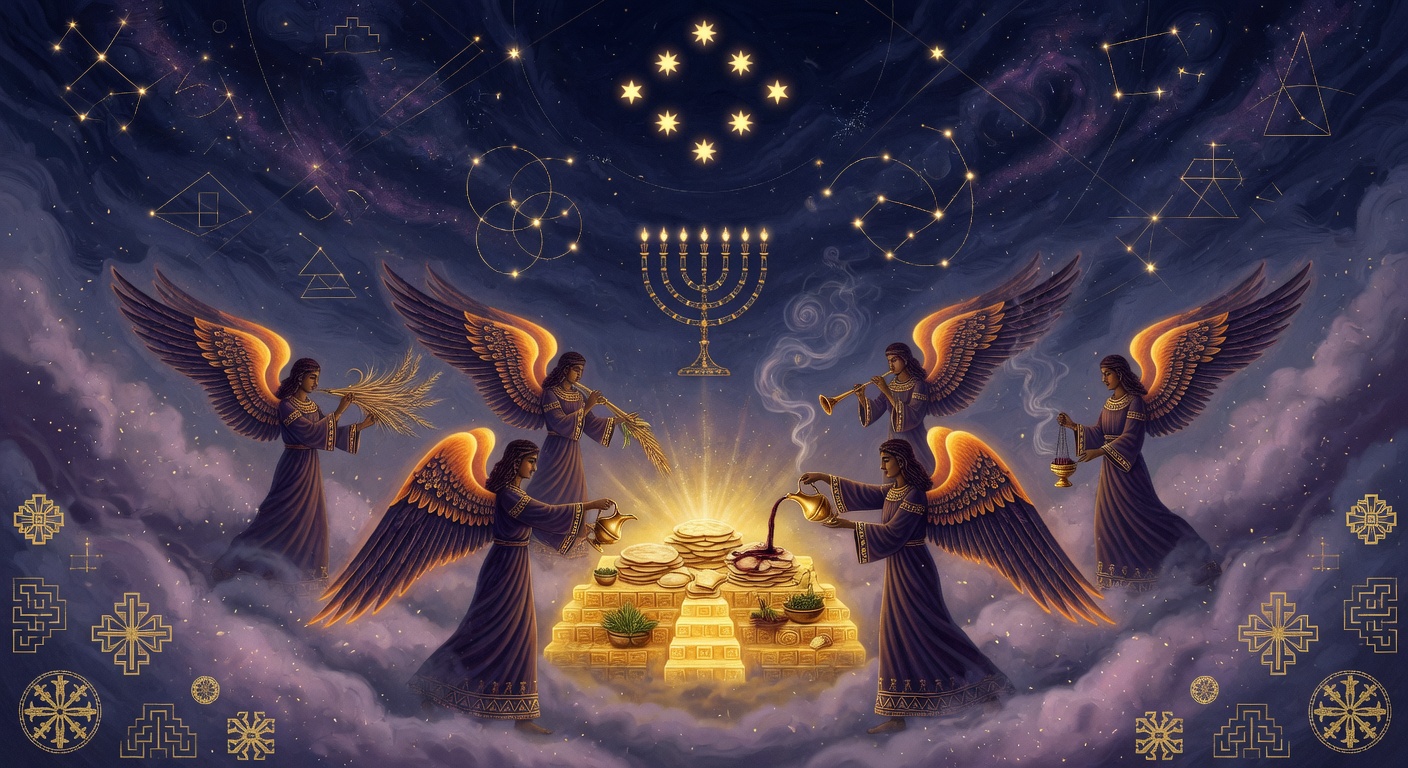
The Feast of Unleavened Bread is the seven-day observance immediately following Passover during which no leaven may be found in any Israelite dwelling - commemorating the haste of the departure from Egypt. Amid the sacred narratives of liberation and divine covenant found in these ancient writings, the seven-day period of consuming only unleavened bread immediately follows the Passover sacrifice as a solemn marker of Israel's swift exodus from bondage. The Book of Jubilees presents this observance as an eternal statute ordained from the heavens, explicitly linking it to the haste with which the people departed Egypt before their dough could rise. In chapter 49, the text instructs that the feast must be kept with unleavened bread and bitter herbs for seven days, beginning on the fifteenth of the first month, underscoring that no leaven is to be found in all Israelite dwellings during this time lest the covenantal memory be profaned. The Book of Jasher expands this historical dimension through its detailed retelling of the exodus events, noting how the Israelites baked their dough into cakes of unleavened bread as they fled, carrying the provisions on their shoulders amid the chaos of departure. This narrative grounds the practice not merely in ritual prescription but in the lived urgency of divine deliverance, where the absence of leaven symbolizes both physical haste and spiritual readiness to abandon the old life. Such accounts align with the broader patriarchal timeline in these texts, where festivals are retrojected to earlier figures like Abraham to affirm their timeless authority. Within the Enochian tradition, this observance gains further resonance through Jubilees' integration of a precise solar calendar that synchronizes earthly feasts with celestial order, ensuring the seven days fall in harmony with the seasons established at creation. The emphasis on purity and separation from leaven echoes Enoch's own warnings against corruption and defilement, transforming the feast into a microcosm of cosmic renewal and covenant fidelity. Readers exploring these works discover how the practice weaves personal remembrance with universal patterns of redemption, inviting reflection on how ancient communities sustained identity through disciplined participation in sacred time.
Details
- Category
- Spring
- Timing
- 15-21 Nisan
- Season
- Spring
Key Chapters
Key Passages
Unleavened Bread Regulations
The Book of Jubilees 49:22-23
And do thou, Moses, command the children of Israel to observe the ordinances of the passover, as it was commanded unto t...
 22nd do thou, Moses, command the children of Israel to observe the ordinances of the passover, as it was commanded unto thee; declare thou unto them every year and the day of its days, and the festival of unleavened bread, that they should eat unleavened bread seven days, (and) that they should observe its festival, and that they bring an oblation every day during those seven days of joy before the Lord on the altar of your God.
Did You Know?
Jubilees traces this observance back to Abraham, who baked unleavened cakes during angelic visits.
The seven-day duration mirrors the creation week, linking liberation to cosmic renewal.
The dough had no time to rise because departure from Egypt was immediate - haste made holy.
Jubilees traces the practice back to Abraham entertaining angels with unleavened cakes.
Seven days without leaven symbolizes complete purification - no corruption can remain.