Coming Judgment on the Wicked
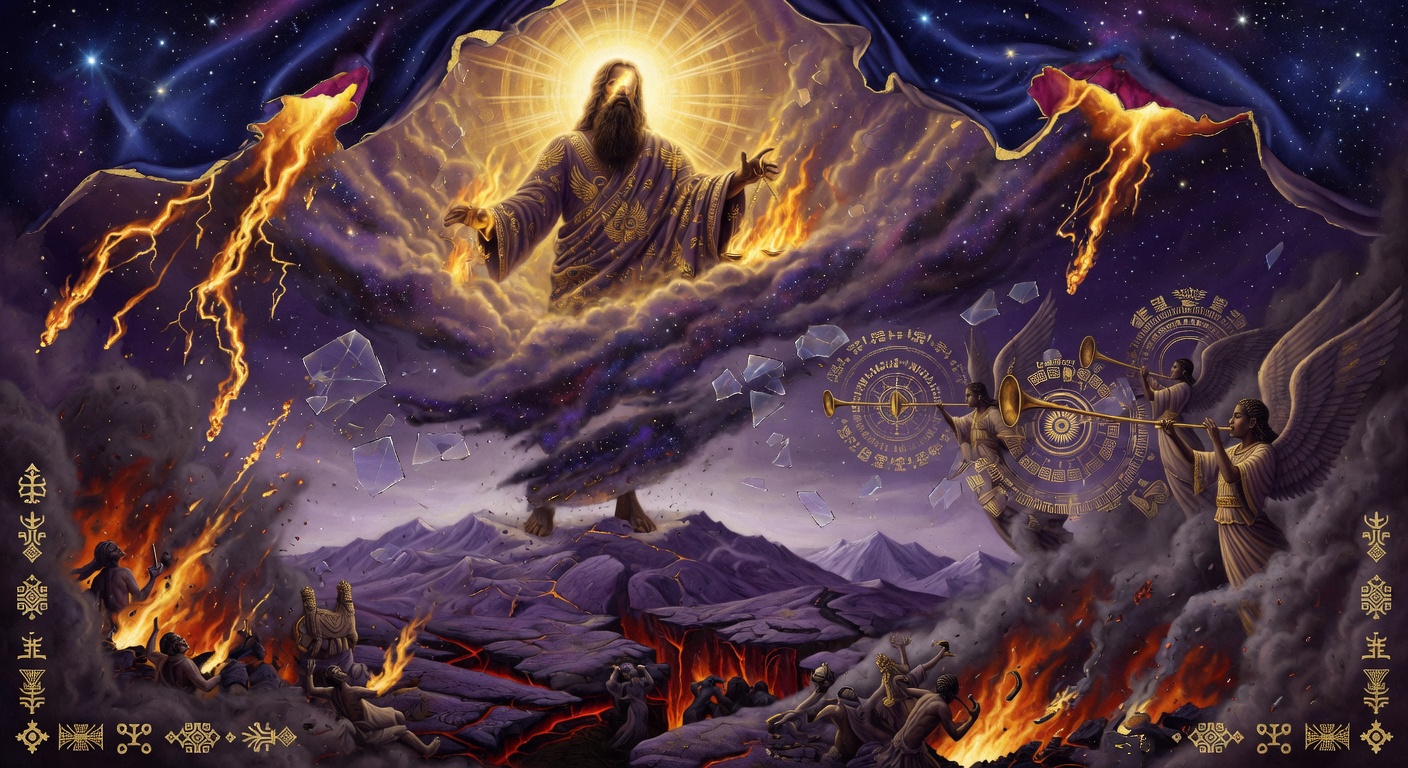
The Coming Judgment is the foundational prophecy of 1 Enoch - the declaration that the Holy Great One will descend from heaven with ten thousand holy ones to execute judgment on all flesh and destroy the ungodly. In the visionary landscape of ancient Jewish apocalyptic writings, few themes resonate with such urgency as the divine descent to confront human wickedness and cosmic disorder. This expectation of an impending judgment runs through the Enochic corpus as a central thread, portraying a sovereign God who refuses to remain distant from the moral chaos wrought by both rebellious angels and defiant humanity. Drawing from traditions that expand upon Genesis narratives, these texts frame history itself as moving inexorably toward a decisive reckoning, where the boundaries between heaven and earth dissolve and hidden deeds are brought to light. The prophecy finds its most vivid expression in the opening chapter of 1 Enoch, where the Holy Great One emerges from the heavenly abode accompanied by myriads of holy ones to execute judgment on the ungodly. This passage, positioned at the threshold of the Book of the Watchers, establishes the entire Enochic revelation as oriented toward eschatological justice. It echoes the Sinai theophany while projecting it forward into a universal assize, condemning the Watchers for their corruption of humanity and the kings of the earth for their violence and oppression. The language underscores both the inevitability and the thoroughness of this intervention, leaving no corner of creation untouched by divine scrutiny. Within the wider Enochian tradition, this motif of coming judgment receives further elaboration in sections such as the Animal Apocalypse and the Epistle of Enoch, where the righteous are promised vindication and the wicked face destruction by fire and sword. The Book of Jubilees complements this vision by recounting earlier acts of judgment, such as the flood, as prototypes for the final purge, emphasizing covenant fidelity as the dividing line between salvation and ruin. Together these writings offered ancient readers both warning and consolation, assuring them that present suffering under unjust powers would not endure. For modern explorers of these texts, the theme illuminates how Second Temple communities grappled with questions of theodicy and hope, transforming older scriptural stories into a dynamic call to ethical vigilance. The judgment is never merely punitive but serves to restore cosmic order, renewing the earth for those who have walked in righteousness.
Details
- Category
- Apocalyptic
- Status
- unfulfilled
The Prophecy
The Holy Great One will come forth from His dwelling to execute judgment upon all and destroy all the ungodly.
Source
The Book of Enoch 1:3-9
Concerning the elect I said, and took up my parable concerning them: The Holy Great One will come forth from His dwellin...
 3oncerning the elect I said, and took up my parable concerning them: The Holy Great One will come forth from His dwelling,
Key Chapters
Did You Know?
This opening oracle sets the tone for all of 1 Enoch.
It is quoted in the epistle of Jude.
The opening oracle of 1 Enoch uses Sinai theophany language projected into the future, making judgment a second Sinai.
Ten thousand holy ones accompany the judge - the same angelic hosts who serve as witnesses throughout the book.
This passage is directly quoted in the Epistle of Jude, proving its wide circulation in antiquity.