Eternal Covenant with Abraham's Seed
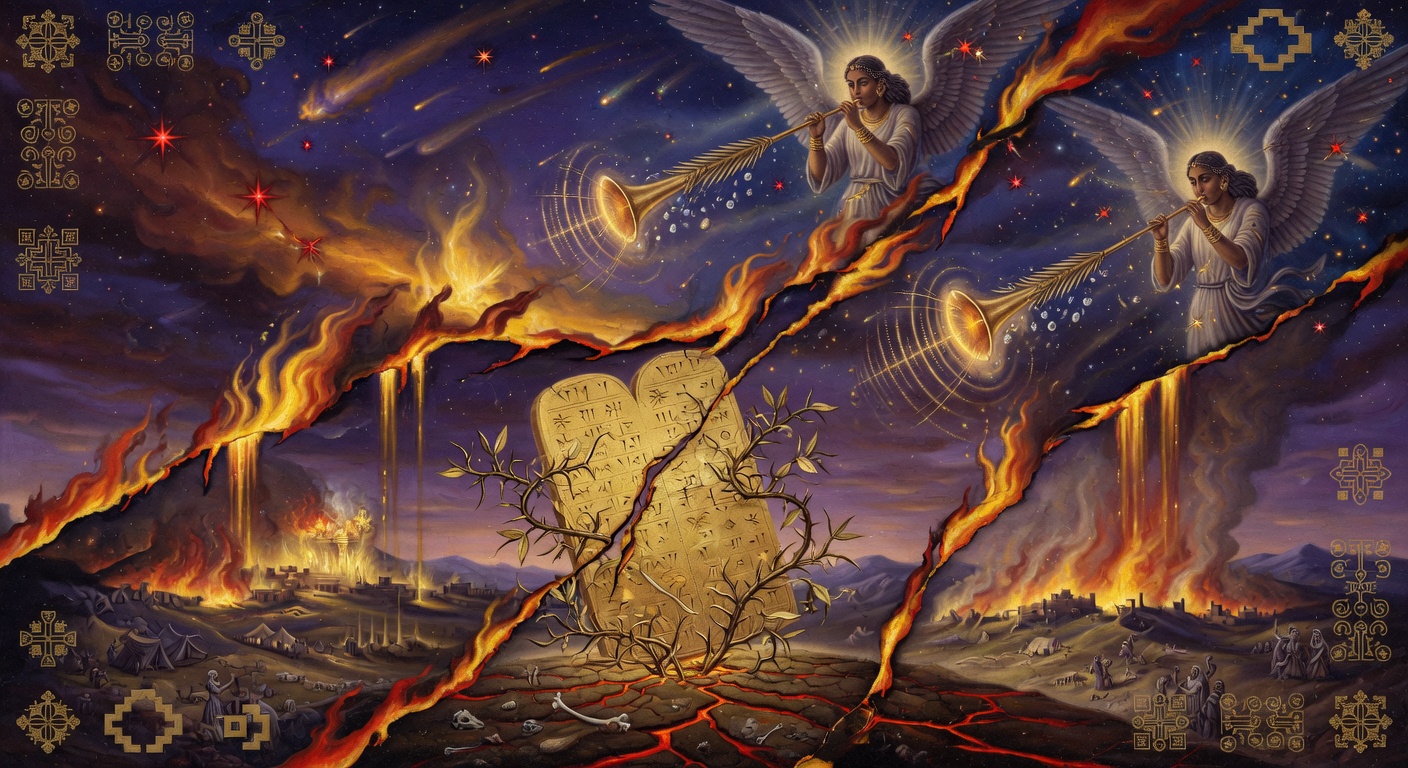
The Covenant with Abraham is the prophetic promise that through one man's seed all nations will be blessed - a promise of land, descendants, and divine relationship sealed by oath and confirmed across generations. In the landscape of Second Temple Jewish writings, divine promises to the patriarchs are portrayed not as fleeting agreements but as enduring foundations that shape the future of an entire people. These texts emphasize how commitments regarding progeny, territory, and moral order persist across generations, even amid exile or disruption, offering readers a vision of continuity rooted in ancestral fidelity. Such themes resonate deeply within the pseudepigraphal corpus, where historical memory intertwines with prophetic expectation to affirm the lasting place of Abraham's line in the divine plan. The Book of Jubilees develops this idea most explicitly, presenting the covenant as an eternal ordinance renewed across patriarchal eras. In Jubilees 15, the promise of land and the requirement of circumcision are framed as perpetual statutes for Abraham's seed, with the text underscoring that the law itself was inscribed on heavenly tablets from creation. Later chapters, such as Jubilees 17 and 22, extend these assurances to Isaac and Jacob, linking territorial inheritance to observance of commandments and warning that neglect invites temporary judgment rather than final revocation. This framework situates the covenant within a cosmic timeline, where the land serves as both gift and testing ground for righteousness. Parallel accounts in the Book of Jasher elaborate the patriarchal narratives with additional dialogue and detail, illustrating how Abraham receives assurances of an everlasting lineage while journeying through Canaan. These expansions align with Enochic traditions found in 1 Enoch, particularly the Apocalypse of Weeks and the Animal Apocalypse, where the elect seed emerges as a purified remnant destined to inherit renewed creation. Here the covenant motif connects to broader eschatological hopes, portraying the law as a safeguard that preserves the community until ultimate restoration. Together these writings invite contemplation of identity forged through ancient pledges, highlighting how land and instruction function as twin pillars sustaining a people across epochs. Readers encounter a theology of resilience, where divine faithfulness ensures that Abraham's descendants remain central to the unfolding of sacred history.
Details
- Category
- Covenantal
- Status
- fulfilled
The Prophecy
The covenant with Abraham will be established with his seed forever; the land and the law given.
Source
The Book of Jubilees 15:1-34
And in the fifth year of the fourth week of this jubilee, 1979 A.M. in the third month, in the middle of the month, Abra...
 1nd in the fifth year of the fourth week of this jubilee, 1979 A.M. in the third month, in the middle of the month, Abram celebrated the feast of the first-fruits of the grain harvest.
Fulfillment
Renewed with Isaac, Jacob, and at Sinai.
Fulfilled In
The Book of Jubilees 1:1-29
And it came to pass in the first year of the exodus of the children of Israel out of Egypt, in the third month, on the s...
nd it came to pass in the first year of the exodus of the children of Israel out of Egypt, in the third month, on the sixteenth day of the month, 2450 Anno Mundi that God spake to Moses, saying: 'Come up to Me on the Mount, and I will give thee two tables of stone of the law and of the commandment, which I have written, that thou mayst teach them.'
Prophecy Journey
Key Chapters
Did You Know?
Jubilees places the covenant ceremony during the Feast of Weeks, linking it to the calendar.
Abraham is promised that his seed will be as numerous as the stars - an image rich in Enochic symbolism.
The stars promised to Abraham carry Enochic symbolism - stars represent righteous beings in the heavenly order.
Jubilees integrates the covenant ceremony with the Feast of Weeks, making it a calendrical event.
The covenant includes a prophetic vision of Israel's future suffering and deliverance in Egypt.