Altar of Sacrifice
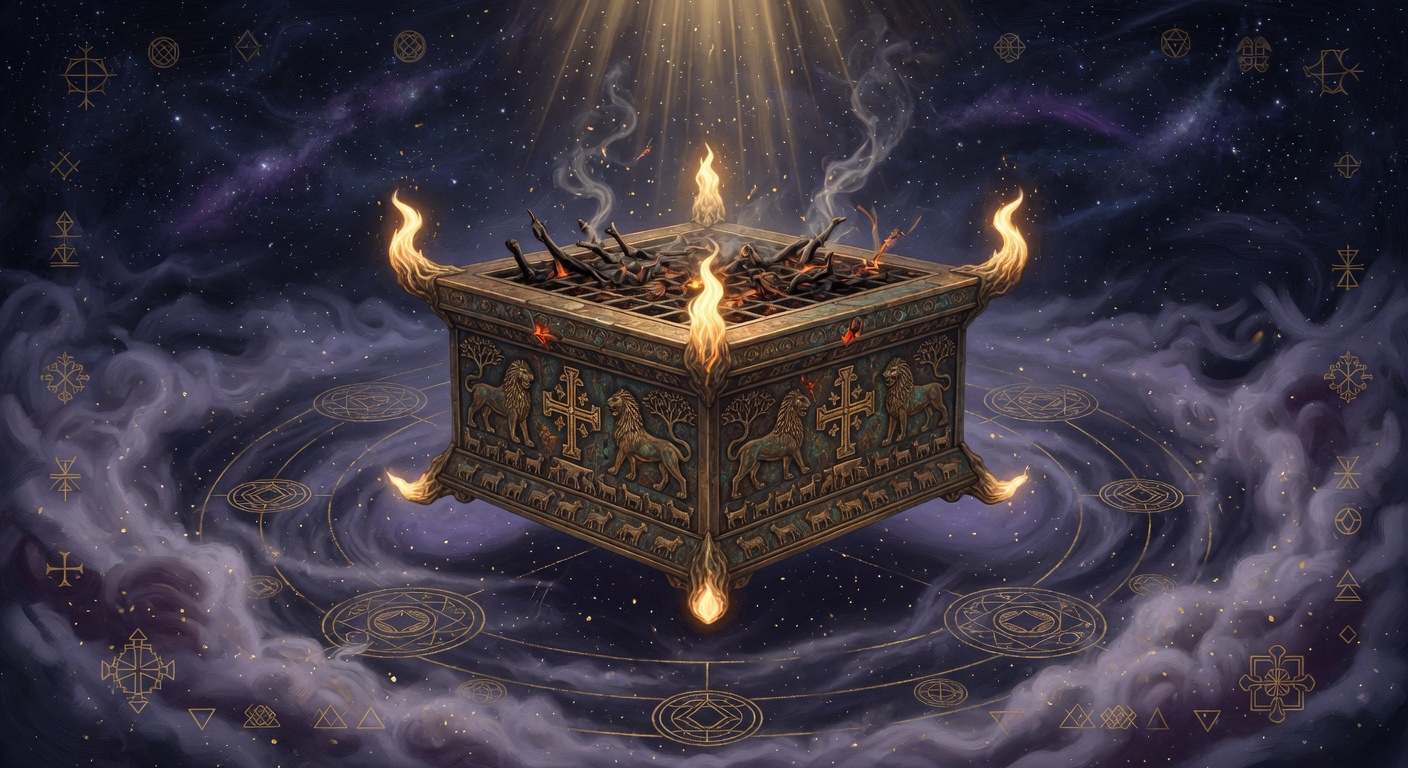
The Altar is the place of sacrifice where offerings are burned before God - from Noah's first post-flood altar on Ararat through Abraham's altars across Canaan to the formal altar of the tabernacle. Throughout the patriarchal narratives preserved in the Book of Jubilees, the construction of an altar for burnt offerings marks pivotal moments of covenant renewal and divine encounter. Noah raises the first such structure after the flood in Jubilees 6, offering clean animals as an atonement that elicits God’s promise never again to destroy the earth by water. Subsequent patriarchs follow this pattern, with Abraham building altars at Bethel and the oaks of Mamre to commemorate the renewal of the covenant and the promise of land and descendants. These acts are not mere formalities but deliberate restorations of the sacred order first revealed to Enoch, linking earthly worship to the heavenly cycles observed in the Book of Enoch. The Book of Jubilees provides the most systematic treatment of how these altars function within the annual calendar of feasts. Detailed prescriptions appear for each appointed time, from the Festival of Weeks in chapter 6 to the observance of Passover and Unleavened Bread in chapter 49, where the blood of the offering is applied in precise ritual sequence. The text emphasizes that the altar must be approached only on the correct day according to the solar calendar, underscoring the Enochian concern for synchronizing human worship with celestial order. Jasher echoes this emphasis by recording the same patriarchal offerings, often adding narrative detail about the wood and the fire that consume the sacrifice, thereby illustrating the physical reality of the ritual. Within the wider Enochian tradition, the altar serves as the terrestrial counterpart to the heavenly temple glimpsed in Enoch’s visions. Offerings performed there maintain the cosmic balance disrupted by the Watchers and restore harmony between heaven and earth. Far from a peripheral cultic object, it embodies the tradition’s central conviction that proper sacrifice, timed correctly and offered with a pure heart, sustains the covenant across generations.
Details
- Category
- Sanctuary
- Associated With
- Moses, Noah, Abraham
Key Chapters
Key Passages
Noah's Altar
The Book of Jubilees 6:1-4
And on the new moon of the third month he went forth from the ark, and built an altar on that mountain....
 1nd on the new moon of the third month he went forth from the ark, and built an altar on that mountain.
Abraham's Altars
The Book of Jubilees 13:1-9
And Abram journeyed from Haran, and he took Sarai, his wife, and Lot, his brother Haran's son, to the land of Canaan, an...
1nd Abram journeyed from Haran, and he took Sarai, his wife, and Lot, his brother Haran's son, to the land of Canaan, and he came into Asshur, and proceeded to Shechem, and dwelt near a lofty oak.
Altar instructions
The Book of Jubilees 21:7-16
And if thou dost slay a victim as an acceptable peace offering, slay ye it, and pour out its blood upon the altar, and a...
7nd if thou dost slay a victim as an acceptable peace offering, slay ye it, and pour out its blood upon the altar, and all the fat of the offering offer on the altar with fine flour and the meat offering mingled with oil, with its drink offering -offer them all together on the altar of burnt offering; it is a sweet savour before the Lord.
Did You Know?
Noah builds the first post-flood altar on Ararat, reestablishing worship in the renewed world.
Jubilees provides precise instructions for salting every offering placed upon it.
Abraham built altars at every significant location in Canaan, claiming the land spiritually before possessing it physically.
Jubilees 21 provides detailed instructions about which wood to use and which animals are acceptable, beyond what other sources preserve.
The altar at Ararat marks the transition between the old world destroyed by flood and the new world under covenant.