Day of Atonement
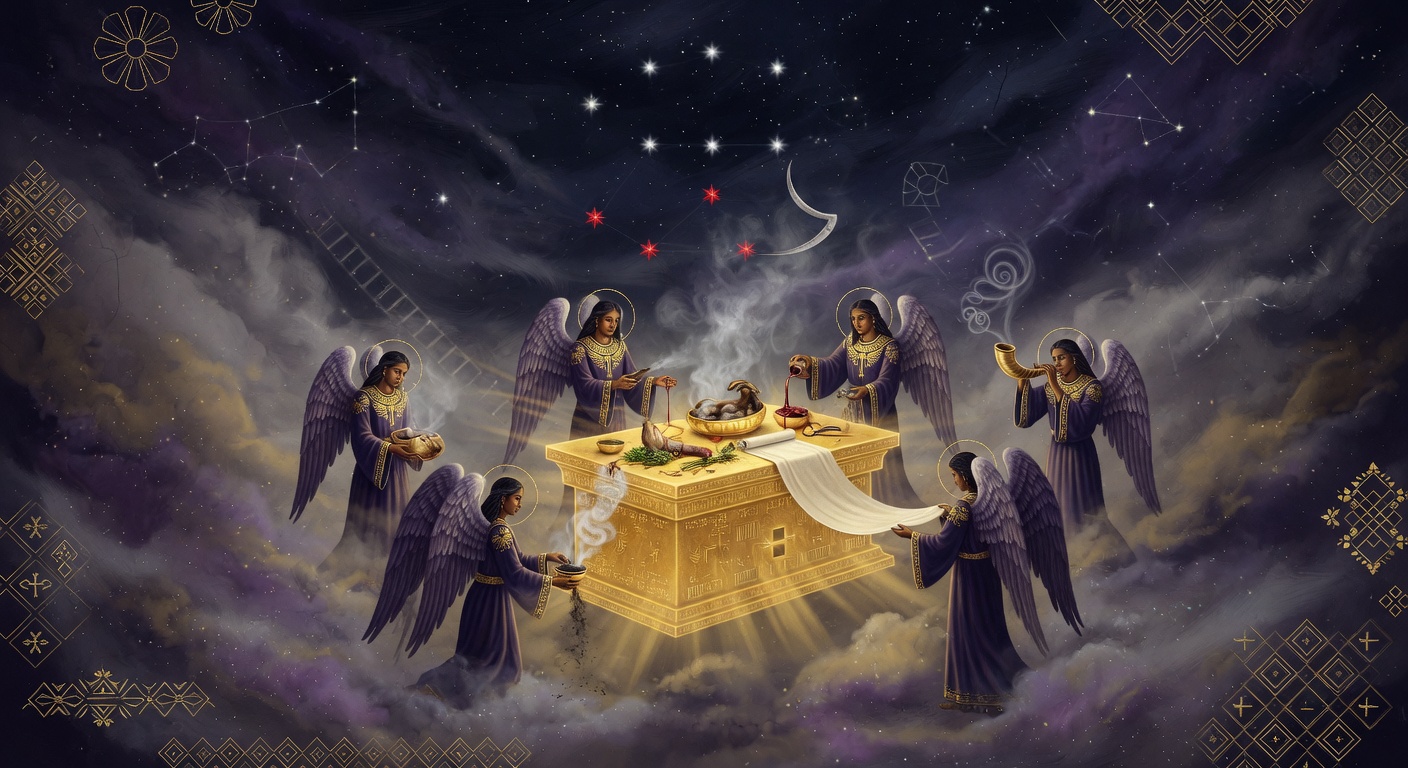
The Day of Atonement is the annual fast on the tenth of Tishri dedicated to communal repentance and purification - connected in Jubilees specifically to the grief of Jacob over Joseph's reported death. Within the ancient pseudepigraphal works that expand upon biblical traditions, the observance of a dedicated day for fasting and communal atonement emerges as a profound mechanism for addressing human transgression and restoring harmony with the divine order. The Book of Jubilees integrates this practice deeply into its rewritten chronology of Israel's history, presenting it not merely as ritual but as an annual commemoration tied to pivotal ancestral events. This framing underscores how such a day functions within a solar calendar of 364 days, ensuring its fixed recurrence and linking personal repentance to broader cosmic stability. The Book of Jubilees specifies the tenth day of the seventh month as one of affliction and mourning, with instructions for particular sacrifices to effect purification. In chapter 34, verses 18 through 19, the text connects the observance directly to the grief surrounding Joseph's betrayal by his brothers, transforming an act of familial rupture into an enduring call for self-examination and expiation of sins. This emphasis on mourning extends beyond individual failings to encompass collective remembrance, positioning the day as essential for maintaining covenantal fidelity amid the cycles of history that Jubilees meticulously records. Echoes appear in the Enochic literature through themes of heavenly judgment and the consequences of rebellion, as seen in the Book of Watchers where the Watchers' transgressions demand divine reckoning. Although 1 Enoch does not outline festival observances in detail, its portrayal of atonement-like processes in the celestial realm provides context for understanding how earthly fasting mirrors angelic accountability and the restoration of order disrupted by sin. The Book of Jasher offers supplementary narrative layers on patriarchal trials that align with these motifs of reconciliation. Exploring these references reveals the observance's role in bridging earthly practice with eternal patterns, inviting modern readers to appreciate how these texts wove ritual into the fabric of sacred time.
Details
- Category
- Fall
- Timing
- 10th of Tishri (7th month)
- Season
- Fall
Key Chapters
Key Passages
Day of Atonement
The Book of Jubilees 34:18-19
For this reason it is ordained for the children of Israel that they should afflict themselves on the tenth of the sevent...
 18or this reason it is ordained for the children of Israel that they should afflict themselves on the tenth of the seventh month -on the day that the news which made him weep for Joseph came to Jacob his father- that they should make atonement for themselves thereon with a young goat on the tenth of the seventh month, once a year, for their sins; for they had grieved the affection of their father regarding Joseph his son.
Joseph mourned on this day
The Book of Jubilees 34:12-19
And the sons of Jacob slaughtered a kid, and dipped the coat of Joseph in the blood, and sent (it) to Jacob their father...
 12nd the sons of Jacob slaughtered a kid, and dipped the coat of Joseph in the blood, and sent (it) to Jacob their father on the tenth of the seventh month.
Did You Know?
Jubilees connects this day specifically to the grief of Jacob over Joseph's reported death.
It is the only feast in Jubilees explicitly tied to affliction and fasting rather than celebration.
Jubilees connects this day specifically to Jacob's grief over Joseph - personal sorrow made communal.
It is the only fast day in the festival calendar - all others involve feasting and joy.
The affliction required on this day mirrors the cosmic affliction of fallen angels awaiting judgment.