Nimrod in the Book of Jasher in the Ancient Writings
Idolatry is the worship of false gods and crafted images that these texts trace back to the demons released from the giants' destroyed bodies - the persistent human corruption that Abraham was called to reject. Within the expansive narratives preserved in the pseudepigraphal traditions, the rejection of idolatrous worship emerges as a decisive act of fidelity that restores the primordial order disrupted after the flood. These texts portray idolatry not merely as erroneous ritual but as a profound inversion of divine sovereignty, one that echoes the angelic transgressions chronicled in the Enochic corpus and demands a return to exclusive service of the Most High. By situating the patriarch Abraham at the center of this confrontation, Jubilees and Jasher present his actions as a renewal of the pure knowledge once entrusted to Enoch and transmitted through the righteous line. The Book of Jubilees provides the most detailed account of Abraham’s domestic revolt. In chapters 11 and 12 the young Abraham observes his father Terah fashioning and selling wooden idols, then secretly sets the entire workshop ablaze, resulting in the death of his brother Haran. This episode is framed as an intellectual awakening: Abraham recognizes that “the idols have no spirit” and that only the God who created heaven and earth deserves worship. The narrative thereby transforms a household incident into a theological manifesto against the material representation of deity. Jasher expands the same motif onto the public stage, depicting Abraham’s direct challenge to the imperial cult of Nimrod. After destroying the royal idols and refusing to participate in their veneration, Abraham is cast into a fiery furnace yet emerges unscathed, an event that precipitates the collapse of Nimrod’s authority and affirms the exclusive power of the one true God. These scenes resonate with the Enochian tradition’s broader condemnation of image worship found in the Epistle of Enoch (1 Enoch 99), where the making of idols is listed among the sins that will bring eschatological judgment, thereby linking Abraham’s stand to the cosmic struggle initiated by the Watchers. Taken together, these accounts underscore a central conviction of the Enochic literature: true knowledge of God entails both the intellectual rejection of false images and the practical refusal to participate in their cult. Abraham’s iconoclasm thus functions as the post-diluvian counterpart to Enoch’s heavenly ascent, reestablishing monotheistic worship as the foundation for covenantal relationship.
Key Passages on Nimrod in the Book of Jasher
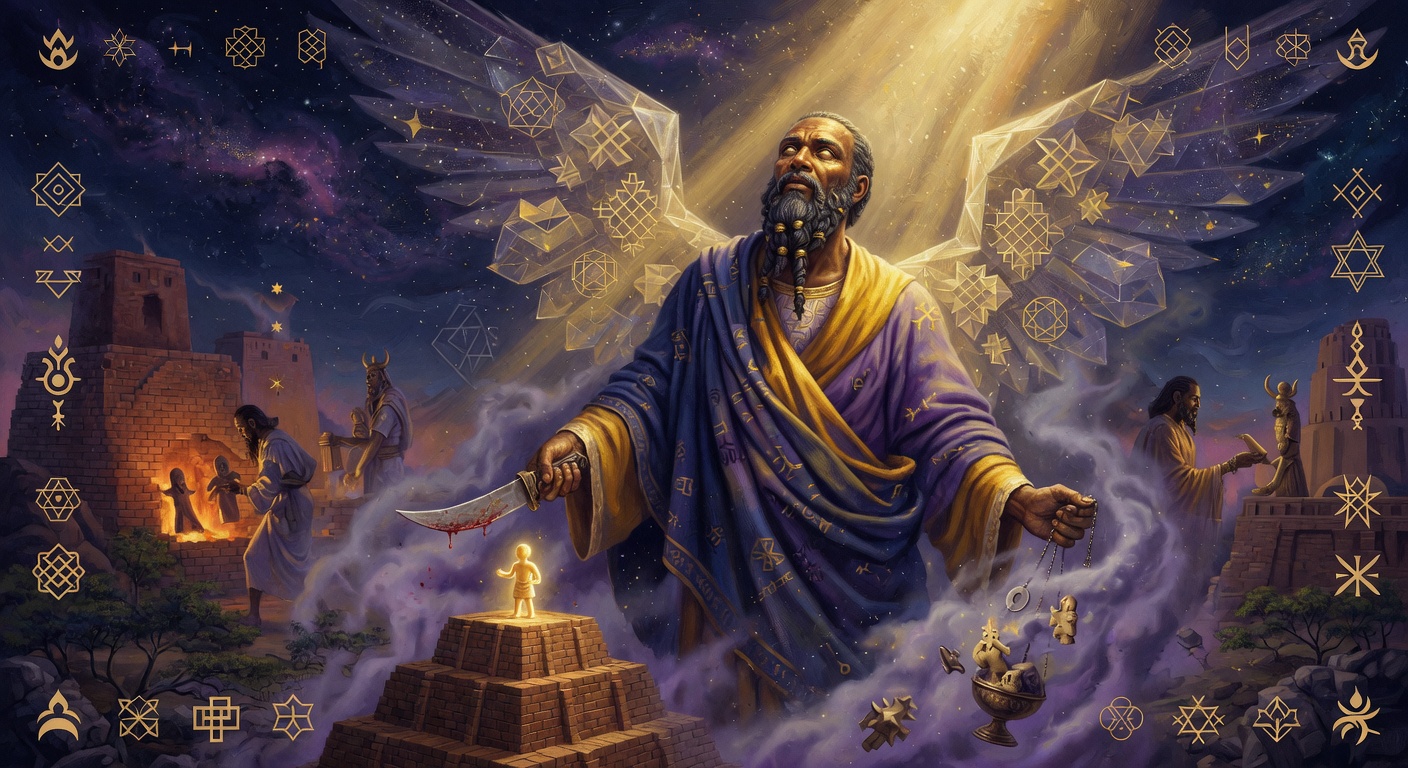
Abram Burns the Idols
The Book of Jubilees 12:1-141 And it came to pass in the sixth week, in the seventh year thereof, 1904 A.M. that Abram said to Terah his father, saying, 'Father!' 2 And he said, 'Behold, here am I, my son.' And he said, 'What help and profit have we from those idols which thou dost worship, And before which thou dost bow thyself? 3 For there is no spirit in them, For they are dumb forms, and a misleading of the heart. Worship them not: 4 Worship the God of heaven, Who causes the rain and the dew to descend on the earth And does everything upon the earth, And has created everything by His word, And all life is from before His face. 5 Why do ye worship things that have no spirit in them? For they are the work of (men's) hands, And on your shoulders do ye bear them, And ye have no help from them, But they are a great cause of shame to those who make them, And a misleading of the heart to those who worship them: Worship them not.' 6 And his father said unto him, I also know it, my son, but what shall I do with a people who have made me to serve before them? 7 And if I tell them the truth, they will slay me; for their soul cleaves to them to worship them and honour them. 8 Keep silent, my son, lest they slay thee.' And these words he spake to his two brothers, and they were angry with him and he kept silent. 9 And in the fortieth jubilee, in the second week, in the seventh year thereof, 1925 A.M. Abram took to himself a wife, and her name was Sarai, the daughter of his father, and she became his wife. 10 And Haran, his brother, took to himself a wife in the third year of the third week, 1928 A.M. and she bare him a son in the seventh year of this week, 1932 A.M. and he called his name Lot. 11 And Nahor, his brother, took to himself a wife. 12 And in the sixtieth year of the life of Abram, that is, in the fourth week, in the fourth year thereof, 1936 A.M. Abram arose by night, and burned the house of the idols, and he burned all that was in the house and no man knew it. 13 And they arose in the night and sought to save their gods from the midst of the fire. 14 And Haran hasted to save them, but the fire flamed over him, and he was burnt in the fire, and he died in Ur of the Chaldees before Terah his father, and they buried him in Ur of the Chaldees.
Abraham destroys idols
The Book of Jasher 11:30-5030 And Abram viewed them, and behold they had neither voice nor hearing, nor did one of them stretch forth his hand to the meat to eat. 31 And in the evening of that day in that house Abram was clothed with the spirit of God. 32 And he called out and said, Wo unto my father and this wicked generation, whose hearts are all inclined to vanity, who serve these idols of wood and stone which can neither eat, smell, hear nor speak, who have mouths without speech, eyes without sight, ears without hearing, hands without feeling, and legs which cannot move; like them are those that made them and that trust in them. 33 And when Abram saw all these things his anger was kindled against his father, and he hastened and took a hatchet in his hand, and came unto the chamber of the gods, and he broke all his father's gods. 34 And when he had done breaking the images, he placed the hatchet in the hand of the great god which was there before them, and he went out; and Terah his father came home, for he had heard at the door the sound of the striking of the hatchet; so Terah came into the house to know what this was about. 35 And Terah, having heard the noise of the hatchet in the room of images, ran to the room to the images, and he met Abram going out. 36 And Terah entered the room and found all the idols fallen down and broken, and the hatchet in the hand of the largest, which was not broken, and the savory meat which Abram his son had made was still before them. 37 And when Terah saw this his anger was greatly kindled, and he hastened and went from the room to Abram. 38 And he found Abram his son still sitting in the house; and he said to him, What is this work thou hast done to my gods? 39 And Abram answered Terah his father and he said, Not so my lord, for I brought savory meat before them, and when I came nigh to them with the meat that they might eat, they all at once stretched forth their hands to eat before the great one had put forth his hand to eat. 40 And the large one saw their works that they did before him, and his anger was violently kindled against them, and he went and took the hatchet that was in the house and came to them and broke them all, and behold the hatchet is yet in his hand as thou seest. 41 And Terah's anger was kindled against his son Abram, when he spoke this; and Terah said to Abram his son in his anger, What is this tale that thou hast told? Thou speakest lies to me. 42 Is there in these gods spirit, soul or power to do all thou hast told me? Are they not wood and stone, and have I not myself made them, and canst thou speak such lies, saying that the large god that was with them smote them? It is thou that didst place the hatchet in his hands, and then sayest he smote them all. 43 And Abram answered his father and said to him, And how canst thou then serve these idols in whom there is no power to do any thing? Can those idols in which thou trustest deliver thee? can they hear thy prayers when thou callest upon them? can they deliver thee from the hands of thy enemies, or will they fight thy battles for thee against thy enemies, that thou shouldst serve wood and stone which can neither speak nor hear? 44 And now surely it is not good for thee nor for the sons of men that are connected with thee, to do these things; are you so silly, so foolish or so short of understanding that you will serve wood and stone, and do after this manner? 45 And forget the Lord God who made heaven and earth, and who created you in the earth, and thereby bring a great evil upon your souls in this matter by serving stone and wood? 46 Did not our fathers in days of old sin in this matter, and the Lord God of the universe brought the waters of the flood upon them and destroyed the whole earth? 47 And how can you continue to do this and serve gods of wood and stone, who cannot hear, or speak, or deliver you from oppression, thereby bringing down the anger of the God of the universe upon you? 48 Now therefore my father refrain from this, and bring not evil upon thy soul and the souls of thy household. 49 And Abram hastened and sprang from before his father, and took the hatchet from his father's largest idol, with which Abram broke it and ran away. 50 And Terah, seeing all that Abram had done, hastened to go from his house, and he went to the king and he came before Nimrod and stood before him, and he bowed down to the king; and the king said, What dost thou want?
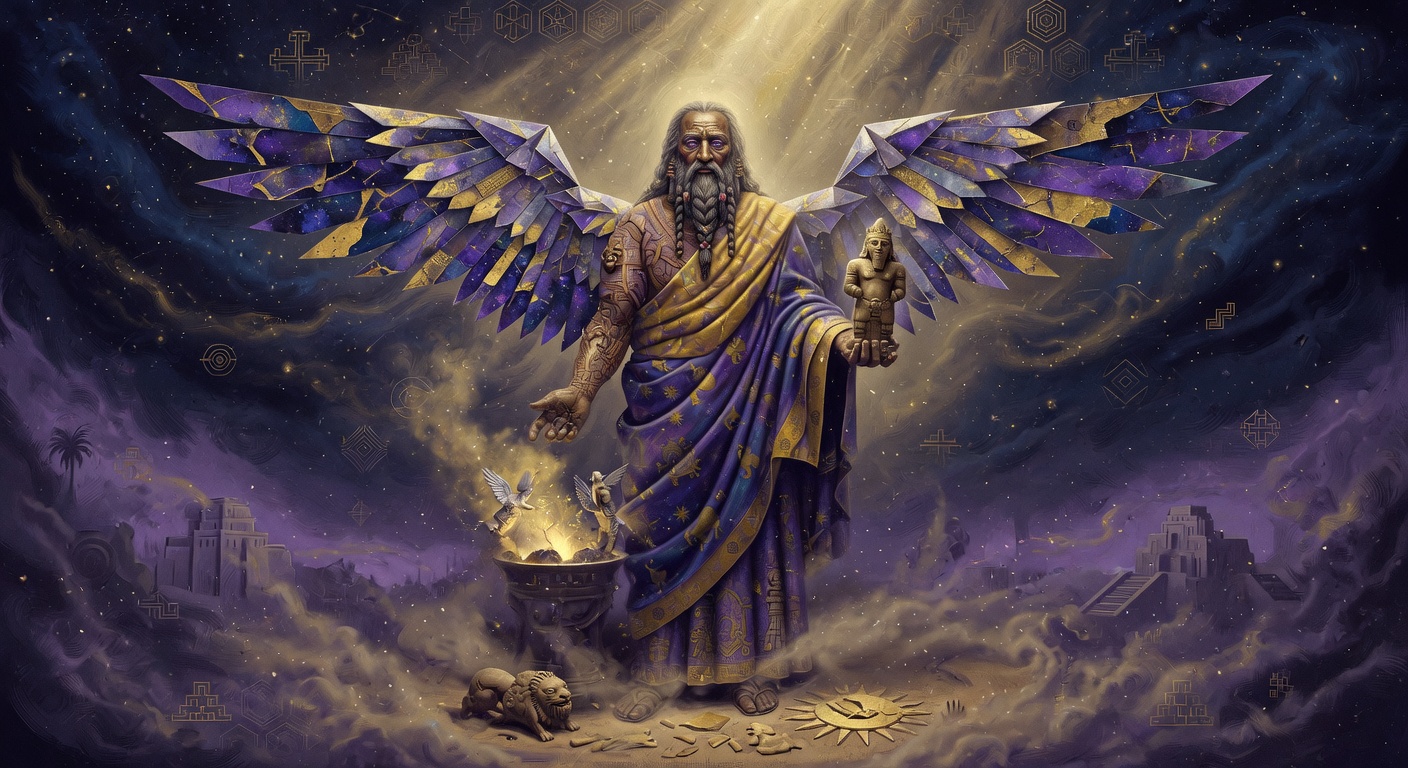
Golden Calf
The Book of Jasher 82:15-2515 And the Lord said to Moses, before he had come down from the mount, Get thee down, for thy people whom thou didst bring forth from Egypt have corrupted themselves. 16 They have made to themselves a molten calf, and have bowed down to it, now therefore leave me, that I may consume them from off the earth, for they are a stiffnecked people. 17 And Moses besought the countenance of the Lord, and he prayed to the Lord for the people on account of the calf which they had made, and he afterward descended from the mount and in his hands were the two tablets of stone, which God had given him to command the Israelites. 18 And when Moses approached the camp and saw the calf which the people had made, the anger of Moses was kindled and he broke the tablets under the mount. 19 And Moses came to the camp and he took the calf and burned it with fire, and ground it till it became fine dust, and strewed it upon the water and gave it to the Israelites to drink. 20 And there died of the people by the swords of each other about three thousand men who had made the calf. 21 And on the morrow Moses said to the people, I will go up to the Lord, peradventure I may make atonement for your sins which you have sinned to the Lord. 22 And Moses again went up to the Lord, and he remained with the Lord forty days and forty nights. 23 And during the forty days did Moses entreat the Lord in behalf of the children of Israel, and the Lord hearkened to the prayer of Moses, and the Lord was entreated of him in behalf of Israel. 24 Then spake the Lord to Moses to hew two stone tablets and to bring them up to the Lord, who would write upon them the ten commandments. 25 Now Moses did so, and he came down and hewed the two tablets and went up to Mount Sinai to the Lord, and the Lord wrote the ten commandments upon the tablets.
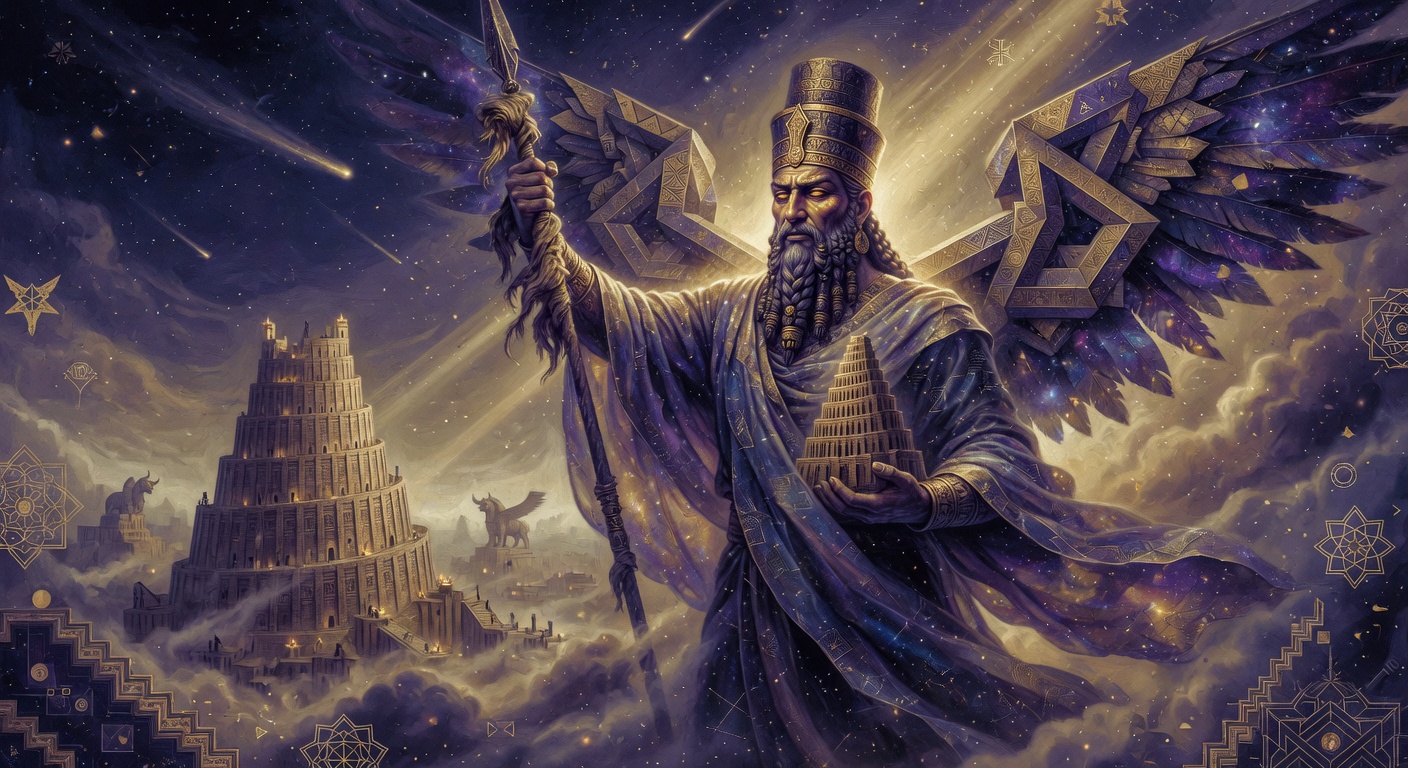
Tower of Babel as rebellion
The Book of Jasher 9:20-3920 And king Nimrod reigned securely, and all the earth was under his control, and all the earth was of one tongue and words of union. 21 And all the princes of Nimrod and his great men took counsel together; Phut, Mitzraim, Cush and Canaan with their families, and they said to each other, Come let us build ourselves a city and in it a strong tower, and its top reaching heaven, and we will make ourselves famed, so that we may reign upon the whole world, in order that the evil of our enemies may cease from us, that we may reign mightily over them, and that we may not become scattered over the earth on account of their wars. 22 And they all went before the king, and they told the king these words, and the king agreed with them in this affair, and he did so. 23 And all the families assembled consisting of about six hundred thousand men, and they went to seek an extensive piece of ground to build the city and the tower, and they sought in the whole earth and they found none like one valley at the east of the land of Shinar, about two days' walk, and they journeyed there and they dwelt there. 24 And they began to make bricks and burn fires to build the city and the tower that they had imagined to complete. 25 And the building of the tower was unto them a transgression and a sin, and they began to build it, and whilst they were building against the Lord God of heaven, they imagined in their hearts to war against him and to ascend into heaven. 26 And all these people and all the families divided themselves in three parts; the first said We will ascend into heaven and fight against him; the second said, We will ascend to heaven and place our own gods there and serve them; and the third part said, We will ascend to heaven and smite him with bows and spears; and God knew all their works and all their evil thoughts, and he saw the city and the tower which they were building. 27 And when they were building they built themselves a great city and a very high and strong tower; and on account of its height the mortar and bricks did not reach the builders in their ascent to it, until those who went up had completed a full year, and after that, they reached to the builders and gave them the mortar and the bricks; thus was it done daily. 28 And behold these ascended and others descended the whole day; and if a brick should fall from their hands and get broken, they would all weep over it, and if a man fell and died, none of them would look at him. 29 And the Lord knew their thoughts, and it came to pass when they were building they cast the arrows toward the heavens, and all the arrows fell upon them filled with blood, and when they saw them they said to each other, Surely we have slain all those that are in heaven. 30 For this was from the Lord in order to cause them to err, and in order; to destroy them from off the face of the ground. 31 And they built the tower and the city, and they did this thing daily until many days and years were elapsed. 32 And God said to the seventy angels who stood foremost before him, to those who were near to him, saying, Come let us descend and confuse their tongues, that one man shall not understand the language of his neighbor, and they did so unto them. 33 And from that day following, they forgot each man his neighbor's tongue, and they could not understand to speak in one tongue, and when the builder took from the hands of his neighbor lime or stone which he did not order, the builder would cast it away and throw it upon his neighbor, that he would die. 34 And they did so many days, and they killed many of them in this manner. 35 And the Lord smote the three divisions that were there, and he punished them according to their works and designs; those who said, We will ascend to heaven and serve our gods, became like apes and elephants; and those who said, We will smite the heaven with arrows, the Lord killed them, one man through the hand of his neighbor; and the third division of those who said, We will ascend to heaven and fight against him, the Lord scattered them throughout the earth. 36 And those who were left amongst them, when they knew and understood the evil which was coming upon them, they forsook the building, and they also became scattered upon the face of the whole earth. 37 And they ceased building the city and the tower; therefore he called that place Babel, for there the Lord confounded the Language of the whole earth; behold it was at the east of the land of Shinar. 38 And as to the tower which the sons of men built, the earth opened its mouth and swallowed up one third part thereof, and a fire also descended from heaven and burned another third, and the other third is left to this day, and it is of that part which was aloft, and its circumference is three days' walk. 39 And many of the sons of men died in that tower, a people without number.
Terah's idol worship
The Book of Jasher 11:1-151 And Nimrod son of Cush was still in the land of Shinar, and he reigned over it and dwelt there, and he built cities in the land of Shinar. 2 And these are the names of the four cities which he built, and he called their names after the occurrences that happened to them in the building of the tower. 3 And he called the first Babel, saying, Because the Lord there confounded the language of the whole earth; and the name of the second he called Erech, because from there God dispersed them. 4 And the third he called Eched, saying there was a great battle at that place; and the fourth he called Calnah, because his princes and mighty men were consumed there, and they vexed the Lord, they rebelled and transgressed against him. 5 And when Nimrod had built these cities in the land of Shinar, he placed in them the remainder of his people, his princes and his mighty men that were left in his kingdom. 6 And Nimrod dwelt in Babel, and he there renewed his reign over the rest of his subjects, and he reigned securely, and the subjects and princes of Nimrod called his name Amraphel, saying that at the tower his princes and men fell through his means. 7 And notwithstanding this, Nimrod did not return to the Lord, and he continued in wickedness and teaching wickedness to the sons of men; and Mardon, his son, was worse than his father, and continued to add to the abominations of his father. 8 And he caused the sons of men to sin, therefore it is said, From the wicked goeth forth wickedness. 9 At that time there was war between the families of the children of Ham, as they were dwelling in the cities which they had built. 10 And Chedorlaomer, king of Elam, went away from the families of the children of Ham, and he fought with them and he subdued them, and he went to the five cities of the plain and he fought against them and he subdued them, and they were under his control. 11 And they served him twelve years, and they gave him a yearly tax. 12 At that time died Nahor, son of Serug, in the forty-ninth year of the life of Abram son of Terah. 13 And in the fiftieth year of the life of Abram son of Terah, Abram came forth from the house of Noah, and went to his father's house. 14 And Abram knew the Lord, and he went in his ways and instructions, and the Lord his God was with him. 15 And Terah his father was in those days, still captain of the host of king Nimrod, and he still followed strange gods.
More Passages on Nimrod in the Book of Jasher
"And Cush the son of Ham, the son of Noah, took a wife in those days in his old age, and she bare a son, and they called his name Nimrod, saying, At that time the sons of men again began to rebel and transgress against God, and the child grew up, and his father loved him exceedingly, for he was the son of his old age."
"And Cush also concealed them from his sons and brothers, and when Cush had begotten Nimrod, he gave him those garments through his love for him, and Nimrod grew up, and when he was twenty years old he put on those garments."
"And Nimrod became strong when he put on the garments, and God gave him might and strength, and he was a mighty hunter in the earth, yea, he was a mighty hunter in the field, and he hunted the animals and he built altars, and he offered upon them the animals before the Lord."
"And Nimrod strengthened himself, and he rose up from amongst his brethren, and he fought the battles of his brethren against all their enemies round about."
"Therefore it became current in those days, when a man ushered forth those that he had trained up for battle, he would say to them, Like God did to Nimrod, who was a mighty hunter in the earth, and who succeeded in the battles that prevailed against his brethren, that he delivered them from the hands of their enemies, so may God strengthen us and deliver us this day."
"And when Nimrod was forty years old, at that time there was a war between his brethren and the children of Japheth, so that they were in the power of their enemies."
"And Nimrod went forth at that time, and he assembled all the sons of Cush and their families, about four hundred and sixty men, and he hired also from some of his friends and acquaintances about eighty men, and be gave them their hire, and he went with them to battle, and when he was on the road, Nimrod strengthened the hearts of the people that went with him."
"And all the men that went were about five hundred, and they fought against their enemies, and they destroyed them, and subdued them, and Nimrod placed standing officers over them in their respective places."
"And he took some of their children as security, and they were all servants to Nimrod and to his brethren, and Nimrod and all the people that were with him turned homeward."
"And when Nimrod had joyfully returned from battle, after having conquered his enemies, all his brethren, together with those who knew him before, assembled to make him king over them, and they placed the regal crown upon his head."
"And they found a large valley opposite to the east, and they built him a large and extensive city, and Nimrod called the name of the city that he built Shinar, for the Lord had vehemently shaken his enemies and destroyed them."
"And Nimrod dwelt in Shinar, and he reigned securely, and he fought with his enemies and he subdued them, and he prospered in all his battles, and his kingdom became very great."
Related Characters
More Topics
Listen to these passages read aloud with the Enoch Archive audio, or experience them in immersive Animate mode.