Nimrod
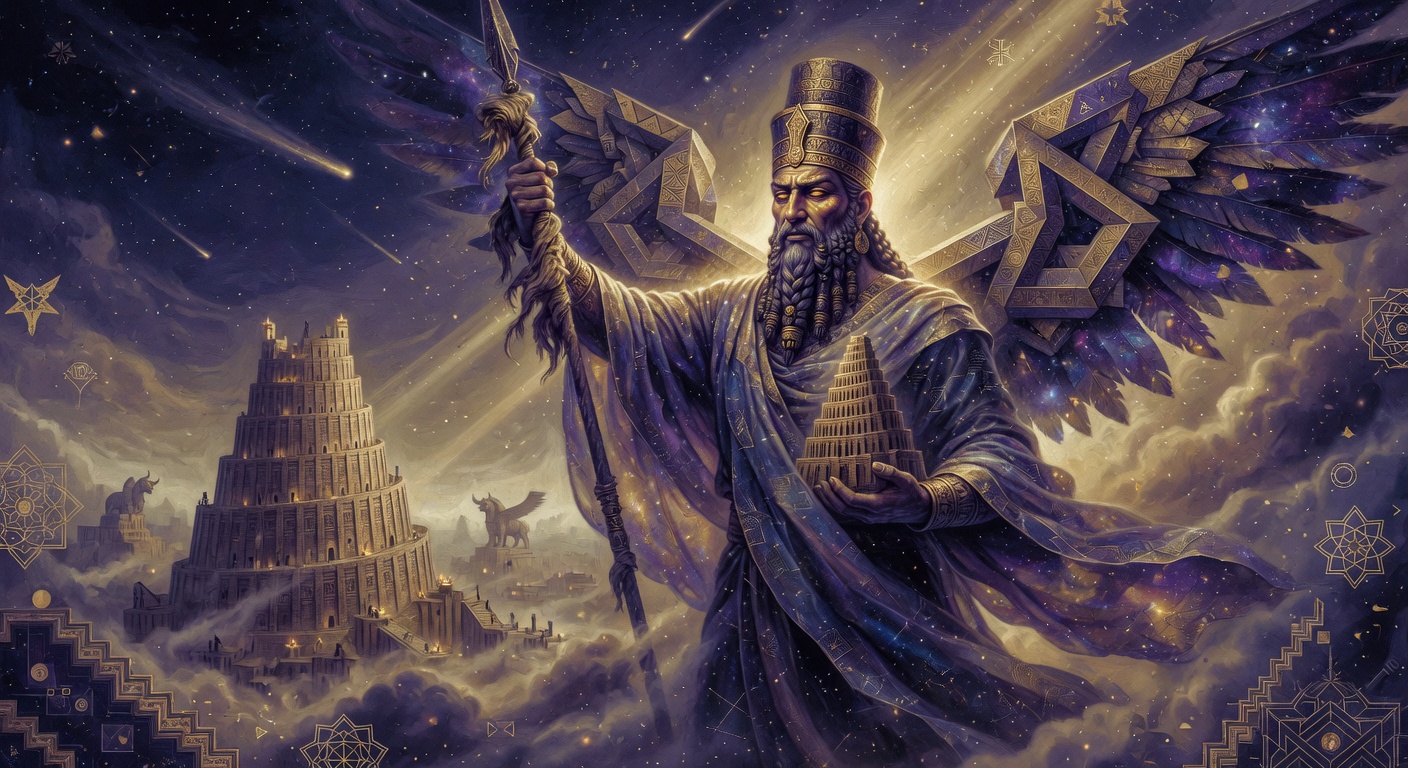
Nimrod is the mighty hunter-king who built Babel and established tyrannical rule after the Flood - the quintessential figure of human ambition opposing divine order in the Book of Jasher. Among the postdiluvian figures who embody both human ambition and defiance of divine order, Nimrod stands out in the apocryphal expansions of Genesis preserved in Jubilees and Jasher. These texts portray him as a descendant of Cush who rises to unparalleled power through skill in hunting and warfare, gradually consolidating authority over the scattered peoples. Jubilees 10 situates his activities within the broader division of the earth among Noah’s sons, while Jasher 7 details his early exploits as a mighty hunter whose prowess earns him kingship, transforming him from an individual warrior into the ruler of expanding territories that include Babel, Erech, and Accad. The same sources develop his role as the architect of the Tower of Babel project, framing the enterprise as a deliberate attempt to secure lasting fame and protection against future divine judgment. Jasher 9-10 recounts how Nimrod organizes the construction, enforces participation through royal decree, and suppresses dissent, thereby positioning the tower as both a technological marvel and an act of collective rebellion. This episode underscores the tension between human self-sufficiency and the covenantal framework established after the flood, themes that resonate throughout the Enochic corpus where angelic and human transgressions repeatedly disrupt the created order. Nimrod further appears as an antagonist to Abraham, whose refusal to participate in idolatrous worship leads to direct confrontation. Jasher 12 narrates the king’s command that Abraham be cast into a fiery furnace, only for divine intervention to preserve the patriarch and expose the limits of royal power. Within the wider Enochian tradition, such episodes illustrate how postdiluvian rulers could perpetuate the rebellious patterns associated with the Watchers, turning political authority into an instrument that challenges the sovereignty of the Most High. These legendary expansions thus transform a brief biblical notice into a sustained meditation on kingship, idolatry, and the persistence of antediluvian disorder.
Biography
- Occupation
- King and Mighty Hunter
- Father
- Cush
- Era
- Post-Flood
Family
Key Chapters
Key Passages
Nimrod's Wicked Reign
The Book of Jasher 7:1-5
Nimrod becomes a mighty tyrant; he forces the people to worship him and builds great cities; he is the first to wear a crown and to hunt men as well as beasts.
 1nd these are the names of the sons of Noah: Japheth, Ham and Shem; and children were born to them after the flood, for they had taken wives before the flood.
Nimrod and Abraham
The Book of Jasher 8:1-5
Nimrod orders the death of the infant Abraham; later, when Abram destroys the idols, Nimrod casts him into a fiery furnace from which God miraculously delivers him.
1nd it was in the night that Abram was born, that all the servants of Terah, and all the wise men of Nimrod, and his conjurors came and ate and drank in the house of Terah, and they rejoiced with him on that night.
The Tower of Babel
The Book of Jasher 9:1-5
Under Nimrod's leadership, the people build the tower in Shinar to reach heaven and make a name for themselves; God confounds their language and scatters them.
1nd Haran, the son of Terah, Abram's oldest brother, took a wife in those days.
Nimrod's rise to power
The Book of Jasher 7:23-50
And Cush the son of Ham, the son of Noah, took a wife in those days in his old age, and she bare a son, and they called ...
23nd Cush the son of Ham, the son of Noah, took a wife in those days in his old age, and she bare a son, and they called his name Nimrod, saying, At that time the sons of men again began to rebel and transgress against God, and the child grew up, and his father loved him exceedingly, for he was the son of his old age.
Esau slays Nimrod
The Book of Jasher 27:1-12
And Esau at that time, after the death of Abraham, frequently went in the field to hunt....
1nd Esau at that time, after the death of Abraham, frequently went in the field to hunt.
Nimrod's garments of power
The Book of Jasher 7:24-30
And the garments of skin which God made for Adam and his wife, when they went out of the garden, were given to Cush....
24nd the garments of skin which God made for Adam and his wife, when they went out of the garden, were given to Cush.
Did You Know?
Nimrod is portrayed as the first tyrant who forced idol worship.
He is central to the Tower of Babel story and the conflict with young Abraham.
In Jasher 7 Nimrod rises from mighty hunter to king whose territories expand to include Babel, Erech, and Accad.
Jubilees 10 places Nimrod's consolidation of power amid the division of the earth among Noah's sons.
A descendant of Cush, Nimrod gains unparalleled postdiluvian authority through skill in hunting and warfare.