Terah
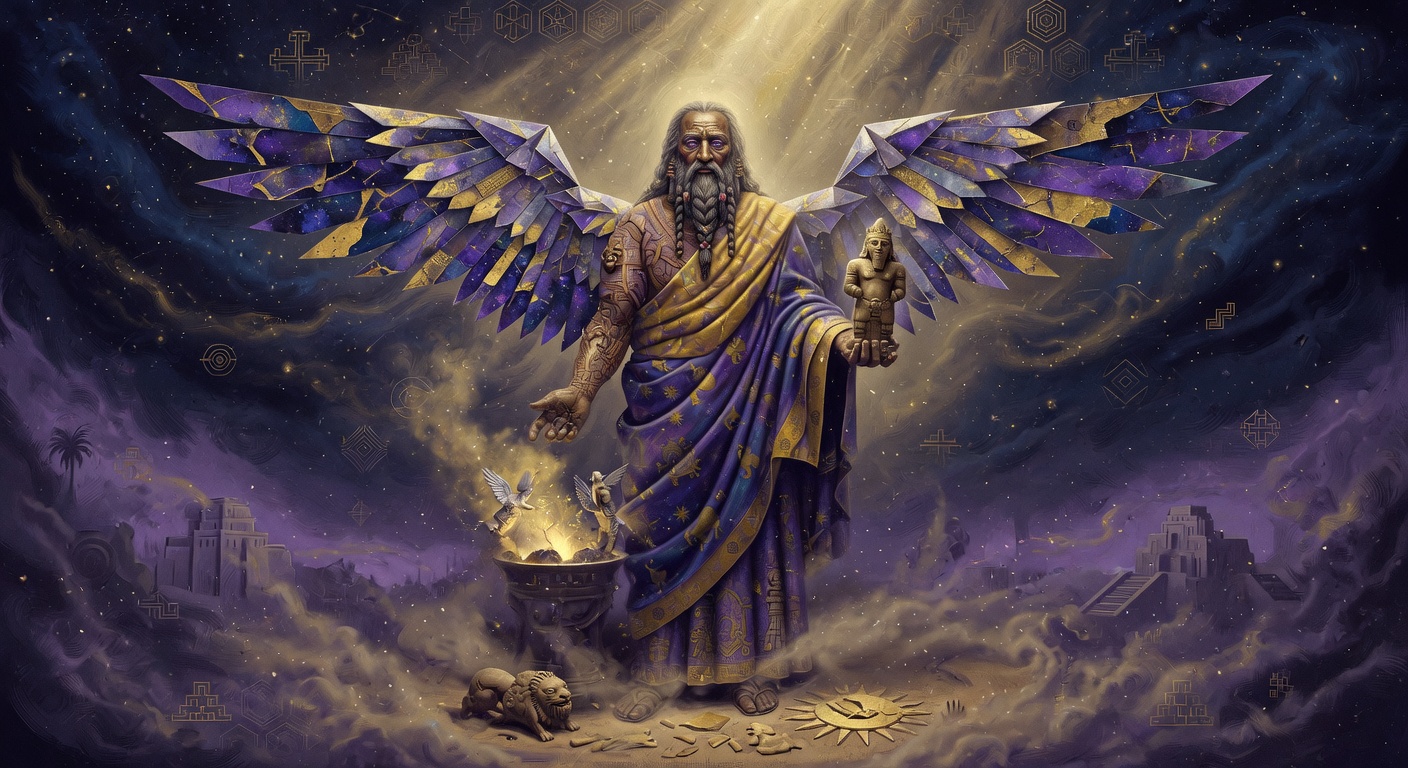
Terah is Abraham's father, an idol-maker in Ur of the Chaldees whose household represents the idolatrous world that Abraham was called to leave behind. Within the apocryphal expansions of Genesis preserved in Jubilees and Jasher, the figure of Abraham's father occupies a pivotal position in the generational shift from the corruptions described in Enoch to the emergence of covenantal faithfulness. These texts situate him amid the renewed spread of idolatry after the flood, portraying a society still influenced by the teachings attributed to the watchers. His household thus becomes the immediate setting in which the rejection of those practices begins, framing the transition from ancestral customs to a renewed allegiance to the Most High. Jubilees places particular emphasis on this period in chapters 11 and 12, recording that he took a wife named Edna and fathered Abram, Nahor, and Haran while residing in Ur of the Chaldees. The narrative notes his continued participation in the manufacture and veneration of images, practices that Jubilees links to the lingering influence of earlier forbidden knowledge. This depiction underscores the tension within the family line, as the text simultaneously presents him as part of the chosen lineage descending from Noah yet entangled in the very errors Enoch had condemned. Jasher develops the account further in chapters 11 and 12, depicting him as an artisan who crafted idols for the court of Nimrod and participated in the official cult surrounding the ruler. The narrative recounts how his son’s public destruction of these images forced a direct confrontation with both familial loyalty and royal authority, leading to the eventual departure from Ur. Such episodes illustrate the personal cost of dissent within a culture still shaped by the postdiluvian resurgence of polytheism. Across these sources, his role highlights the gradual purification of the patriarchal line. While Enoch outlines the cosmic origins of corruption, the later texts show its persistence in everyday religious life until challenged from within the very household that would produce the next bearer of the covenant. This layered portrayal invites readers to consider how ancestral tradition and individual conviction intersect in the preservation of monotheistic memory.
Biography
- Occupation
- Idol Maker
- Era
- Patriarchal
Key Chapters
Key Passages
Terah Makes Idols
The Book of Jasher 11:1-20
Terah makes and sells idols. Young Abram questions the power of the idols and eventually smashes them in his father's shop.
 1nd Nimrod son of Cush was still in the land of Shinar, and he reigned over it and dwelt there, and he built cities in the land of Shinar.
Terah Leaves Ur with Abram
The Book of Jubilees 12:15
After the incident with the idols and the furnace, Terah takes his family and leaves Ur of the Chaldees for Haran, where he dies.
15nd Terah went forth from Ur of the Chaldees, he and his sons, to go into the land of Lebanon and into the land of Canaan, and he dwelt in the land of Haran, and Abram dwelt with Terah his father in Haran two weeks of years.
Did You Know?
Terah was an idol maker in Ur who worshiped under Nimrod.
He left Ur with Abraham after the idol incident.
Jubilees records that Terah took a wife named Edna and fathered Abram, Nahor, and Haran while residing in Ur of the Chaldees.
Jasher recounts that Abraham's public destruction of the idols forced a direct confrontation with familial loyalty and royal authority.
Terah formed part of the chosen lineage descending from Noah yet remained entangled in the errors Enoch had condemned.