The Rainbow
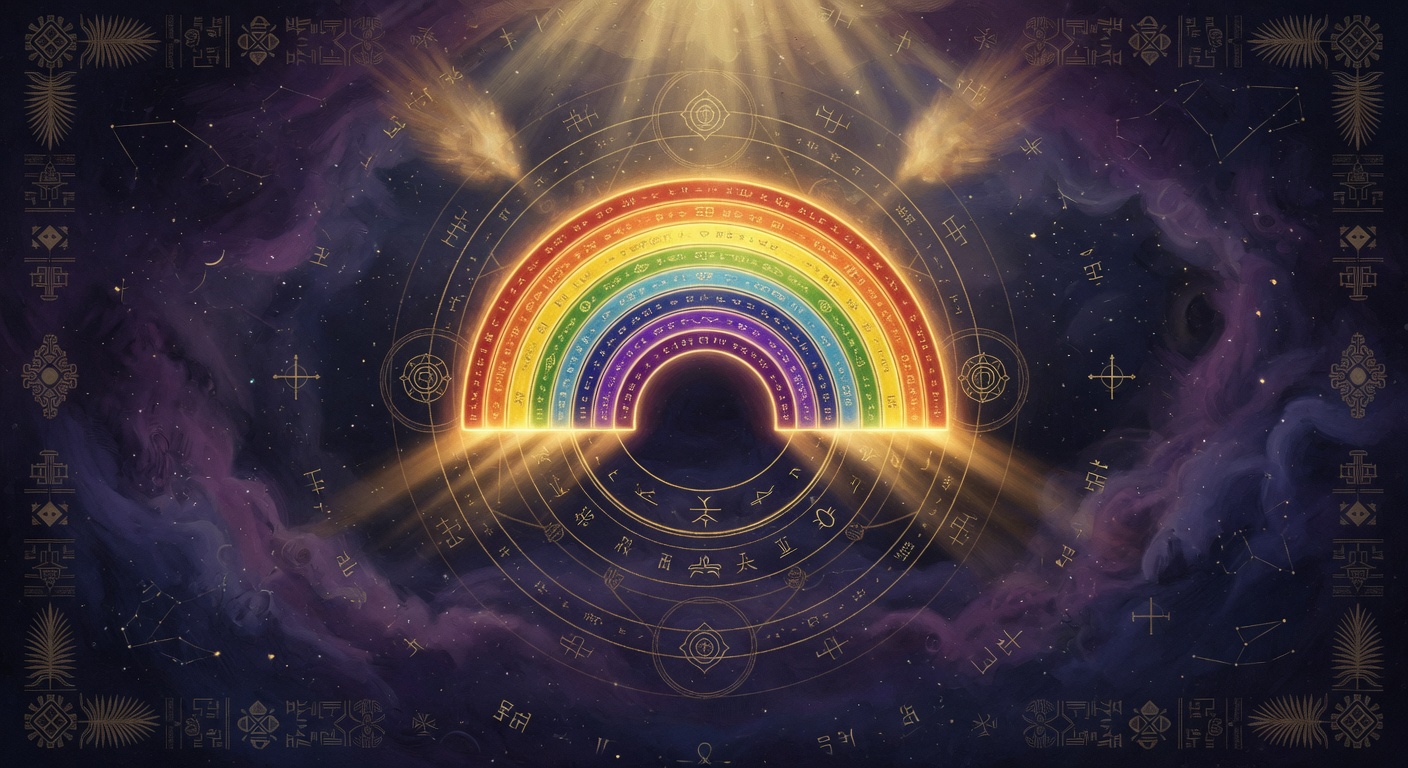
The Rainbow is the covenant sign of divine restraint - a visible arc binding God's power over the waters and assuring all flesh that no universal flood will ever again destroy the earth. Following the great deluge that reshaped the world, ancient accounts preserved in the Book of Jubilees describe how the divine promise to Noah established an enduring order for creation. In Jubilees 6:15-17, the text recounts the renewal of the covenant after the waters receded, with the luminous arc set in the clouds as a visible token that the fountains of the deep and the windows of heaven would remain sealed. This sign assured Noah and his descendants that no further universal flood would destroy all flesh, transforming the memory of judgment into a framework for seasonal stability and agricultural renewal. Within the Enochian corpus, this covenant echoes the earlier revelations given to Enoch concerning the watchers and the coming cataclysm, positioning the rainbow as a bridge between primordial secrets and the restored human order. The Book of Jasher complements this portrayal by situating the rainbow amid Noah's post-flood offerings and the explicit binding of chaotic waters. Jasher 5:12-14 notes how the celestial bow served not merely as a reminder but as an active restraint upon the forces that had once overwhelmed the earth, underscoring mercy tempered by precise divine limits. Enochic tradition deepens this symbolism through Enoch's visionary role as heavenly scribe; his writings in 1 Enoch 10 and 41 allude to the measured control of cosmic waters and luminaries, suggesting the rainbow participates in the same orderly architecture that governs stars and seasons. Thus the symbol integrates themes of restraint and preservation, linking the flood narrative to broader Enochian concerns about angelic transgression and the safeguarding of creation's boundaries. Across these texts the rainbow therefore functions as both memorial and mechanism, embodying the transition from destruction to covenantal continuity. It reassures later readers that the judgments revealed to Enoch find their resolution in structured mercy rather than endless upheaval, inviting contemplation of how divine oversight maintains the world's equilibrium.
Details
- Symbolizes
- God's Faithfulness and No More Flood
Key Chapters
Key Passages
The Sign of the Covenant
The Book of Jubilees 6:15-17
And He gave to Noah and his sons a sign that there should not again be a flood on the earth....
 15nd He gave to Noah and his sons a sign that there should not again be a flood on the earth.
Did You Know?
Symbol of mercy tempering judgment.
It binds the waters that were used in the Flood.
The sign operates in both directions - reminding God of his oath and reassuring humanity simultaneously.
Jubilees connects it to specific calendar dates, making it a recurring liturgical marker.
It appears after destruction, making it inherently a symbol of survival and new beginning.