Rejection of Idolatry
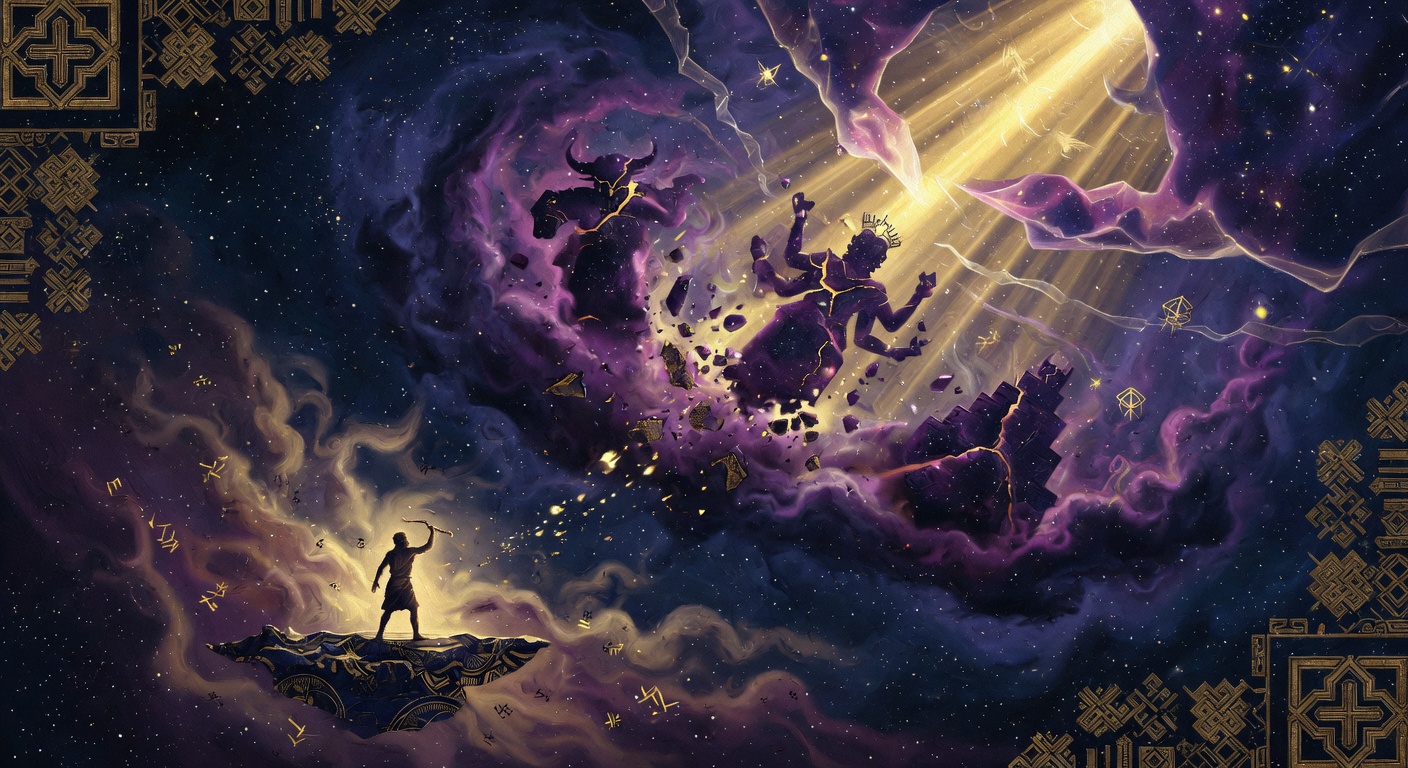
Idolatry is the worship of false gods and crafted images that these texts trace back to the demons released from the giants' destroyed bodies - the persistent human corruption that Abraham was called to reject. Within the expansive narratives preserved in the pseudepigraphal traditions, the rejection of idolatrous worship emerges as a decisive act of fidelity that restores the primordial order disrupted after the flood. These texts portray idolatry not merely as erroneous ritual but as a profound inversion of divine sovereignty, one that echoes the angelic transgressions chronicled in the Enochic corpus and demands a return to exclusive service of the Most High. By situating the patriarch Abraham at the center of this confrontation, Jubilees and Jasher present his actions as a renewal of the pure knowledge once entrusted to Enoch and transmitted through the righteous line. The Book of Jubilees provides the most detailed account of Abraham’s domestic revolt. In chapters 11 and 12 the young Abraham observes his father Terah fashioning and selling wooden idols, then secretly sets the entire workshop ablaze, resulting in the death of his brother Haran. This episode is framed as an intellectual awakening: Abraham recognizes that “the idols have no spirit” and that only the God who created heaven and earth deserves worship. The narrative thereby transforms a household incident into a theological manifesto against the material representation of deity. Jasher expands the same motif onto the public stage, depicting Abraham’s direct challenge to the imperial cult of Nimrod. After destroying the royal idols and refusing to participate in their veneration, Abraham is cast into a fiery furnace yet emerges unscathed, an event that precipitates the collapse of Nimrod’s authority and affirms the exclusive power of the one true God. These scenes resonate with the Enochian tradition’s broader condemnation of image worship found in the Epistle of Enoch (1 Enoch 99), where the making of idols is listed among the sins that will bring eschatological judgment, thereby linking Abraham’s stand to the cosmic struggle initiated by the Watchers. Taken together, these accounts underscore a central conviction of the Enochic literature: true knowledge of God entails both the intellectual rejection of false images and the practical refusal to participate in their cult. Abraham’s iconoclasm thus functions as the post-diluvian counterpart to Enoch’s heavenly ascent, reestablishing monotheistic worship as the foundation for covenantal relationship.
Details
- Category
- Moral / Polemical
- Key Figures
- Abraham, Nimrod, Terah
- Passages
- 5 key references
Key Chapters
Key Passages
Abram Burns the Idols
The Book of Jubilees 12:1-14
And it came to pass in the sixth week, in the seventh year thereof, 1904 A.M. that Abram said to Terah his father, sayin...
 1nd it came to pass in the sixth week, in the seventh year thereof, 1904 A.M. that Abram said to Terah his father, saying, 'Father!'
Abraham destroys idols
The Book of Jasher 11:30-50
And Abram viewed them, and behold they had neither voice nor hearing, nor did one of them stretch forth his hand to the ...
30nd Abram viewed them, and behold they had neither voice nor hearing, nor did one of them stretch forth his hand to the meat to eat.
Golden Calf
The Book of Jasher 82:15-25
And the Lord said to Moses, before he had come down from the mount, Get thee down, for thy people whom thou didst bring ...
15nd the Lord said to Moses, before he had come down from the mount, Get thee down, for thy people whom thou didst bring forth from Egypt have corrupted themselves.
Tower of Babel as rebellion
The Book of Jasher 9:20-39
And king Nimrod reigned securely, and all the earth was under his control, and all the earth was of one tongue and words...
20nd king Nimrod reigned securely, and all the earth was under his control, and all the earth was of one tongue and words of union.
Terah's idol worship
The Book of Jasher 11:1-15
And Nimrod son of Cush was still in the land of Shinar, and he reigned over it and dwelt there, and he built cities in t...
1nd Nimrod son of Cush was still in the land of Shinar, and he reigned over it and dwelt there, and he built cities in the land of Shinar.
Did You Know?
Abraham is the model of rejecting false gods.
Nimrod represents the archetypal idolater and tyrant in Jasher.
Abraham's destruction of his father's idols in Jasher 11 is the decisive break with Mesopotamian religion.
Jubilees traces the origins of idol worship to the demons released from the giants' destroyed bodies.
The golden calf episode in Jasher 82 shows how quickly even liberated people revert to familiar worship.