Rise of Nimrod
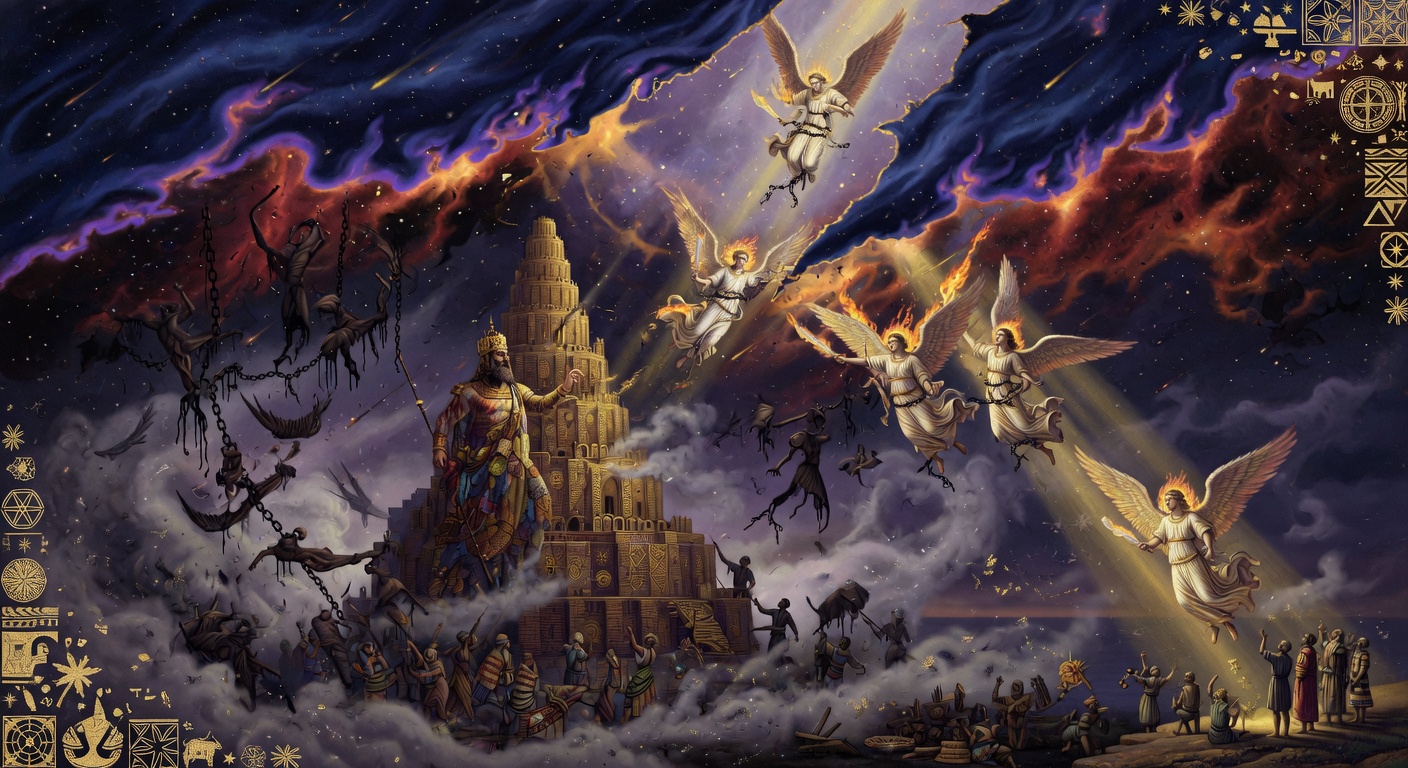
The Rise of Nimrod is the emergence of the first post-flood tyrant - a mighty hunter who establishes centralized human power in opposition to divine order, builds the first empire, and persecutes those who worship God alone. Jasher 7 provides the most detailed portrait, describing how Nimrod acquired the garments of Adam (stolen by Ham), which gave him power over animals and men. He gathers followers, establishes Babel and other cities, and demands worship as a god-king. His reign represents the human echo of the Watchers' rebellion - ambition that refuses divine boundaries. His later conflict with Abraham dramatizes the clash between tyrannical idolatry and emerging monotheism. This event represents a critical juncture in the sacred chronology that the Books of Enoch, Jubilees, and Jasher collectively preserve. Within the jubilee framework that Jubilees meticulously tracks, it occupies a precise position in the divine timetable - not an accident of history but a predetermined turning point inscribed on the heavenly tablets before creation. The expanded narratives in Jasher and the theological interpretations in Jubilees together provide a multidimensional understanding of this moment that illuminates both its immediate consequences and its role in the larger pattern of divine action spanning from creation to final judgment.
Did You Know?
Nimrod acquired Adam's garments (stolen by Ham) which gave him supernatural power over animals.
He is the first person in the tradition to establish a centralized kingdom after the flood.
His name became associated with rebellion - 'let us rebel' in folk etymology.
He demanded worship as a deity, making him the first post-flood idolater.
His conflict with Abraham represents tyranny versus faith - the political versus the spiritual.
Key Passage
Rise of Nimrod
The Book of Jasher 7:23-50
And Cush the son of Ham, the son of Noah, took a wife in those days in his old age, and she bare a son, and they called ...
 23nd Cush the son of Ham, the son of Noah, took a wife in those days in his old age, and she bare a son, and they called his name Nimrod, saying, At that time the sons of men again began to rebel and transgress against God, and the child grew up, and his father loved him exceedingly, for he was the son of his old age.
Did You Know?
Nimrod acquired Adam's garments (stolen by Ham) which gave him supernatural power over animals.
He is the first person in the tradition to establish a centralized kingdom after the flood.
His name became associated with rebellion - 'let us rebel' in folk etymology.
He demanded worship as a deity, making him the first post-flood idolater.
His conflict with Abraham represents tyranny versus faith - the political versus the spiritual.