War of the Kings (Chedorlaomer)
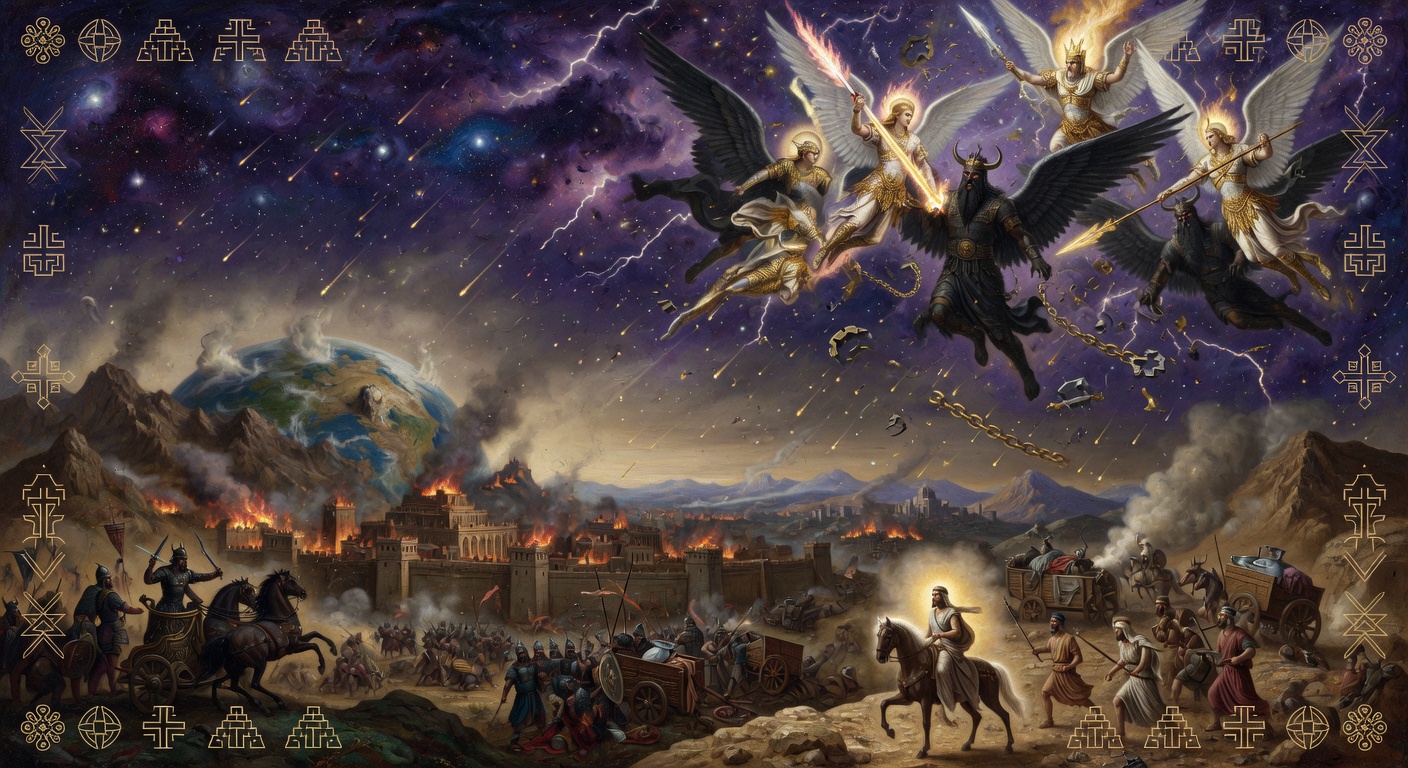
The War of the Kings is the conflict in which Abraham with 318 men defeated a coalition of four eastern monarchs to rescue his nephew Lot - the first military engagement of a patriarch in these texts. The ancient accounts of conflict among eastern monarchs and the cities of the plain receive notable elaboration in the Book of Jasher and the Book of Jubilees, both of which expand upon the terse Genesis narrative to highlight themes of covenant fidelity and divine deliverance. In these texts the campaign originates when the rulers of Elam, Shinar, Ellasar, and the Goiim demand tribute from the five cities of the plain; the refusal by Sodom and its allies precipitates a decisive invasion. Jasher devotes extended chapters to the military preparations, the route of the invading forces through the Jordan Valley, and the subsequent capture of goods and persons, including Lot, while Jubilees 13 condenses the same sequence into a few verses that underscore Abraham’s immediate response as an act of kinship loyalty. Abraham’s pursuit with a force of 318 trained retainers is presented in both works as a nocturnal assault near Dan that scatters the coalition and recovers all that had been taken. Jasher supplies additional tactical detail, noting the division of the company and the surprise attack that leaves the enemy kings in disarray, whereas Jubilees stresses the swift return of the captives and the subsequent encounter with Melchizedek. These embellishments serve to portray the patriarch not merely as a sojourner but as an active defender of his household, a characterization consistent with the broader patriarchal history preserved in the Enochic and Jubilean traditions. Within the wider corpus the episode functions as an early illustration of the principle that the righteous, though few, prevail when aligned with divine purpose. The texts thereby link Abraham’s victory to the same cosmic order of judgment and protection that Enoch witnesses in his heavenly journeys, reinforcing the continuity between primeval history and the patriarchal age. Readers encounter a narrative that celebrates both martial courage and the refusal of unjust spoils, themes that reverberate through later accounts of covenant testing.
Details
- Era
- Patriarchs
- Category
- Patriarchal
- Participants
- Abraham + allies vs. Chedorlaomer coalition
- Outcome
- Abraham's victory and rescue of Lot
- Divine Intervention
- Yes
Key Chapters
Key Passages
The Campaign and Victory
The Book of Jasher 16:1-20
At that time Chedorlaomer king of Elam sent to all the neighboring kings, to Nimrod, king of Shinar who was then under h...
 1t that time Chedorlaomer king of Elam sent to all the neighboring kings, to Nimrod, king of Shinar who was then under his power, and to Tidal, king of Goyim, and to Arioch, king of Elasar, with whom he made a covenant, saying, Come up to me and assist me, that we may smite all the towns of Sodom and its inhabitants, for they have rebelled against me these thirteen years.
Did You Know?
Abraham with only 318 men defeated a coalition of four powerful kings.
This is the first recorded military campaign in the ancient texts.
Abraham defeated four kings with just 318 men - a nighttime guerrilla strategy detailed extensively in Jasher.
After the victory, Abraham refused all spoils from the king of Sodom, establishing his independence from corrupt allies.
Melchizedek's blessing of Abraham after this battle introduces the mysterious priest-king figure.
Jasher provides the tactical detail of dividing forces for a pincer attack that other sources lack.