Canaan
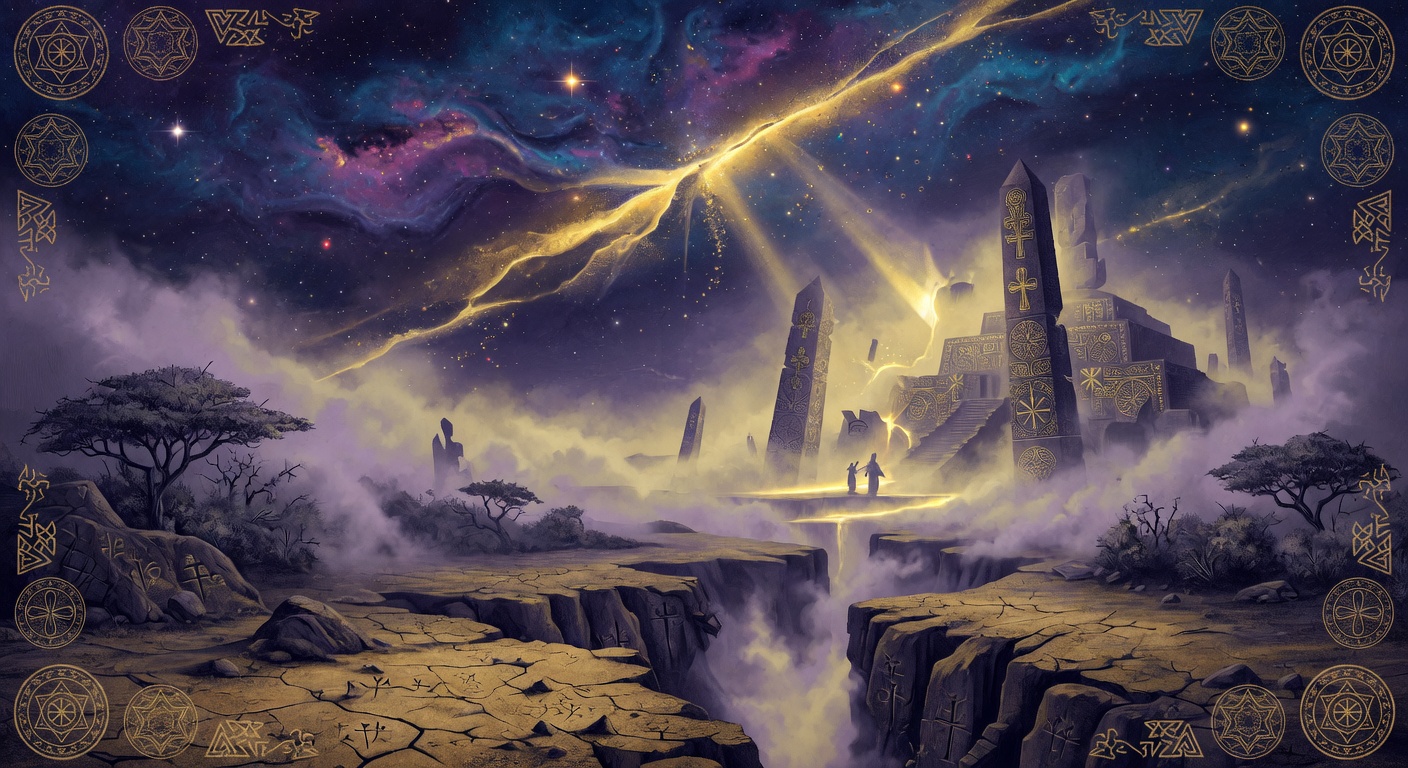
Canaan is the land promised to Abraham and his descendants - illegally seized by Ham's son in Jubilees, contested through the patriarchal period, and finally conquered under Joshua in Jasher. In the aftermath of the great deluge, the pseudepigraphal traditions preserved in Jubilees portray the earth as carefully apportioned among the sons of Noah according to an oath sworn before the divine throne. Shem receives the central and most blessed portion, encompassing the territory that would later become the focus of the patriarchal covenants, while Ham and Japheth are allotted lands to the south and north respectively. Yet the narrative highlights a profound transgression when Canaan, the youngest son of Ham, defies this sacred division and settles instead within the boundaries assigned to Shem, an act that precipitates both a lasting curse and the future conflicts over possession of the land. This improper seizure receives further elaboration in Jubilees 10, where Canaan’s refusal to depart for his allotted inheritance near the sea prompts Noah to pronounce a malediction upon him and his descendants. The text emphasizes that the land in question, stretching from the river of Egypt to the Euphrates and including sites later associated with Salem and Hebron, was never intended for Ham’s line. Within the broader Enochic corpus, this territorial drama unfolds against the lingering shadow of the Watchers’ descent on Mount Hermon and the violence of the giants, suggesting that the region carried an inherent spiritual tension long before the patriarchs arrived. The Book of Jasher supplements these accounts with vivid patriarchal episodes, depicting Abraham, Isaac, and Jacob moving through Canaan’s cities and altars while contending with its indigenous inhabitants, who are traced genealogically to the cursed son of Ham. These stories underscore the land’s dual character as both the stage for covenantal promises and a realm still marked by the consequences of antediluvian rebellion. In the Enochian tradition, Canaan thus emerges not merely as a geographical prize but as a contested inheritance whose boundaries and moral status remain intertwined with the cosmic order established after the flood.
Details
- Region
- Earth
Journey Paths
Key Chapters
Key Passages
Promised to Abraham
The Book of Jubilees 15:1-10
And in the fifth year of the fourth week of this jubilee, 1979 A.M. in the third month, in the middle of the month, Abra...
 1nd in the fifth year of the fourth week of this jubilee, 1979 A.M. in the third month, in the middle of the month, Abram celebrated the feast of the first-fruits of the grain harvest.
Patriarchs sojourn
The Book of Jasher 16:1-10
At that time Chedorlaomer king of Elam sent to all the neighboring kings, to Nimrod, king of Shinar who was then under h...
1t that time Chedorlaomer king of Elam sent to all the neighboring kings, to Nimrod, king of Shinar who was then under his power, and to Tidal, king of Goyim, and to Arioch, king of Elasar, with whom he made a covenant, saying, Come up to me and assist me, that we may smite all the towns of Sodom and its inhabitants, for they have rebelled against me these thirteen years.
Division among Noah sons
The Book of Jubilees 8:1-30
In the twenty-ninth jubilee, in the first week, 1373 A.M. in the beginning thereof Arpachshad took to himself a wife and...
 1n the twenty-ninth jubilee, in the first week, 1373 A.M. in the beginning thereof Arpachshad took to himself a wife and her name was Rasu'eja, the daughter of Susan, the daughter of Elam, and she bare him a son in the third year in this week, 1375 A.M. and he called his name Kainam.
Jacob returns to Canaan
The Book of Jubilees 29:1-20
And it came to pass when Rachel had borne Joseph, that Laban went to shear his sheep; for they were distant from him a t...
1nd it came to pass when Rachel had borne Joseph, that Laban went to shear his sheep; for they were distant from him a three days' journey.
Sons of Jacob conquer cities
The Book of Jasher 34:1-30
And the number of all the males that were circumcised, were six hundred and forty-five men, and two hundred and forty-si...
1nd the number of all the males that were circumcised, were six hundred and forty-five men, and two hundred and forty-six children.
Canaanites fear Jacob
The Book of Jasher 38:1-10
And Ihuri king of Shiloh came up to assist Elon, and he approached Jacob, when Jacob drew his bow that was in his hand a...
1nd Ihuri king of Shiloh came up to assist Elon, and he approached Jacob, when Jacob drew his bow that was in his hand and with an arrow struck Ihuri which caused his death.
Sons conquer Amorites
The Book of Jasher 39:1-15
And when the sons of Jacob went from the city of Sarton, they had gone about two hundred cubits when they met the inhabi...
1nd when the sons of Jacob went from the city of Sarton, they had gone about two hundred cubits when they met the inhabitants of Tapnach coming toward them, for they went out to fight with them, because they had smitten the king of Tapnach and all his men.
Kings make peace
The Book of Jasher 40:1-15
And the sons of Jacob led away all the spoil of Gaash, and went out of the city by night....
1nd the sons of Jacob led away all the spoil of Gaash, and went out of the city by night.
Canaanites fight Israel
The Book of Jasher 85:1-10
And king Arad the Canaanite, who dwelt in the south, heard that the Israelites had come by the way of the spies, and he ...
1nd king Arad the Canaanite, who dwelt in the south, heard that the Israelites had come by the way of the spies, and he arranged his forces to fight against the Israelites.
Did You Know?
The land promised to Abraham and his descendants.
The setting for most of the patriarchal stories and the later conquest.
Canaan son of Ham illegally settled in Shem's territory - the land's contested status begins with theft.
Abraham claims it spiritually through altar-building before any physical possession occurs.
The land's boundaries (Nile to Euphrates) far exceed what Israel ever actually controlled.