Haran
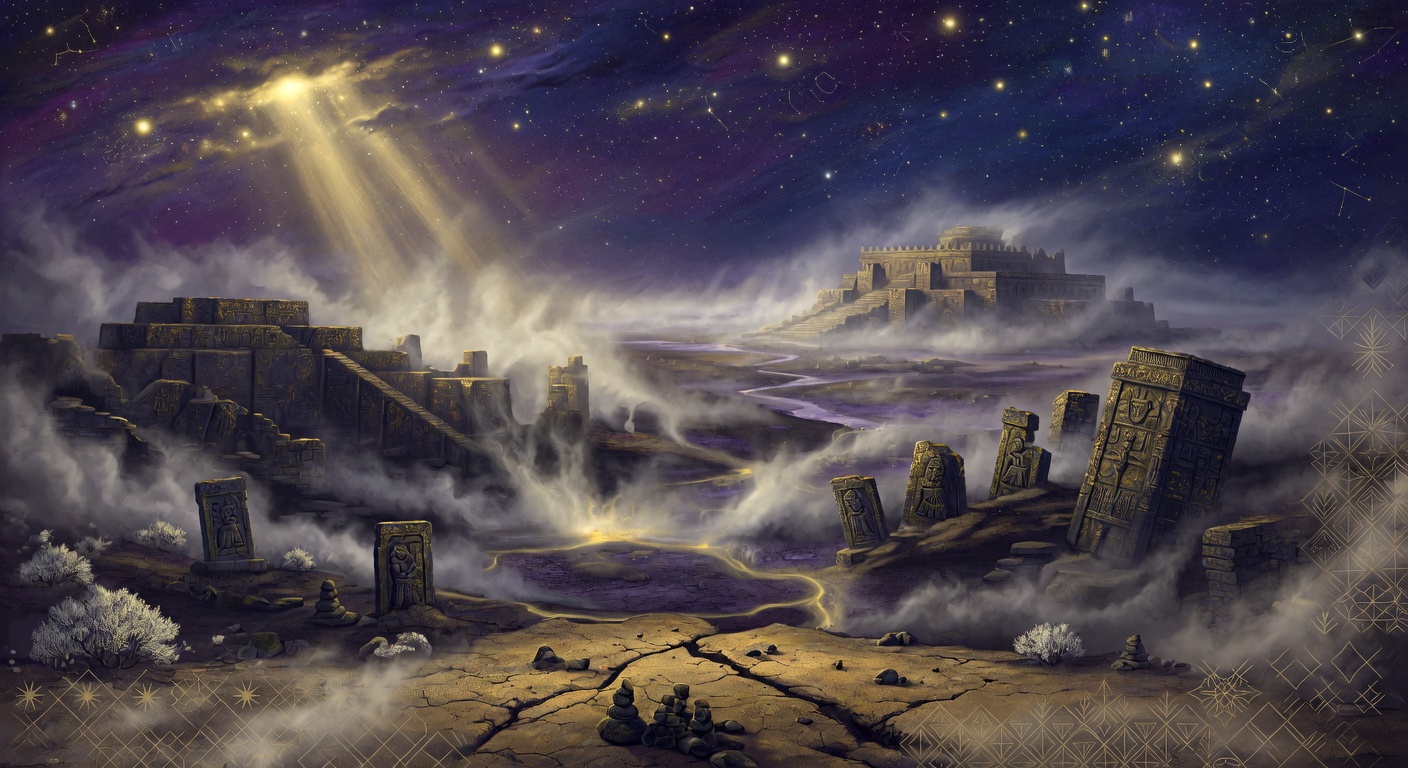
Haran is the northern Mesopotamian city where Abraham's family settled after fleeing Ur - a transitional waypoint between the idolatrous world and the promised land of Canaan. In the patriarchal journeys detailed in Jubilees and Jasher, this northern Mesopotamian city functions as a crucial waypoint between the idolatrous world of Ur and the promised land of Canaan. The Book of Jubilees records how Terah relocates his family here after Abraham's confrontation with the idol-worship of their homeland, and it becomes the staging ground for Abraham's divinely directed departure toward Canaan. Jasher expands on the family's years in this city, noting Abraham's continued growth in wisdom and his interactions with surrounding peoples. The city also figures in the later narrative of Jacob's flight from Esau, where he serves Laban for twenty years before returning to Canaan. These associations make it a recurring symbol of transition between worlds in the pseudepigraphal literature.
Details
- Region
- Earth
Journey Paths
Key Chapters
Key Passages
Abraham departs Haran
The Book of Jubilees 12:28-31
And it came to pass in the seventh year of the sixth week 1953 A.M. that he spoke to his father and informed him, that h...
 28nd it came to pass in the seventh year of the sixth week 1953 A.M. that he spoke to his father and informed him, that he would leave Haran to go into the land of Canaan to see it and return to him.
Terah settles in Haran
The Book of Jasher 13:1-10
And Terah took his son Abram and his grandson Lot, the son of Haran, and Sarai his daughter-in-law, the wife of his son ...
1nd Terah took his son Abram and his grandson Lot, the son of Haran, and Sarai his daughter-in-law, the wife of his son Abram, and all the souls of his household and went with them from Ur Casdim to go to the land of Canaan. And when they came as far as the land of Haran they remained there, for it was exceedingly good land for pasture, and of sufficient extent for those who accompanied them.
Did You Know?
Abraham's brother Haran died in Ur during the idol-burning incident before the family moved here.
Jacob spent twenty years in Haran serving Laban before his dramatic night departure.
The family stays here after Haran's death in Ur - trauma drives the geographic move.
It serves as the midpoint between idolatrous origin and covenantal destination.
Jacob's twenty years here with Laban parallel Israel's later servitude in Egypt.