Revelation of the Son of Man
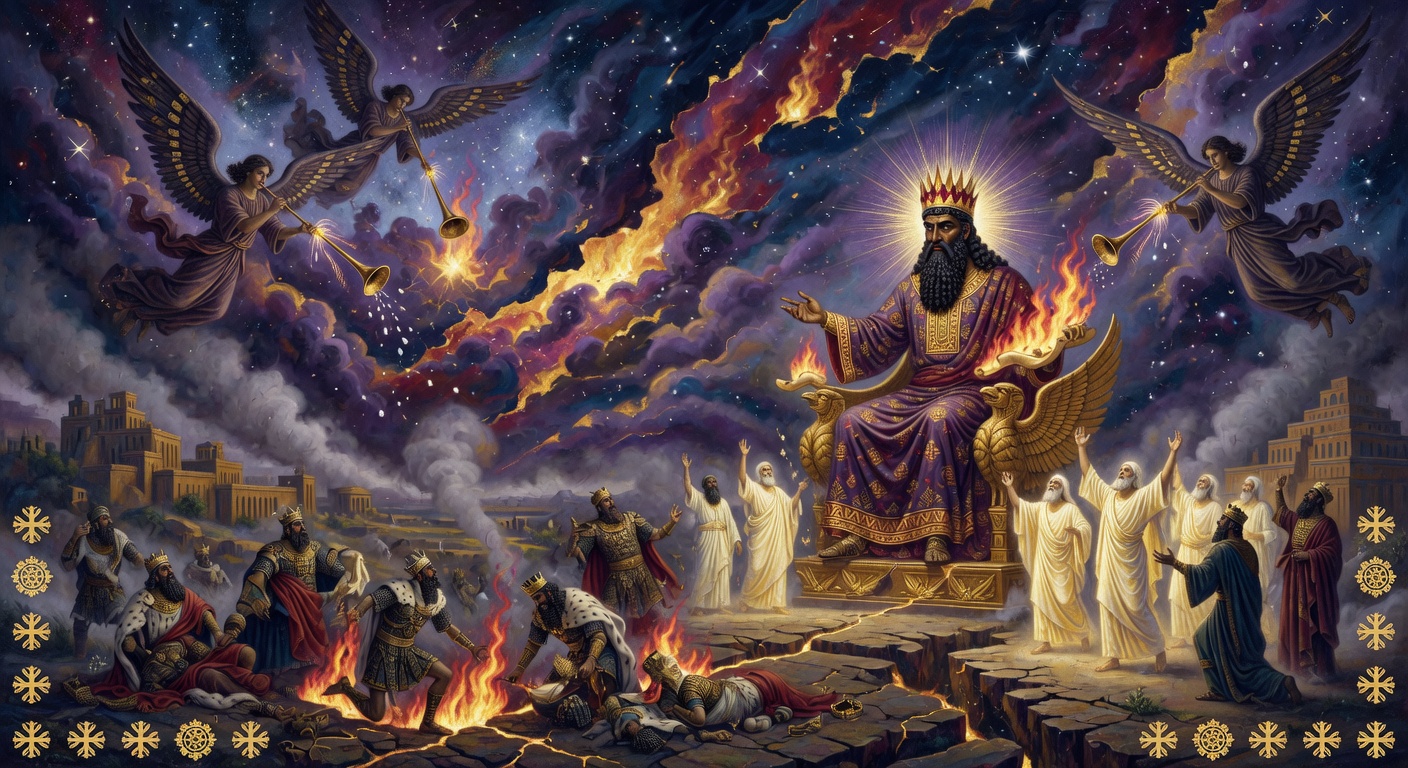
The Revelation of the Son of Man is the prophecy that a preexistent messianic figure, chosen before creation, will be revealed on the throne of glory to judge kings and rulers and vindicate the righteous. Among the visionary accounts preserved in the ancient Enochic writings, one finds a profound depiction of eschatological judgment centered on a heavenly figure who embodies divine justice and authority. This prophecy emerges most fully within the Book of Parables, a section of 1 Enoch that expands earlier themes from the Book of Watchers concerning the corruption of earthly powers and the ultimate restoration of cosmic order. Here the narrative shifts from the fall of the Watchers to a future reckoning in which the oppressed righteous witness the reversal of their fortunes under the guidance of a preexistent being chosen by the Lord of Spirits. The core of this vision unfolds across several chapters, particularly 1 Enoch 46 and 62. In chapter 46 the seer beholds one like a son of man whose face is full of graciousness, standing beside the Head of Days; this figure receives dominion to execute judgment. Chapter 62 then describes how the Lord of Spirits seats him on the throne of glory, summoning the kings and the mighty to stand before him in fear. They acknowledge their former denial of the Lord of Spirits and their oppression of the righteous, only to be delivered to the angels for punishment, while the elect and holy rejoice in the presence of the son of man, sharing in his glory and eternal peace. These passages draw on imagery from Daniel yet develop it into a more explicit messianic drama of vindication. Within the broader Enochian tradition this portrayal serves to affirm that true sovereignty resides not with human rulers but with the heavenly realm, offering hope to communities experiencing persecution. The son of man functions as both revealer of hidden wisdom and agent of final justice, linking the ethical demands of the earlier Enochic books with an anticipated transformation of history. Such texts underscore the conviction that the righteous, though presently marginalized, will ultimately participate in the divine triumph over chaos and injustice.
Details
- Category
- Messianic
- Status
- unfulfilled
The Prophecy
The Son of Man will sit on the throne of glory and judge the kings and the mighty; the righteous will rejoice with him.
Source
The Book of Enoch 62:1-16
And thus the Lord commanded the kings and the mighty and the exalted, and those who dwell on the earth, and said: ' Open...
 1nd thus the Lord commanded the kings and the mighty and the exalted, and those who dwell on the earth, and said: ' Open your eyes and lift up your horns if ye are able to recognize the Elect One.'
Prophecy Journey
Key Chapters
Did You Know?
This figure is the most developed messianic concept in pre-the Anointedian Jewish literature.
It influences later the Anointedian use of 'Son of Man' title.
This is the most developed pre-Christian messianic concept in Jewish literature outside the canonical texts.
The Son of Man is described as pre-existent - chosen before the creation of the world.
Kings and rulers who oppressed the righteous will personally face him and beg for mercy that will not come.