Virtue, Vice and the Two Spirits
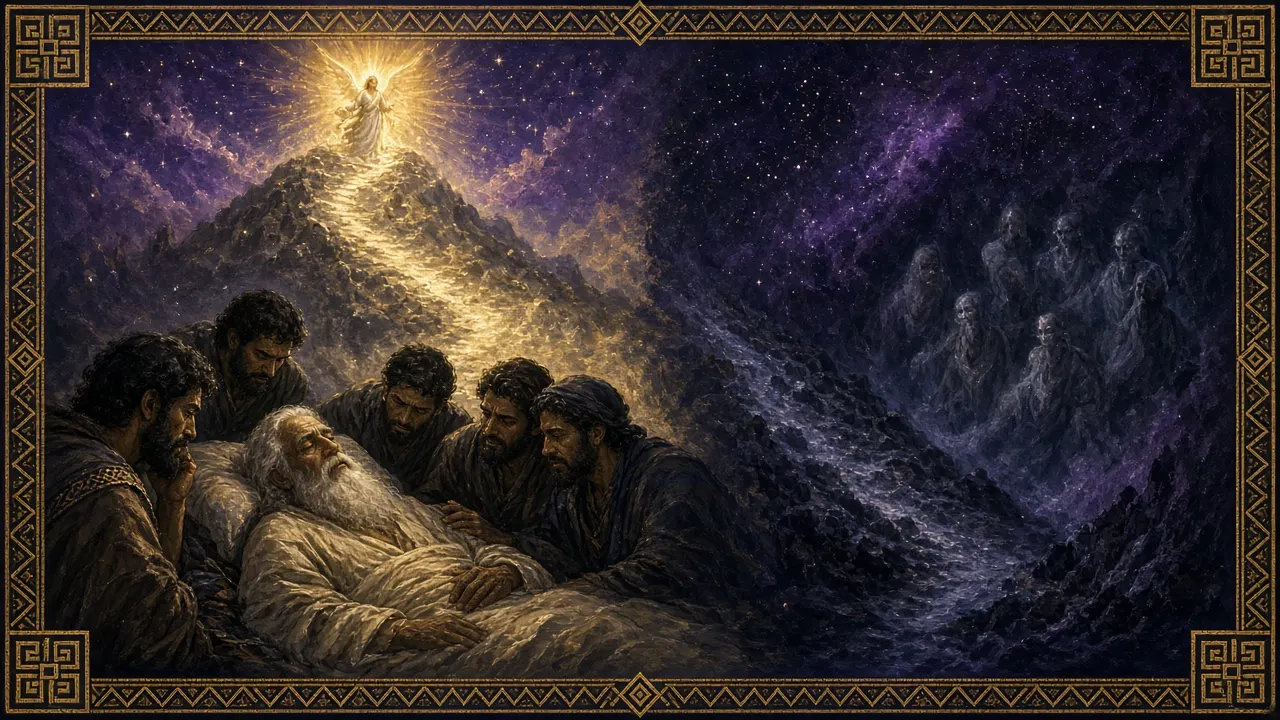
The Testaments of the Twelve Patriarchs turn the lives of Jacob's sons into moral case studies. Each patriarch, on his deathbed, names the vice that ruled him or the virtue that kept him: Reuben speaks of fornication, Simeon of envy, Judah of wine and the love of money, Dan of anger, Gad of hatred; Issachar commends singleness of heart, Zebulun compassion, Joseph chastity and Benjamin a good mind.
Behind the advice stands a picture of two powers at work in a person. Reuben lists the spirits of deceit that Beliar sends against the young, and Asher describes two ways set before the children of men, with two inclinations in the breast that choose between them. A person belongs to the Lord or to Beliar according to which he follows.
The Kebra Nagast strikes the same note when it traces the first murder to the envy Satan stirred in Cain. Across these books sin is a spirit that takes hold and virtue is something practised daily, and both are passed from parents to children as an inheritance.
Details
- Category
- Moral
- Key Figures
- Reuben, Simeon, Judah, Issachar, Zebulun, Dan, Gad, Asher, Joseph, Benjamin, Beliar
- Passages
- 7 key references
Key Chapters
Key Passages
The seven spirits of deceit
The Testaments of the Twelve Patriarchs 2:1-9
And now hear me, my children, what things I saw in my repentance concerning the seven spirits of error....
 1nd now hear me, my children, what things I saw in my repentance concerning the seven spirits of error.
Dan on the blindness of anger
The Testaments of the Twelve Patriarchs 80:1-4
And now, my children, I am dying, and I tell you of a truth, that unless ye keep yourselves from the spirit of lying and...
1nd now, my children, I am dying, and I tell you of a truth, that unless ye keep yourselves from the spirit of lying and of anger, and love truth and long-suffering, ye shall perish.
Gad on hatred
The Testaments of the Twelve Patriarchs 97:1-2
And now, my children, hearken to the words of truth to work righteousness, and all the law of the Most High, and not go ...
1nd now, my children, hearken to the words of truth to work righteousness, and all the law of the Most High, and not go astray through the spirit of hatred, for it is evil in all the doings of men.
Asher on the two ways
The Testaments of the Twelve Patriarchs 103:1-9
The record of the testament of Asher, what things he spake to his sons in the hundred and twentieth year of his life....
 1he record of the testament of Asher, what things he spake to his sons in the hundred and twentieth year of his life.
Issachar's singleness of heart
The Testaments of the Twelve Patriarchs 64:1-6
When, therefore, I grew up, my children, I walked in uprightness of heart, and I became a husbandman for my parents and ...
 1hen, therefore, I grew up, my children, I walked in uprightness of heart, and I became a husbandman for my parents and my brethren, and I brought in fruits from the field according to their season; and my father blessed me, for he saw that I walked in simplicity.
Benjamin on the good man's mind
The Testaments of the Twelve Patriarchs 133:1-8
Do ye also therefore, my children, love the Lord God of heaven, and keep His commandments, and be followers of the good ...
 1o ye also therefore, my children, love the Lord God of heaven, and keep His commandments, and be followers of the good and holy man Joseph; and let your mind be unto good, even as ye know me.
Envy and the sin of Cain
The Kebra Nagast 4:1-3
And when they had grown up together, Satan had envy of him, and he cast this envy into the heart of Cain, who was enviou...
1nd when they had grown up together, Satan had envy of him, and he cast this envy into the heart of Cain, who was envious [of Abel] first, because of the words of his father Adam, who said, " He who hath the good-tempered face shall be the heir of my kingdom "; and secondly, because of his sister with the beautiful face, who was born with him and who had been given unto Abel, even as God commanded them to multiply and fill the earth — now the face of the sister who had been born with Abel resembled that of Cain, and their father had transferred them (i.e., the two sisters) when giving them [in marriage]; — and thirdly, because when the two [brothers] offered up sacrifice, God accepted the offering of Abel and rejected the offering of Cain.
Did You Know?
Asher teaches that God gave mankind two ways, good and evil, with two minds in the breast to tell them apart.
Gad says the spirit of hatred works with Satan toward death, while the spirit of love works with the law of God.
Dan warns that a powerful man who is angry has a threefold might, and even a weak man a twofold one.
Issachar says the spirits of error have no power over the simple person, who does not covet gold or fine clothing.
Benjamin says the good mind does not have two tongues, of blessing and of cursing, while every work of Beliar is twofold.