The Wilderness
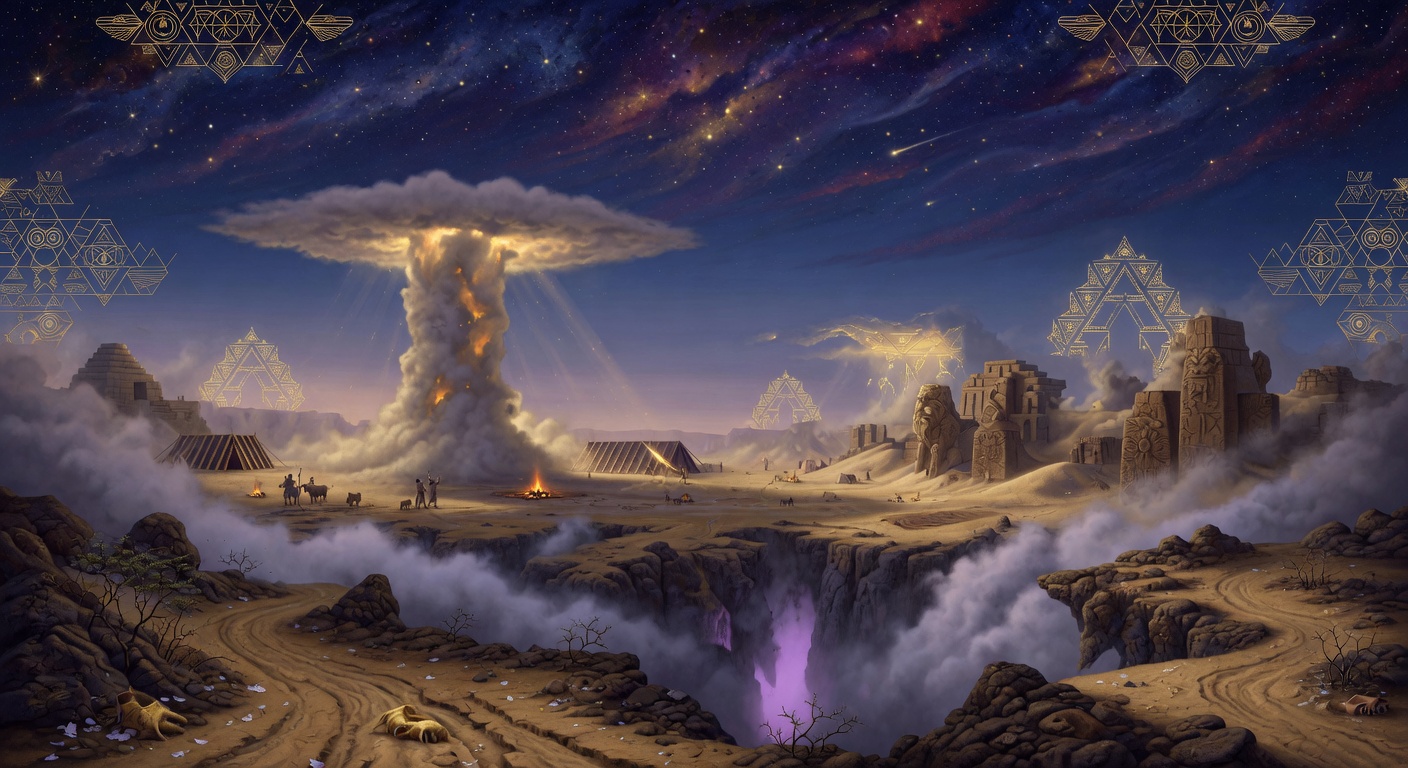
The wilderness traversed by Israel after the Exodus functions in Jubilees and Jasher as a prolonged testing ground where divine provision and human faithfulness are continually measured. The Book of Jubilees situates key events of this period within its precise chronological framework, including the giving of the law, the construction of the tabernacle, and the failures that prolong the journey. Jasher supplies narrative expansion on military encounters, internal rebellions, and the daily rhythms of manna, water, and cloud-guided travel. Within the broader Enochic tradition, wilderness imagery resonates with Enoch's own journeys through desolate regions at the edges of the world, where judgment and revelation intersect. The wilderness thus serves as a liminal space between bondage and inheritance, testing and transformation.
Details
- Region
- Earth
Journey Paths
Key Chapters
Key Passages
Wilderness wanderings
The Book of Jasher 82:1-10
And the children of Israel proceeded from Rephidim and they encamped in the wilderness of Sinai, in the third month from...
 1nd the children of Israel proceeded from Rephidim and they encamped in the wilderness of Sinai, in the third month from their going forth from Egypt.
Wilderness in Jubilees
The Book of Jubilees 48:12-19
And notwithstanding all (these) signs and wonders the prince Mastêmâ was not put to shame because he took co...
12nd notwithstanding all (these) signs and wonders the prince Mastêmâ was not put to shame because he took courage and cried to the Egyptians to pursue after thee with all the powers of the Egyptians, with their chariots, and with their horses, and with all the hosts of the peoples of Egypt.
Ephraimites die in wilderness
The Book of Jasher 75:1-15
At that time, in the hundred and eightieth year of the Israelites going down into Egypt, there went forth from Egypt val...
1t that time, in the hundred and eightieth year of the Israelites going down into Egypt, there went forth from Egypt valiant men, thirty thousand on foot, from the children of Israel, who were all of the tribe of Joseph, of the children of Ephraim the son of Joseph.
Moses in Midian
The Book of Jasher 76:1-15
And Moses the son of Amram was still king in the land of Cush in those days, and he prospered in his kingdom, and he con...
1nd Moses the son of Amram was still king in the land of Cush in those days, and he prospered in his kingdom, and he conducted the government of the children of Cush in justice, in righteousness, and integrity.
Pharaoh afflicts more
The Book of Jasher 78:1-10
At that time died Baal Channan son of Achbor, king of Edom, and was buried in his house in the land of Edom....
1t that time died Baal Channan son of Achbor, king of Edom, and was buried in his house in the land of Edom.
War in Africa
The Book of Jasher 74:1-10
In the end of years died Saul king of Edom, and Baal Chanan the son of Achbor reigned in his place....
 1n the end of years died Saul king of Edom, and Baal Chanan the son of Achbor reigned in his place.
Did You Know?
The forty-year wandering is presented in Jubilees as precisely calibrated to a jubilee framework.
Jasher expands the wilderness battles and rebellions with dramatic dialogue absent from other sources.
Forty years mirrors Moses' forty days on the mountain - time between realms operates proportionally.
Every provision (manna, water, quail) requires fresh faith daily - no stockpiling allowed.
The generation that left Egypt must die before entry - judgment and promise coexist in the same space.